

If you’re talking to a crossbody gym bag manufacturer for the first time, settle the format before you think about fabric. “Crossbody gym bag” covers three different products: a small sling for a phone, keys and earbuds; a structured gym tote with a crossbody strap; and a 20–30L duffel you can wear across the body. We make all three. MOQ starts at 50 pieces for in-stock styles with a heat-transfer logo, and most other customization starts at 300–500 pieces.
This guide is written for the two buyers who order this style from us most often: gyms and studios buying bags for members or front-desk retail, and fitness accessory brands adding a bag to their range. It covers which format fits which buyer, what comes standard on the strap and what’s an add-on, and why two bags that look alike can be quoted far apart.
Do Gyms and Fitness Accessory Brands Need Different Crossbody Gym Bags?
Usually, yes. Gyms tend to want a simple bag in their brand colors that is easy to reorder. Accessory brands want a bag designed around the products they already sell.
Gyms and studios. These orders typically go into member welcome kits, challenge rewards or front-desk retail. What matters most is that the color and logo match from one order to the next, that the price works as a gift or an impulse buy, and that members actually carry the bag every day. That usually points to the small sling or a crossbody gym tote. Keep the spec simple — one body color, one logo position — so a reorder six months later matches the first batch.
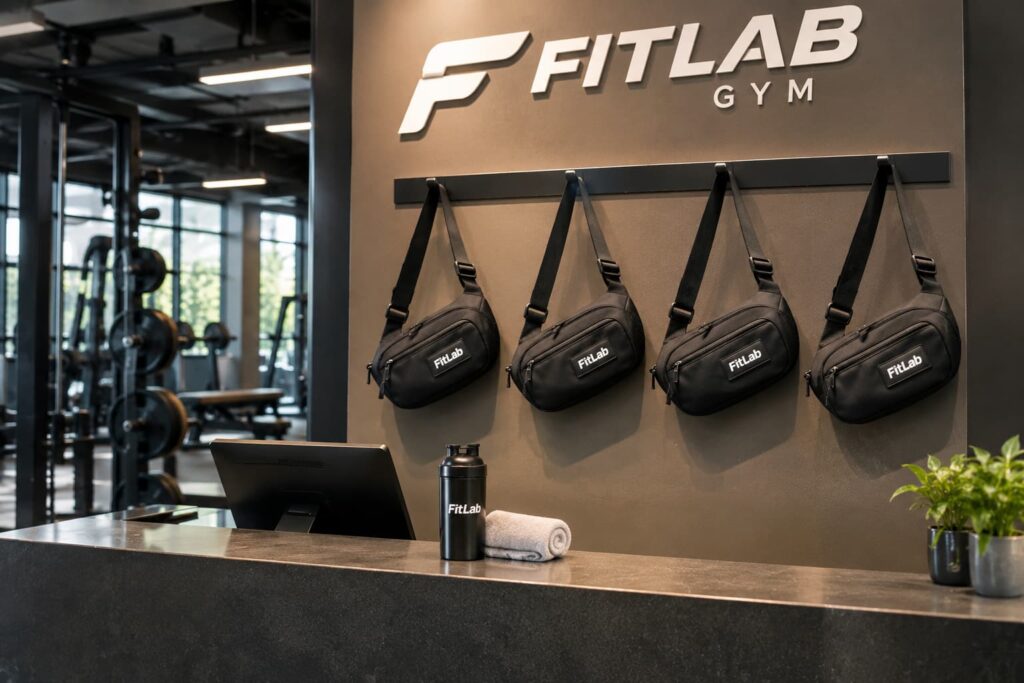
Fitness accessory brands. If you sell shaker bottles, jump ropes, lifting straps or resistance bands, the bag is an extension of your line and is often sold as a bundle. The key question is whether your own products fit: does your shaker sit upright in the side pocket, and do your straps or bands have a pocket of their own? These buyers lean toward the tote or the 20–30L duffel, and a custom pocket layout is often worth it, even if it takes the order to the custom MOQ.
Whichever group you’re in, tell the factory who will carry the bag and what goes in it. That one line saves more sampling rounds than any spec sheet.
Which Format Should You Ask a Crossbody Gym Bag Manufacturer For?
Pick the format by what has to fit inside, not by a number of liters. Write a packing list — the exact items a member or customer will carry — and send it with your inquiry. A factory can size pockets around a list; a bare capacity figure leaves too much to guess.
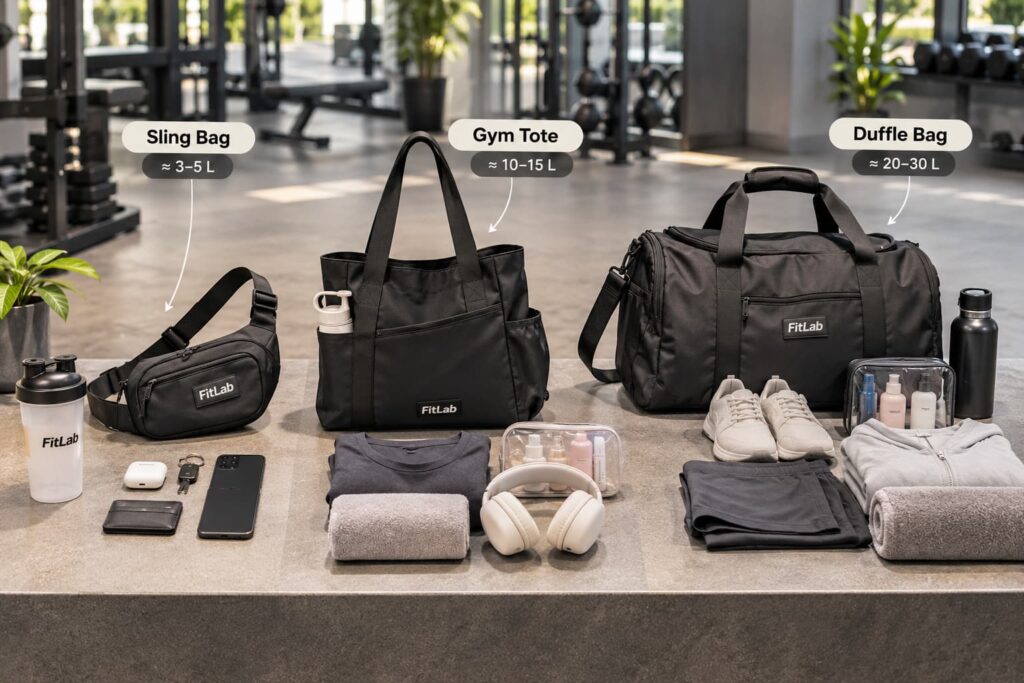
1. The small sling. This is the hands-free option: phone, keys, earbuds, a card holder, maybe a slim water bottle. One brand that sells gym slings suggests around 5–10 liters of interior space, and we also make smaller slings for buyers who only need the essentials. It works well for gym merch because it is light, cheap to ship and worn every day, not only on workout days.
2. The crossbody gym tote. A structured tote with a removable crossbody strap, usually with a shoe compartment or a wet/dry pocket. It carries a change of clothes, a towel and shoes, and suits studios (yoga, Pilates) and members who go straight from work to a class. A wide opening makes packing easier than a zip-top duffel.
3. The crossbody duffel (20–30L). A compact duffel with two handles plus a detachable strap, often with a shoe pocket and a trolley sleeve. It holds a full training kit and is the closest to a classic gym bag. If you need something larger, our duffel bag guide covers the full-size formats, and the weekender guide covers tote-style travel bags.
| Format | Typical contents | Best fit |
|---|---|---|
| Small sling | Phone, keys, earbuds, cards, slim bottle | Gym merch, welcome kits, everyday carry |
| Crossbody gym tote | Clothes, towel, shoes, bottle | Studios, work-to-class members |
| Crossbody duffel (20–30L) | Full training kit, shoes, shaker | Accessory brand bundles, serious trainees |
What Should a Crossbody Gym Bag Spec Include?
A usable first spec fits on one page. It answers six questions, and each answer removes a round of back-and-forth before the sample.
| What to send | Example | Why it matters |
|---|---|---|
| Format | Small sling / crossbody tote / 20–30L duffel | Sets the pattern, price tier and MOQ |
| Packing list with sizes | Phone in a case, 700 ml shaker, lifting straps, size 11 trainers | Pockets are sized around real items |
| Who carries it | Gym members, studio clients, your retail customers | Guides strap comfort and how premium it should feel |
| Colors | Body color + trim color, Pantone if you have one | Decides in-stock vs custom fabric |
| Logo | Artwork file, method, position and size | Decides in-stock vs custom MOQ |
| Quantity and timing | First order and expected reorders, target delivery date | Decides whether stock styles or a custom run make sense |
If you’re not sure about the format yet, send the packing list and the use case, and ask for a recommendation. That’s a normal starting point for a first order.
What Comes Standard on the Strap, and What’s an Add-On?
An adjustable, detachable strap that can be worn on either shoulder is standard on every crossbody gym bag we make. Padding, a wider strap, hardware upgrades and load testing are added when a buyer asks for them.
| Feature | Standard | Add on request |
|---|---|---|
| Adjustable strap length | Yes | — |
| Detachable strap | Yes | — |
| Wear on left or right shoulder | Yes | — |
| Shoulder pad | — | Yes |
| Wider strap | — | Yes |
| Metal snap hooks or plastic buckles | Either, by design | Your choice |
| Load test on samples | — | Yes |

The strap matters more on a crossbody bag than on a backpack, because the whole load sits on one strap and two attachment points. For a small sling that carries a phone and keys, a plain webbing strap is plenty. For a 20–30L duffel packed with shoes and a full kit, a shoulder pad makes a real difference to comfort, and many brands sell duffels with switchable shoulder or crossbody straps for that reason.
On hardware, metal snap hooks feel more premium; plastic buckles are lighter and cost less. Both are common, so pick by the look and price point you want. Strap failures haven’t been a rework issue for us, but if your bag will carry heavy kit, ask for a load test on the approved sample before bulk production.
Which Fabrics and Linings Work Best for a Gym Bag Worn Crossbody?
For most crossbody gym bags, a water-resistant polyester, Oxford or nylon outer with a wipe-clean lining is the practical choice. Weight matters more here than on a duffel you put down: the bag hangs from one shoulder for the whole walk to and from the gym.

- Outer fabric. Oxford polyester is the common all-rounder; nylon is lighter and has a softer hand feel; coated fabrics shrug off spills and wet floors. Water resistance comes from a coating or finish, so specify it on the order rather than assuming it.
- Lining. A smooth, wipe-clean lining is easier to keep fresh than a brushed one when sweaty kit goes inside.
- Wet/dry or shoe pocket. On the tote and the duffel, a separate pocket keeps used clothes and shoes away from clean items. A mesh panel on that pocket helps air move through it.
- Color. Very light colors show gym-floor dirt quickly. Darker bodies with a brand-colored trim are a common compromise for gym merch.
Our gym bag guide goes deeper on shoe compartments versus wet/dry pockets if your bag needs both.
What Are the MOQ and Price for Custom Crossbody Gym Bags?
MOQ and price are two separate questions. MOQ depends on how much you change the bag; price depends on how the bag itself is built. An in-stock style can be a basic $5 sling or a premium bag from $20 and up.
MOQ by order type
| Order type | MOQ |
|---|---|
| In-stock style + heat-transfer logo | From 50 pcs |
| Customization (colors, pockets, logo method, fabric) | Usually 300–500 pcs |
| Premium custom build | From 300 pcs, at a higher unit price |
Indicative unit price by build level (EXW, at starting quantities)
| Build level | What it usually means | Indicative unit price |
|---|---|---|
| Basic | Standard polyester, simple pockets, plastic hardware | $5–10 |
| Mid-range | Better fabric, more compartments, upgraded zippers | $10–20 |
| Premium | Coated or soft-hand fabrics, metal hardware, shoe or wet/dry compartments, padded strap | $20+ |
These build levels apply to in-stock styles and custom orders alike, and the prices assume quantities near the MOQ. On a custom order, the unit price comes down as the quantity goes up: 1,000 pieces of the same design cost less per bag than 300. Treat these figures as ranges, not a price list: two crossbody gym bags that look alike in a photo can be quoted far apart, because the price is the sum of several separate choices.
- Fabric: a basic polyester costs far less than a coated Oxford or a nylon with a soft hand feel.
- Hardware: metal snap hooks and branded zippers add cost over plastic buckles and standard zippers.
- Structure: every extra pocket, a shoe compartment or a wet/dry lining adds pattern pieces and sewing time.
- Finishing details: a shoulder pad, piping, a leather or PU logo patch.
- Quantity: on a custom order, setup, cutting and material costs are spread over more bags as the quantity grows, so a larger run lowers the unit price.
Our custom bag cost breakdown explains the same logic in more detail. The fastest way to an accurate quote is a reference photo plus your packing list, target quantity and logo method.
How Should You Brand a Small Crossbody Gym Bag?
On a small bag, the logo method matters less than where the logo goes and how big it is. A sling’s front panel leaves little flat space once zippers and seams are placed, so plan the logo size against the actual panel, not a mock-up.
- Heat transfer is the quickest route on in-stock styles and the only change that keeps an order at the 50-piece MOQ.
- Embroidery or a PU or rubber patch gives a more premium feel and suits gyms that want the bag to look like retail merchandise.
- Placement options go beyond the front panel: the strap, the shoulder pad or a pull tab can carry a small logo where a large print won’t fit.
The right choice comes down to your brand and budget. Our bag branding techniques guide compares screen printing, embroidery and heat transfer side by side.
Common Spec Mistakes on a First Crossbody Gym Bag Order
Most problems on a first order come from the spec, not the sewing. Four are worth checking before you approve a sample.
- Sizing the phone pocket to a bare phone. Most people carry a phone in a case, and larger models keep getting bigger. Size the pocket to the largest phone-plus-case your customers are likely to carry.
- Too short a strap range. A crossbody strap has to work over a T-shirt and over a winter jacket, and for wearers of different heights. Check the shortest and longest setting on the sample, worn on a real person.
- A logo that’s too big for the panel. Artwork that looks right on a flat mock-up can run into a zipper or seam once the bag is sewn. Approve the logo size on the physical sample.
- Choosing the format by price alone. A cheaper small sling won’t sell to members who wanted to carry shoes. Match the format to the packing list first, then work on cost.
How Long Does It Take, From Sample to Reorder?
A typical first order runs about five to six weeks from sample approval to finished goods. Samples can be ready in as little as 3–5 days, depending on materials, and bulk production usually takes about 30 days, give or take a week.
- Inquiry and spec: format, packing list, colors, logo and quantity.
- Sample: as fast as 3–5 days; allow longer if a fabric or color has to be sourced.
- Revisions: pocket sizes, strap length, logo placement.
- Bulk production: about 30 days, give or take a week.
- Reorder: keep the approved sample and the fabric and color references, so the next batch matches the first.
For gyms, the reorder step matters most: members notice when this year’s bag is a slightly different shade from last year’s. Agree on the reference sample and color codes at the first order, and quote them on every reorder.
Frequently Asked Questions
What is a crossbody gym bag? A gym bag that can be worn across the body on a single strap, keeping your hands free. It comes in three common formats: a small sling, a crossbody gym tote and a compact 20–30L duffel with a detachable strap.
What is the MOQ for custom crossbody gym bags? From 50 pieces for in-stock styles with a heat-transfer logo. Other customization usually starts at 300–500 pieces, and premium custom builds can start from 300 pieces at a higher unit price.
Can you match our brand colors? Yes. Custom fabric colors count as customization, so they follow the custom MOQ rather than the 50-piece in-stock MOQ.
Can the bag be designed around our own products? Yes. Send the dimensions of the items the bag must hold — a shaker bottle, lifting straps, a jump rope — or the items themselves, and the pockets can be sized around them on the sample.
How long do sampling and production take? Samples can be ready in as little as 3–5 days, depending on materials. Bulk production usually takes about 30 days, give or take a week.
Can you load-test the strap? Yes, on request. We recommend it for duffel-size bags that will carry shoes and a full training kit.
Explore Our Crossbody Gym Bag Range
A few crossbody-ready gym bags from our range, as a starting point for your spec:




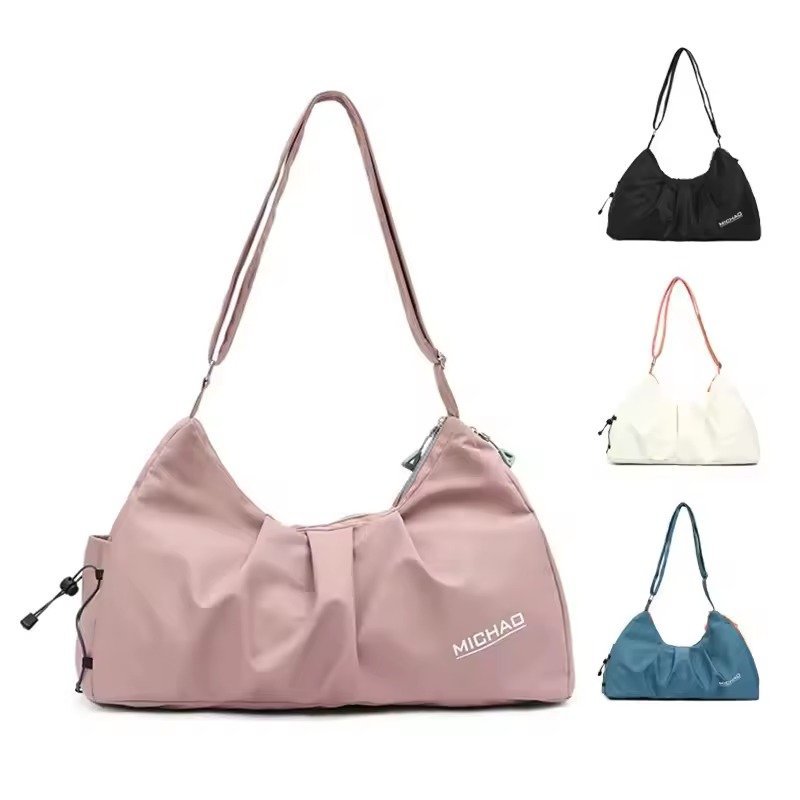
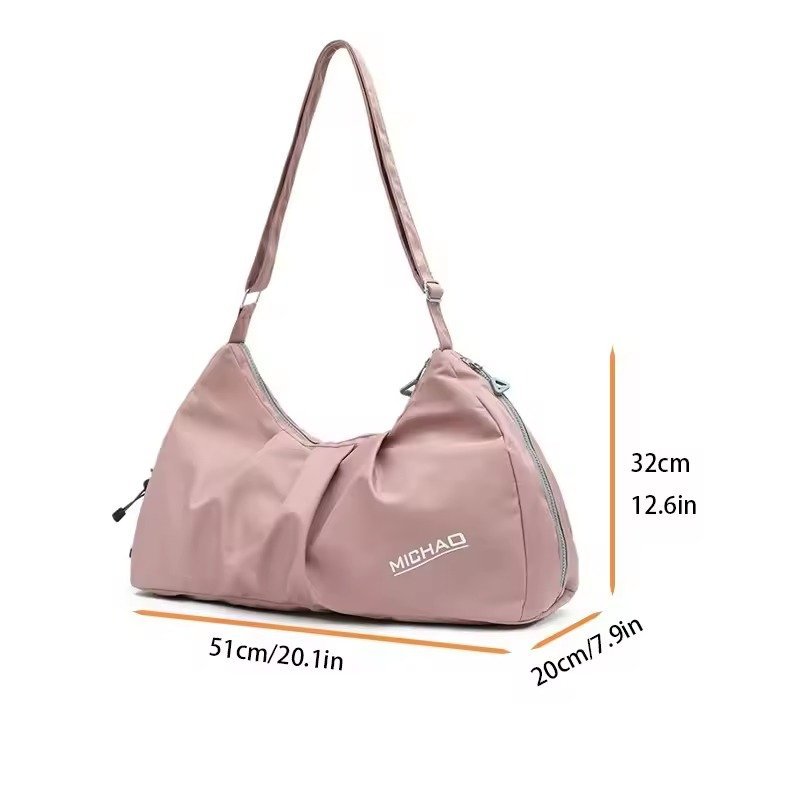
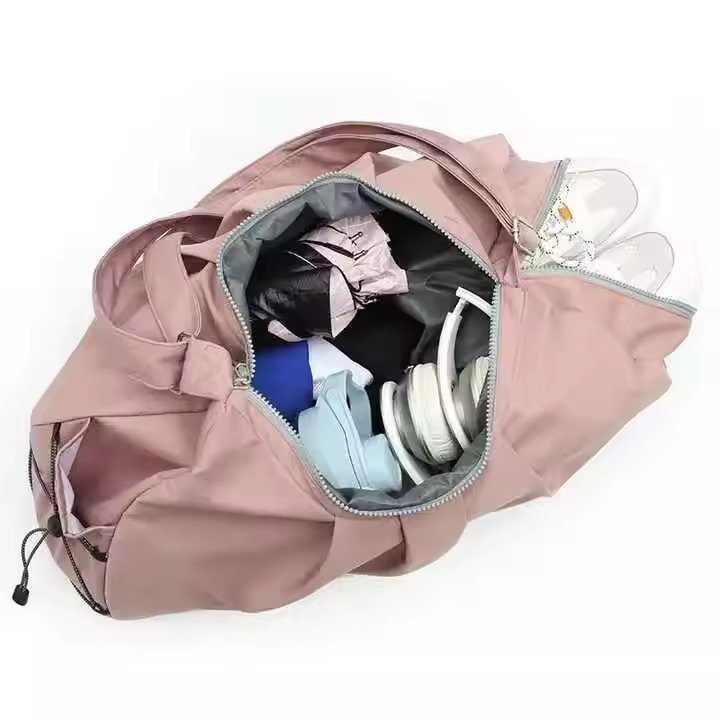
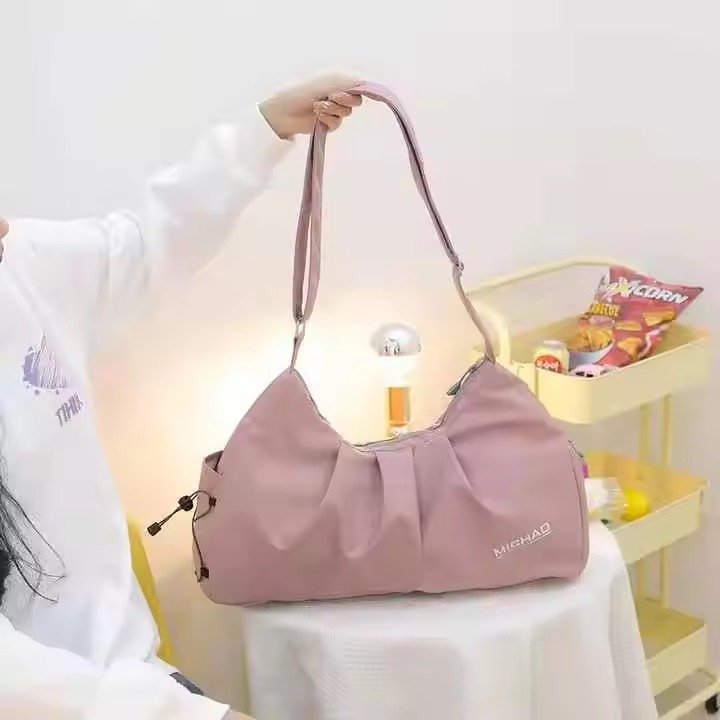
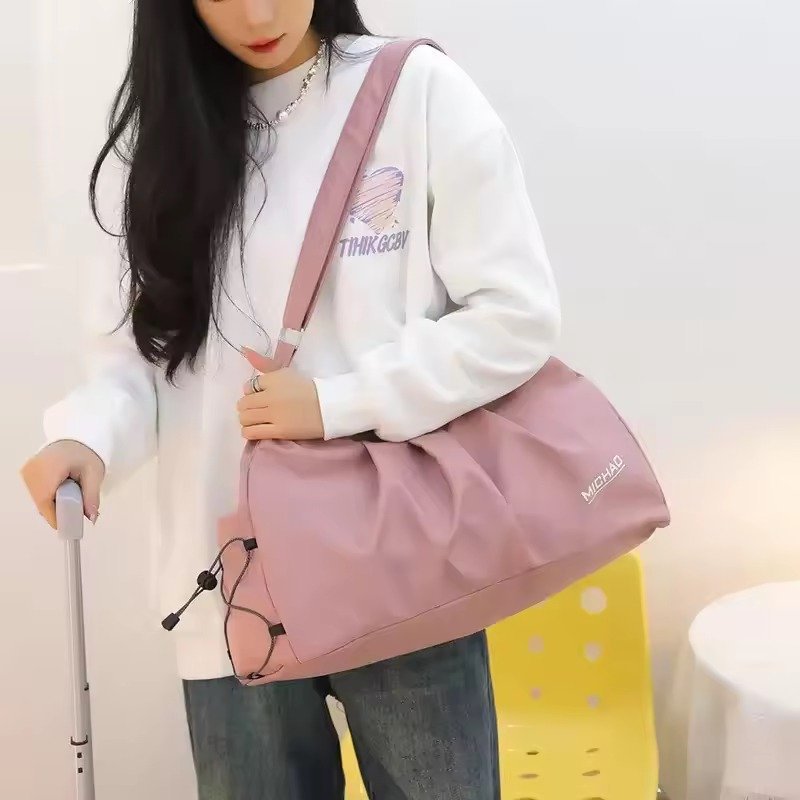
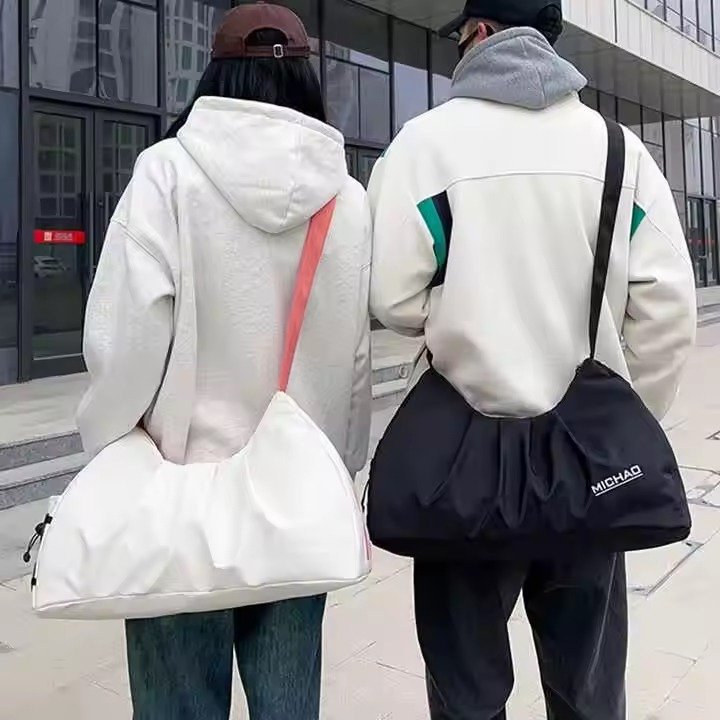
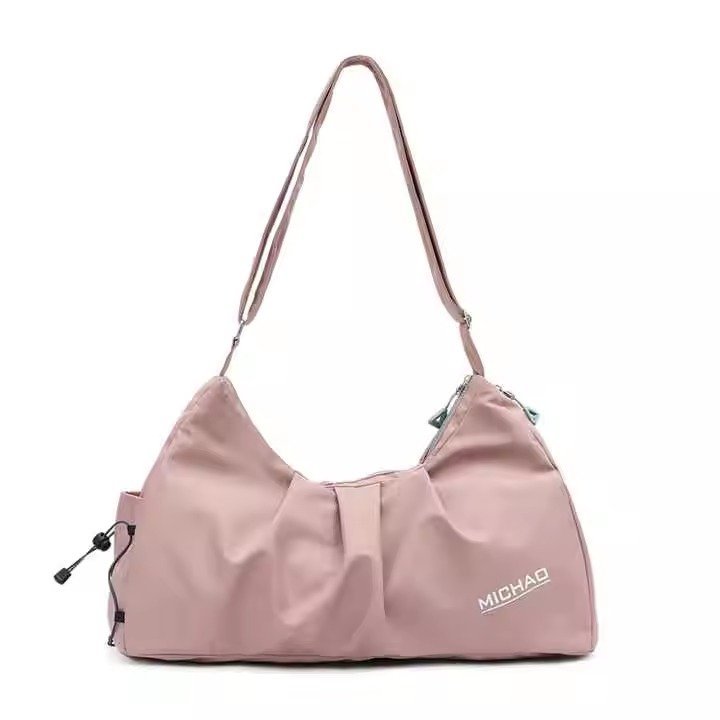
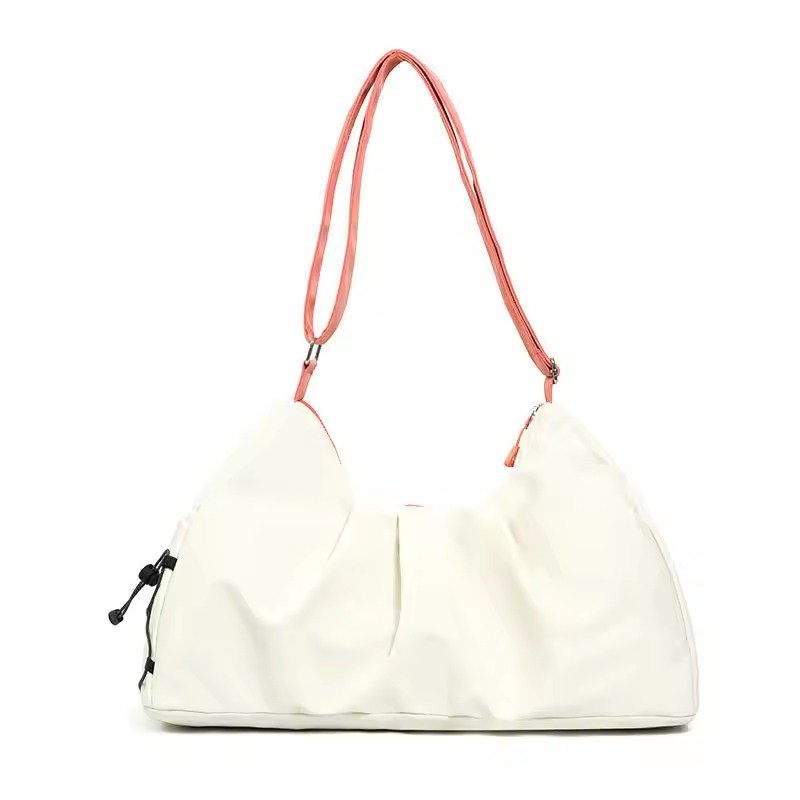
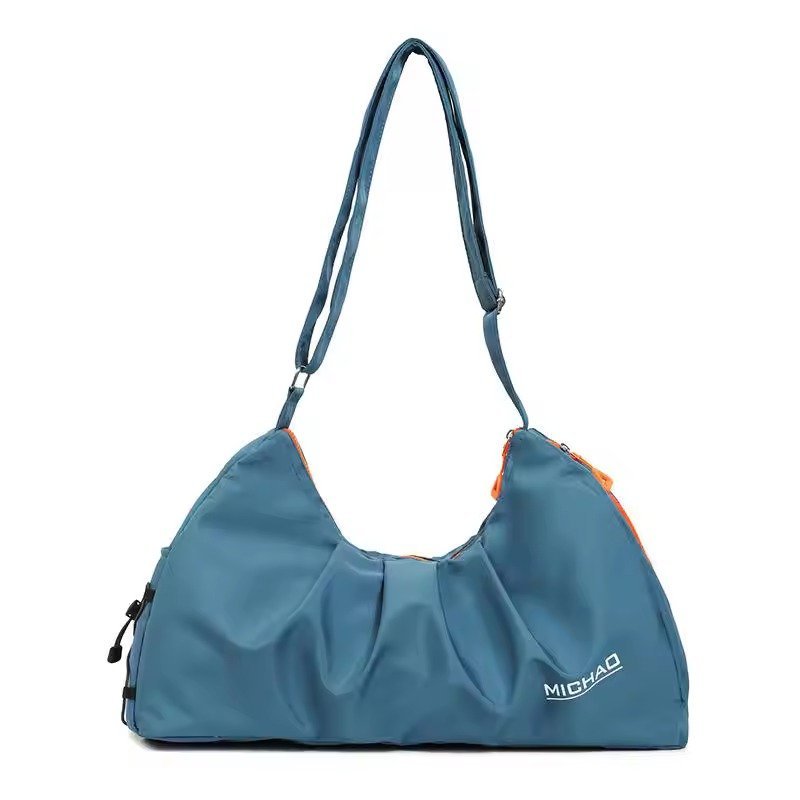
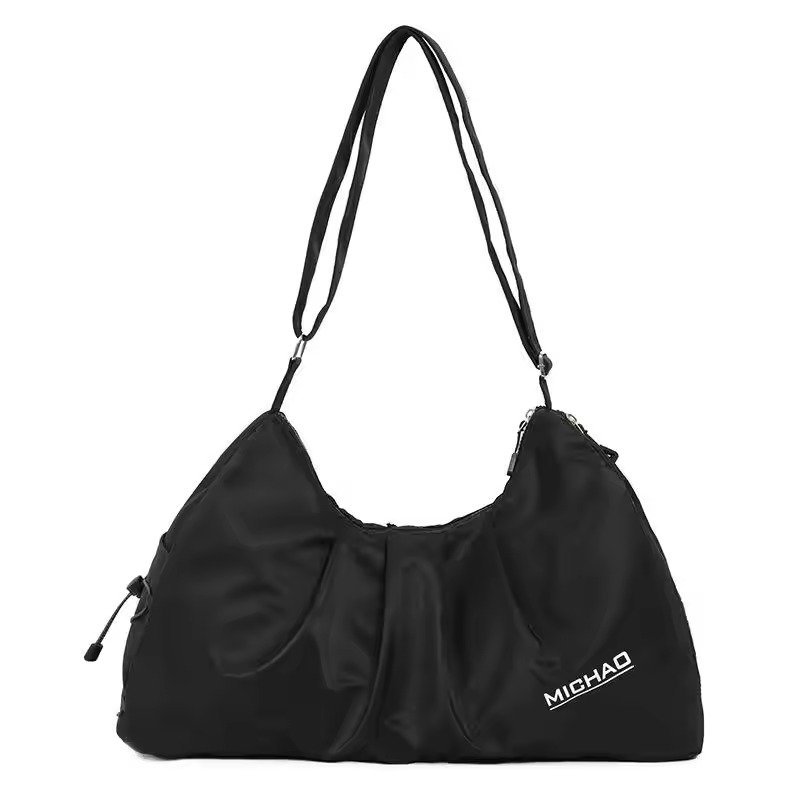




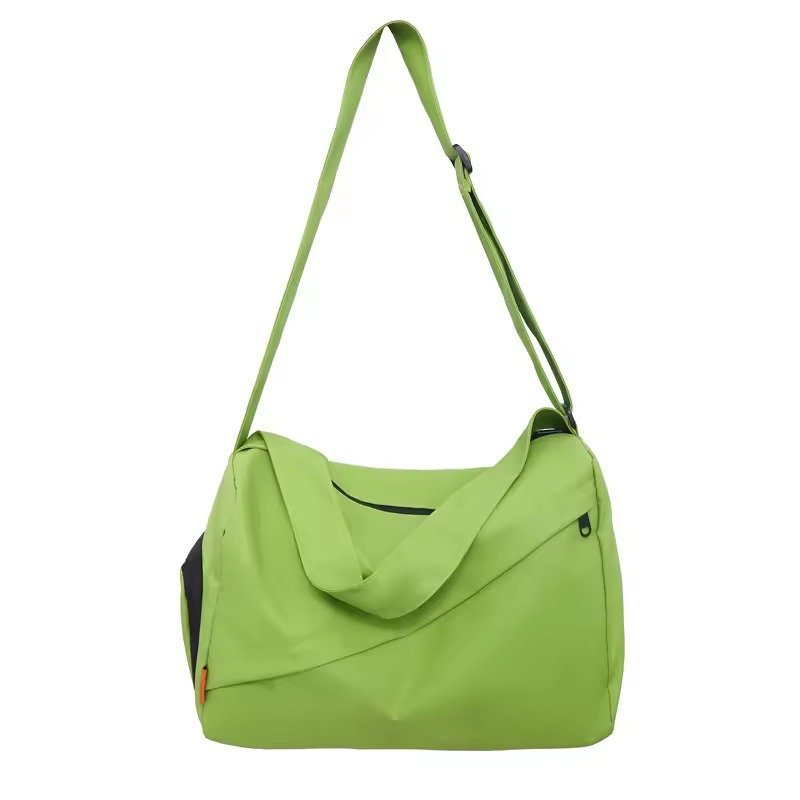
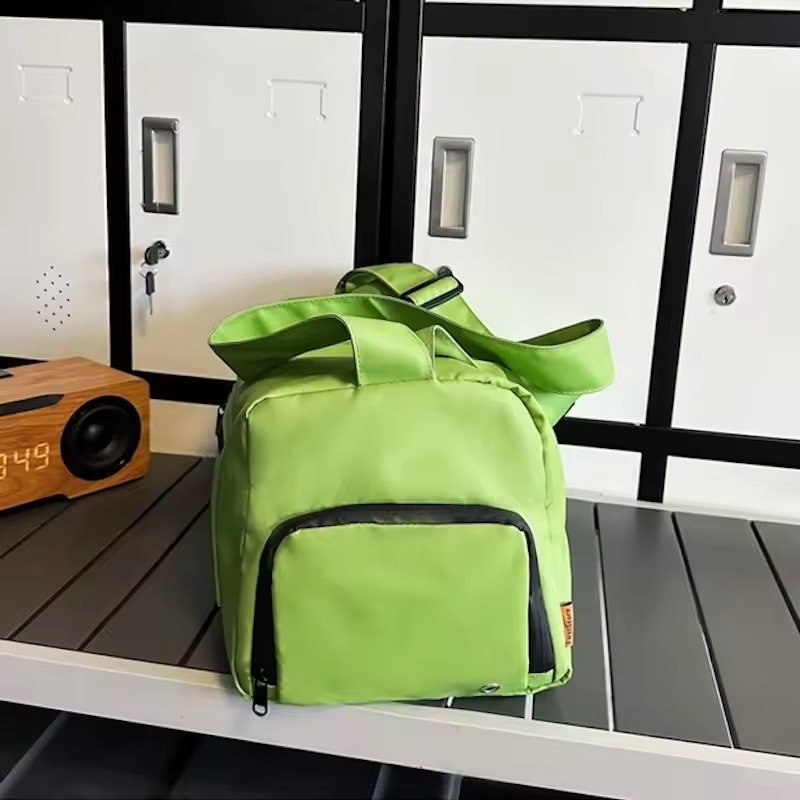
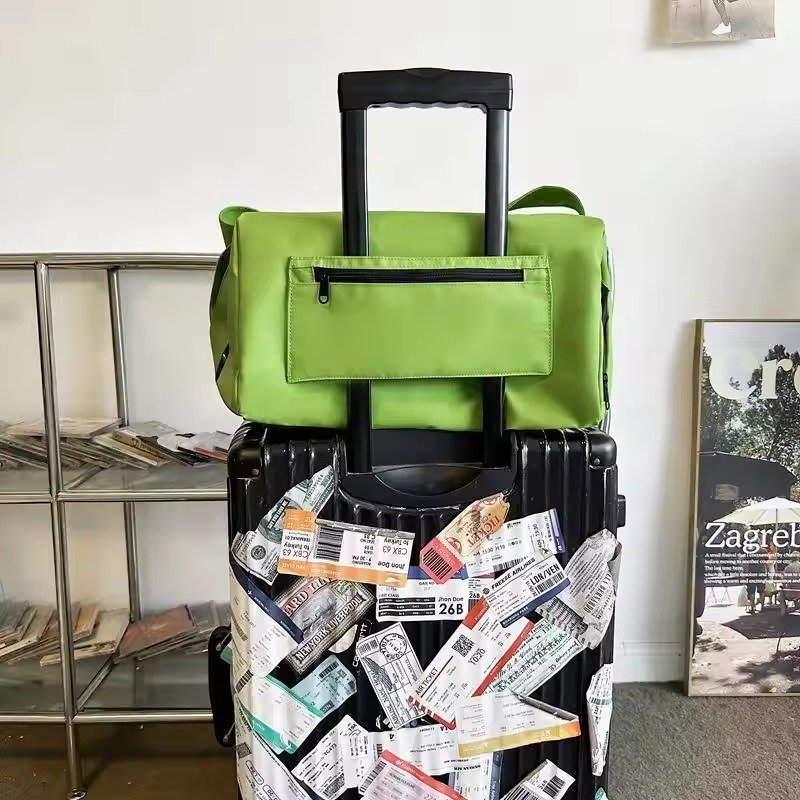
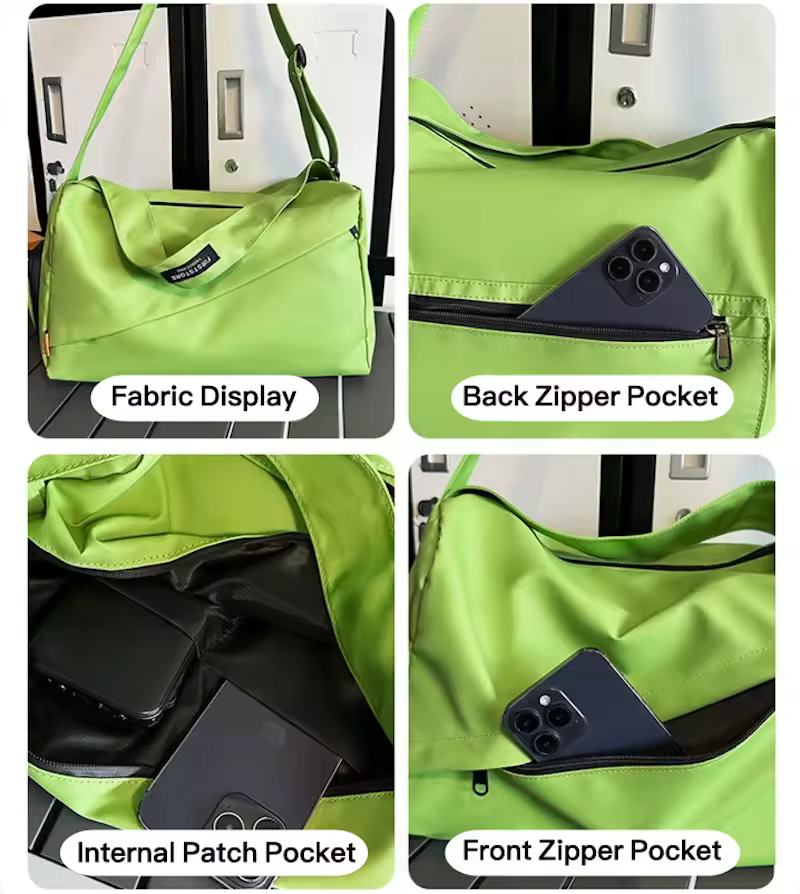
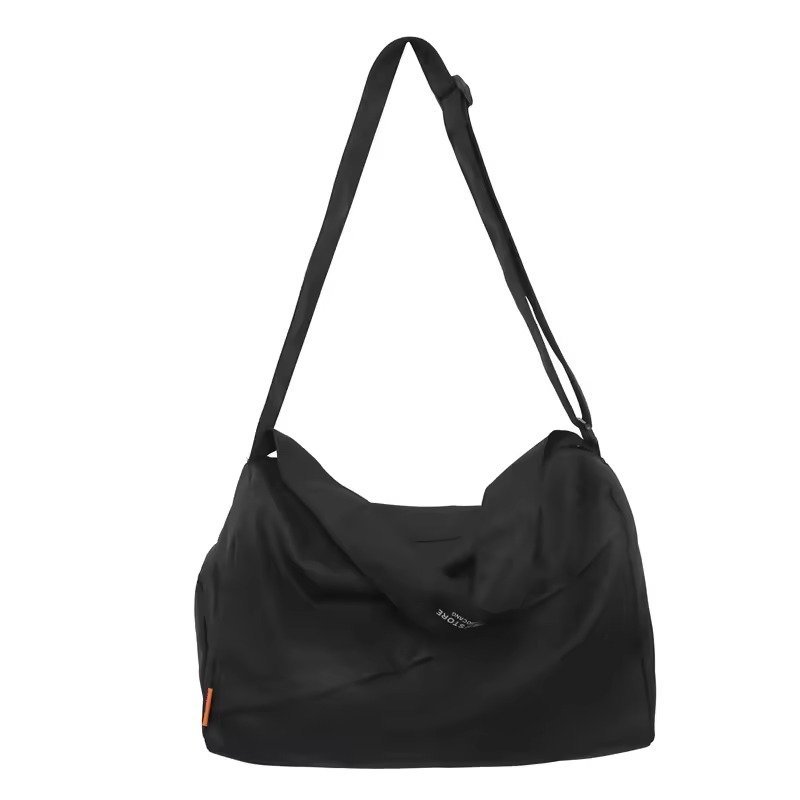
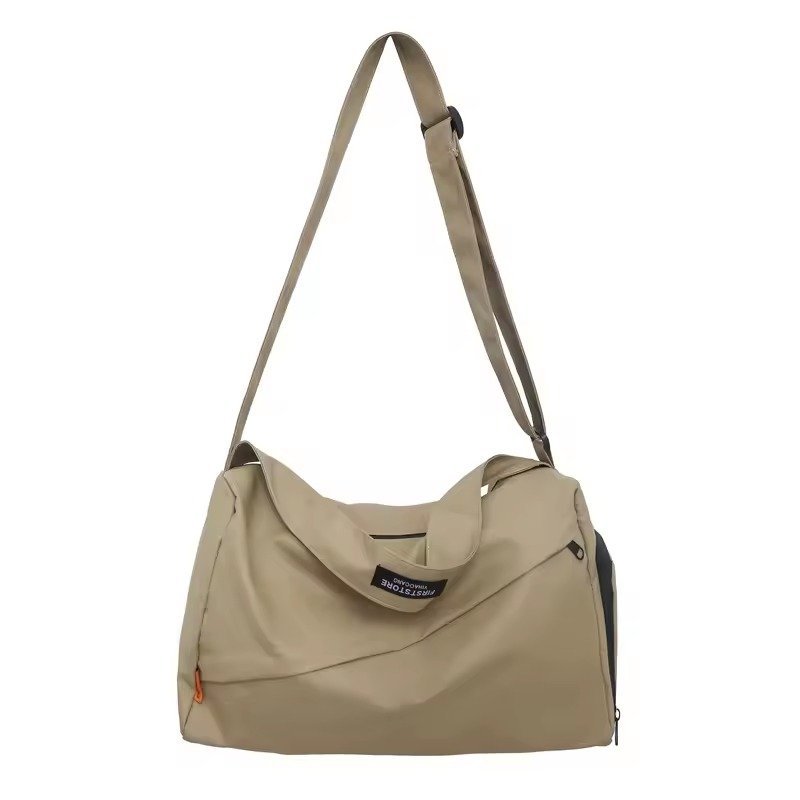


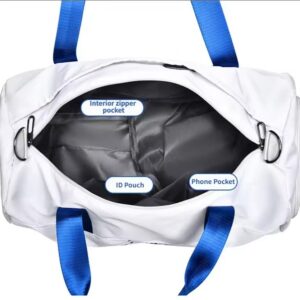

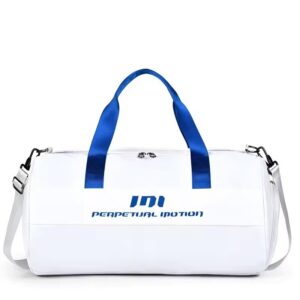
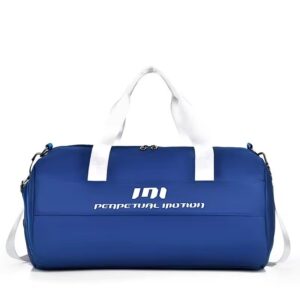


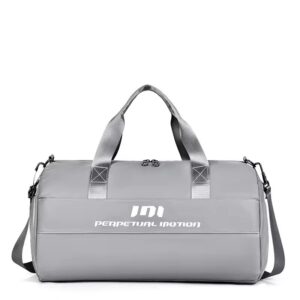
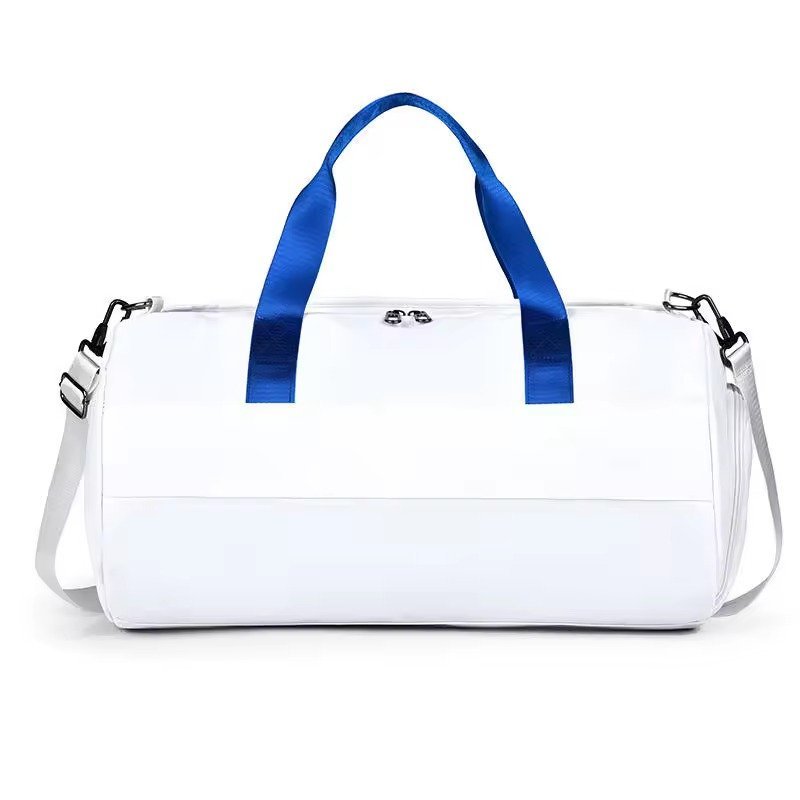
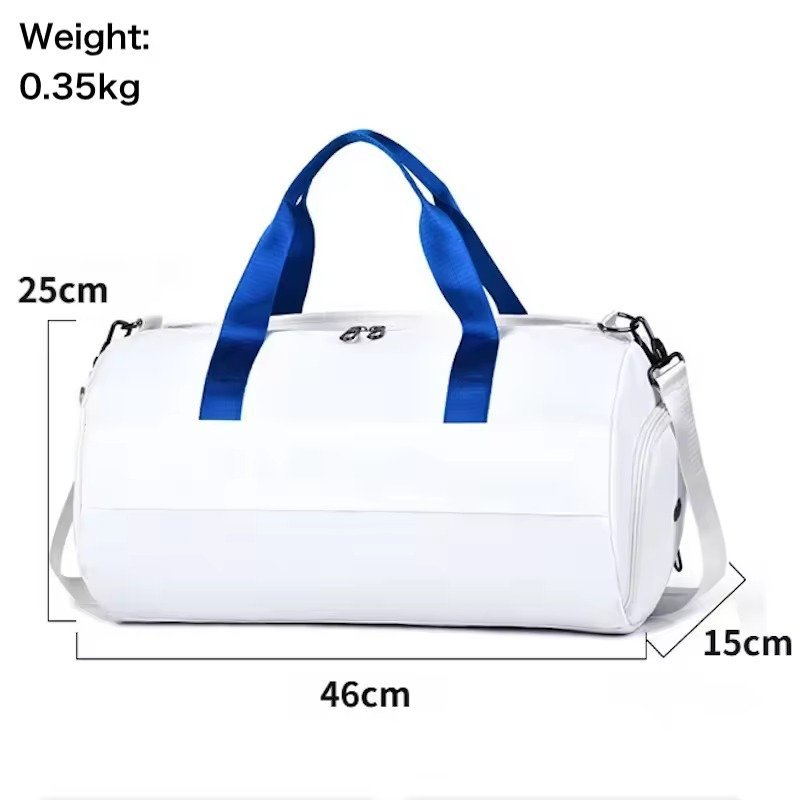
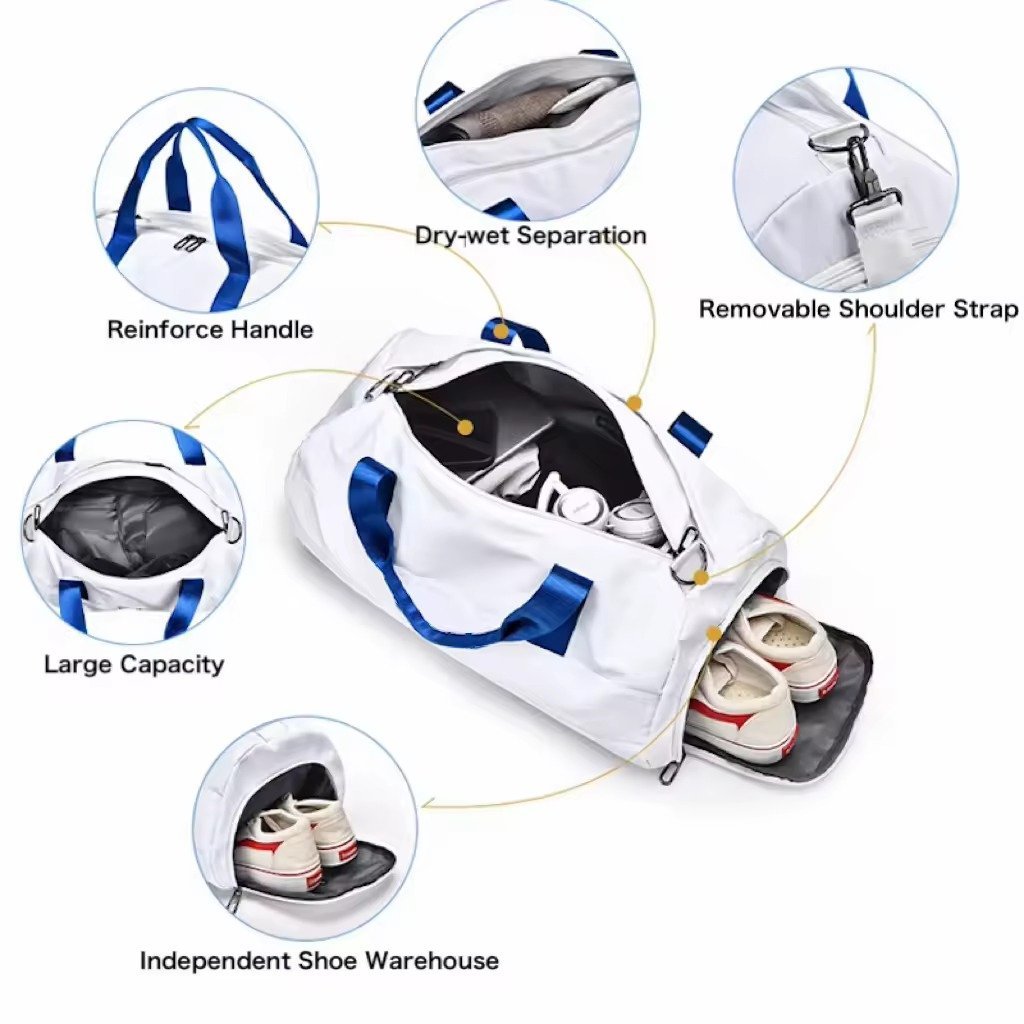
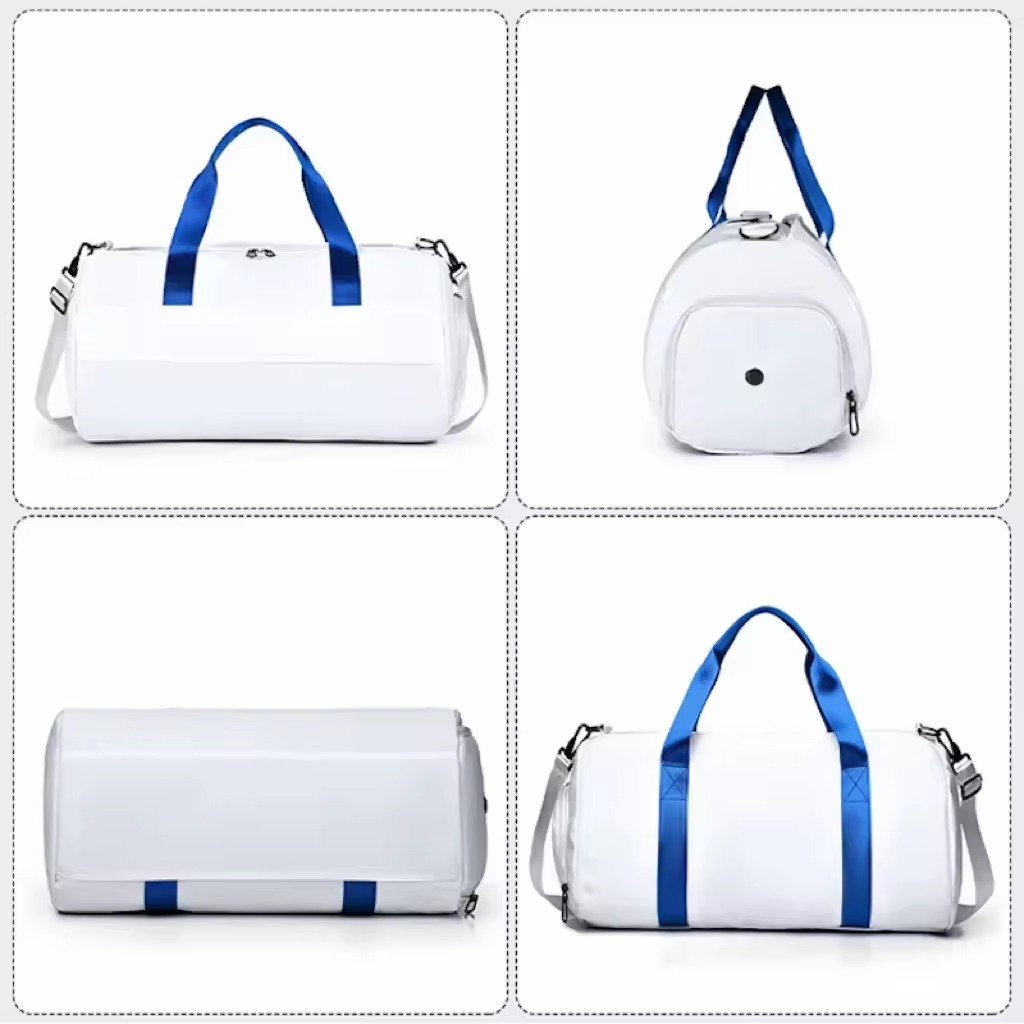
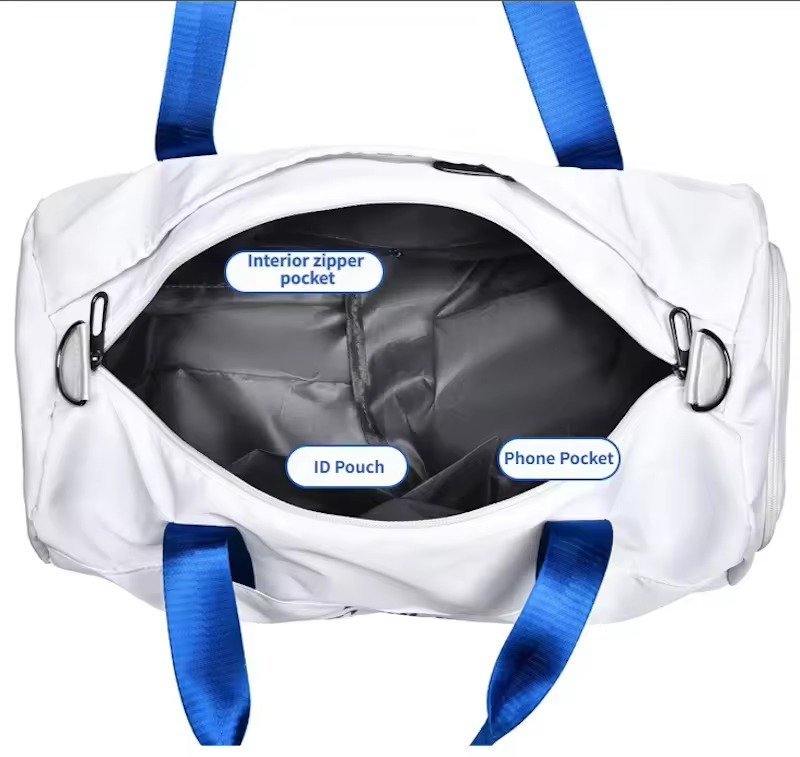
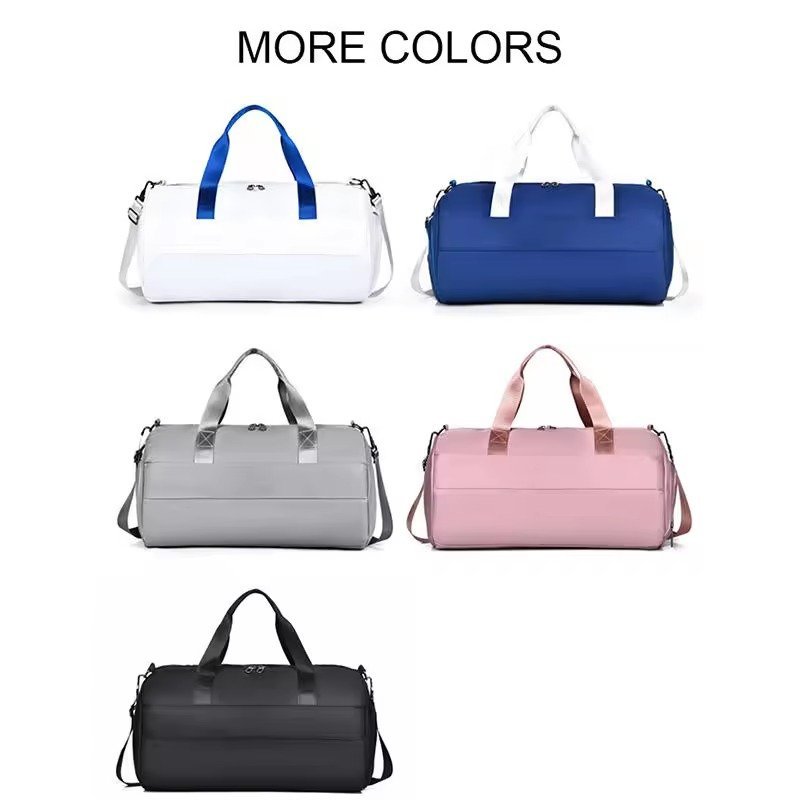
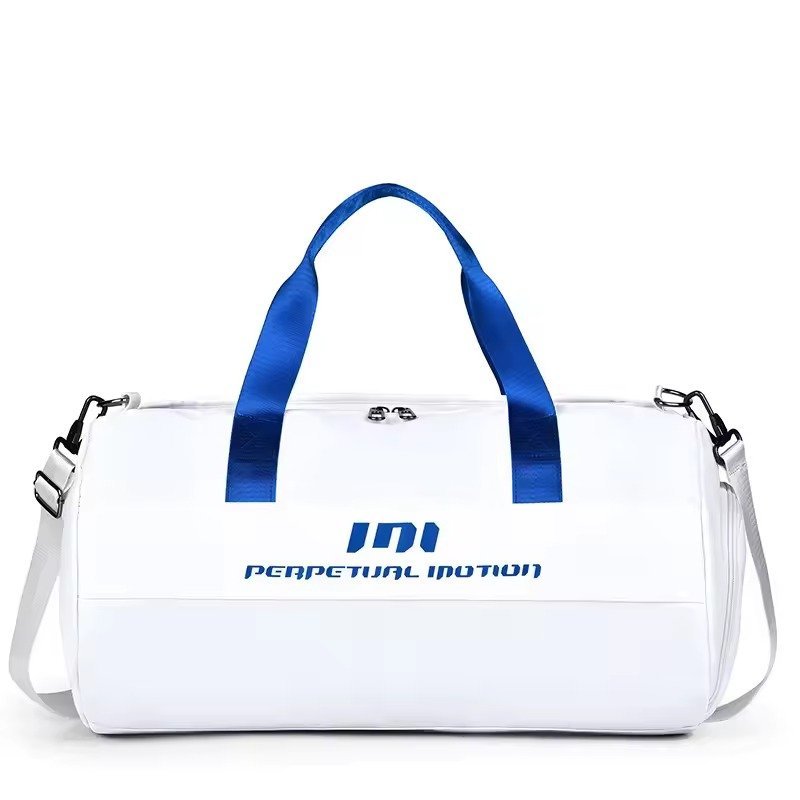

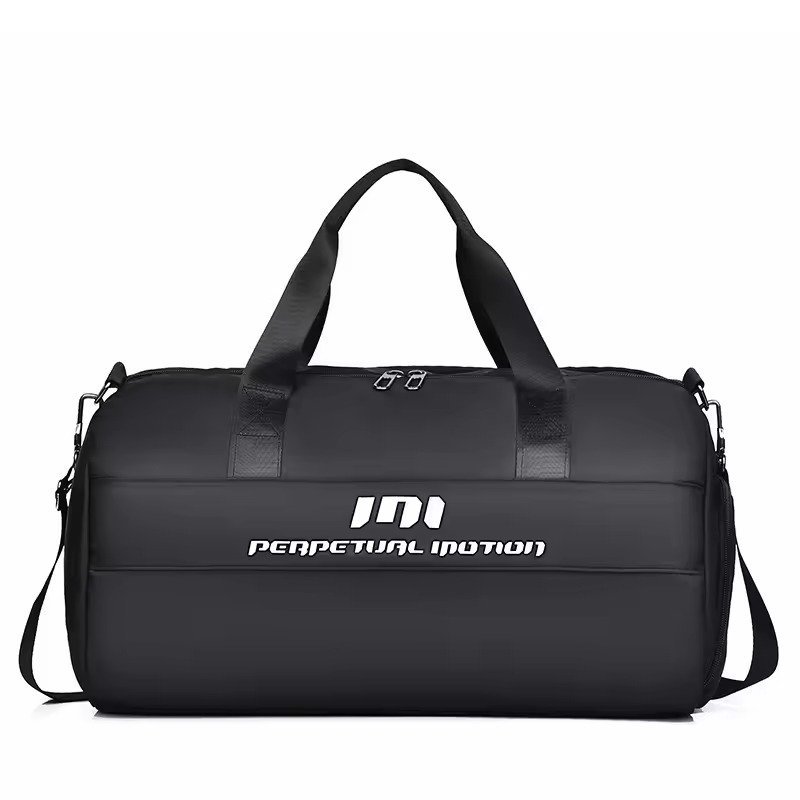
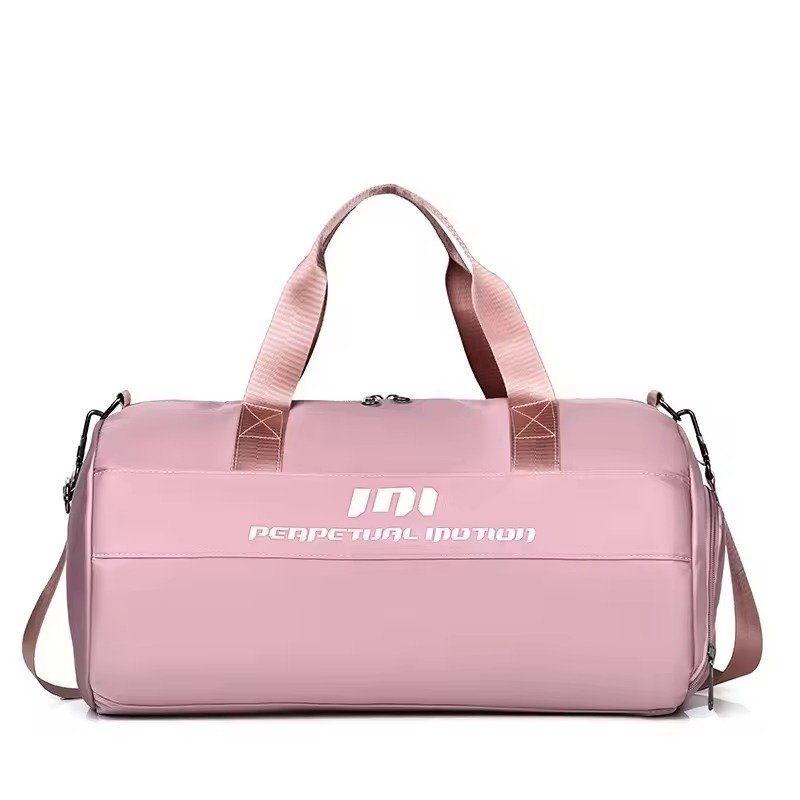
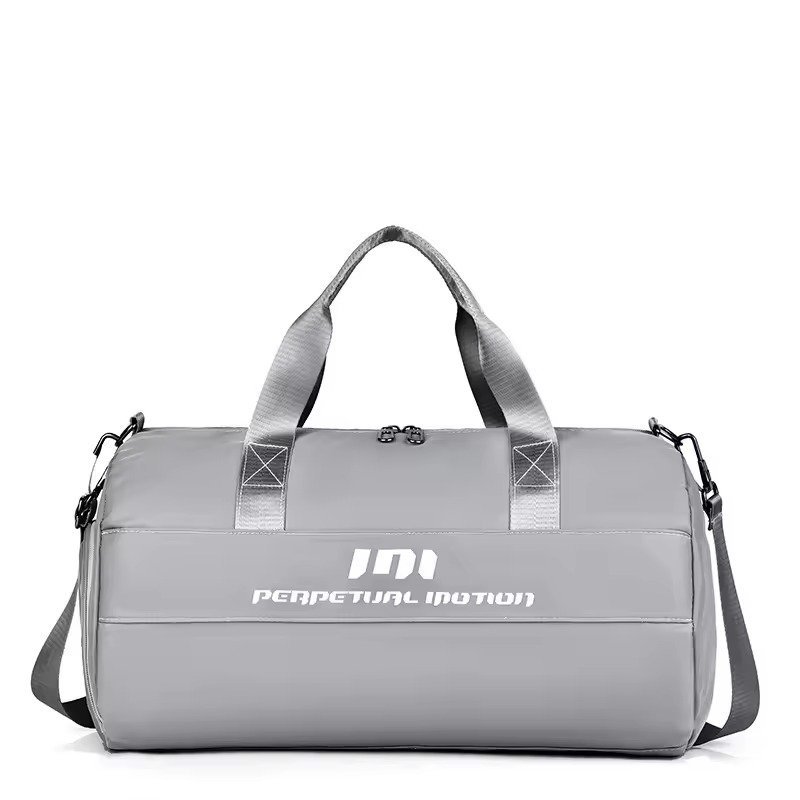
Browse the full gym bag range, or send us your packing list and target quantity and we’ll suggest the format and spec that fits.