

If you’re looking for a weekender bag manufacturer, the first thing to settle is which “weekender” you mean: a structured travel tote with a wide zip top, or a soft, barrel-shaped duffel. Most factories, including ours, make both — but they’re specified, priced and sold differently. This guide focuses on the weekender tote — not a flat canvas shopping tote, but a structured travel bag with a trolley sleeve on the back, a shoe or wet pocket inside, and enough structure to look good on a product page. In-stock styles start at 50 pieces with a heat-transfer logo; any other customization starts at 500.
What Is a Weekender Bag, and How Is It Different from a Duffel?
The two words get used interchangeably on marketplaces, which is exactly why buyers end up comparing the wrong quotes.
A duffel is the soft, cylindrical bag with one large main compartment. It squashes into a car boot, expands when you overpack it, and usually carries on a single shoulder strap. We cover duffel types, materials and MOQ in detail in our Duffel Bag Manufacturer Guide.
A weekender tote, by contrast, is built to hold its shape. Typical traits:
- A wide, flat-bottomed tote body with a long top zip, so the bag opens like a box instead of a tube
- Structure from a stiffer fabric, foam padding or a base board — it stands up on its own when empty
- More internal organization: a shoe or wet-item compartment, a laptop or document sleeve, zip pockets for small items
- Two carry modes: short handles for the hand or forearm, plus a detachable shoulder strap
- A trolley sleeve on the back panel so it rides on a rolling suitcase
And it’s worth saying what a weekender tote is not: it isn’t the flat, unlined canvas or cotton shopping tote you hand out at trade shows. Those are single-layer bags with no zip, no structure and no compartments — a different product, made by different suppliers, at a very different price point. Everything in this guide is about structured travel totes in coated Oxford, nylon, PU or neoprene.
Industry travel brands describe the weekender–duffel split the same way: the weekender is the more structured, compartment-heavy bag, while the duffel is the flexible, one-big-space option (BÉIS: weekender vs duffel).
Why this matters for sourcing: a structured tote uses more pattern pieces, more reinforcement and more internal panels than a duffel of the same volume. If one supplier quotes a “weekender” and another quotes a “weekender duffel,” you are not looking at like-for-like prices.
Who Buys Custom Weekender Bags?
Weekender totes tend to attract three kinds of buyers, and each one cares about something different.
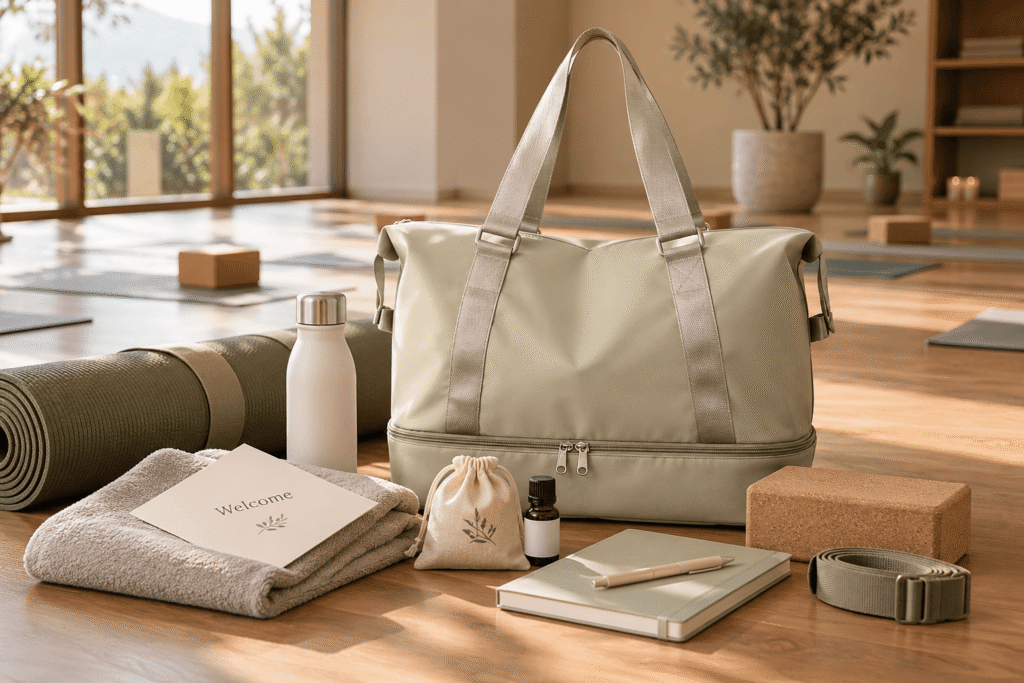
1. Travel and lifestyle brands, and Amazon/DTC sellers. They compete on listing photos and feature bullets, so they want a bag that looks full and tidy even when it’s empty, plus the features shoppers search for: trolley sleeve, shoe compartment, wet/dry pocket, laptop sleeve. Color matters more here than in any other segment — pinks, sage greens and creams sell alongside black.
2. Corporate gifting and event buyers. Think sales-incentive trips, conference speaker gifts and retreat welcome kits. Searches like “personalised travel bag” usually come from this group. Their priorities are logo placement, a neutral color that suits the whole team, and a firm delivery date. They rarely need custom patterns — an in-stock style with their logo is often enough.
3. Gym, yoga and active brands. Many weekender totes double as gym bags, and active brands use them as a “gym-to-weekend” line extension. If your bag is mainly for daily training rather than overnight trips, our gym bag manufacturer guide is the better starting point.
Which Weekender Features Actually Sell?
Feature bullets are cheap to write and expensive to get wrong. Here’s what each one actually involves, and what to check on a sample.
Trolley sleeve
A trolley sleeve is a panel on the back of the bag that slides over the extended handle of a rolling suitcase. The better version is a full pass-through — open at the top and bottom — so both handle bars sit inside it and the bag is held at two points rather than swinging on one strap (Maverick & Co. on trolley sleeves).
What to check on your sample: slide it onto a two-bar suitcase handle yourself. It should go on without forcing, and the bag shouldn’t tip sideways when you roll the case. A shallow strap sewn across the middle looks fine in photos but tends to slip — and customers notice.
Shoe or wet compartment
Usually a zipped bay at the base or one end of the bag, separated from the main space. Two details make the difference between “separated” and “actually useful”:
- Lining. A water-resistant lining keeps damp shoes or a wet swimsuit from soaking through; plain polyester only separates things, it doesn’t block moisture.
- Ventilation. Small vent holes or a mesh panel let trapped moisture escape, which reduces odor.
Both are commonly cited as what separates a good shoe compartment from a decorative one (The Wearify, gym bags with shoe compartments). Bear in mind the shoe bay takes space from the main compartment — a tote with a large shoe bay can feel smaller than its listed size.
Wet/dry pocket
A smaller, lined pocket inside the main compartment for toiletries or a damp towel. It’s one of the most-searched features in this category and costs relatively little to add, so it’s often a good place to spend.
Laptop or document sleeve
How big a laptop fits depends on the bag’s design — many weekender totes can be built to take a laptop of around 15.6″, but the sleeve size is set style by style. If you’re selling to business travelers, a padded sleeve against the back panel is worth it; for a beach or gym line, it’s usually dead weight.
Base and handles
The base is where weekender totes fail first, because a full bag concentrates weight there. A base board keeps the bottom flat; protective feet or reinforced corners stop the base wearing through. Handles should be stitched through a reinforcement patch, not just into the outer fabric — ask to see the inside of the handle anchor on your sample.

Which Materials Work for a Structured Weekender?
Most weekender totes we ship are Oxford polyester with a polyester lining — it’s relatively light (a basic Oxford weekender tote typically weighs around 0.4–0.5 kg; heavier fabrics, padding and extra features add to that), takes a water-resistant coating well, and comes in a wide range of stock colors. Beyond that:
| Material | Best for | Watch out for |
|---|---|---|
| Oxford polyester (coated) | Everyday travel and gym-to-weekend lines; widest color choice | Lighter deniers need padding or a base board to look structured |
| Nylon | Lighter, smoother, more premium hand-feel; works well for minimalist designs | Usually costs more than Oxford at a similar weight |
| PU leather / PU trim | Business-trip and fashion styles; PU handles and corners make an Oxford bag look more upmarket | Large PU panels add weight; quality varies widely between PU grades |
| Neoprene | Soft, stretchy, washable “carryall” styles popular with yoga and active brands | Noticeably more expensive than woven fabrics; holds less structure |
| Reflective or printed fabrics | Statement colorways and trend-led drops | Check availability before you design around a specific fabric |
If you’re comparing fabrics across categories, our backpack material guide explains denier and coatings in more depth — the same principles apply to totes.

What Are the MOQ and Price for Custom Weekender Bags?
MOQ:
- In-stock styles with a heat-transfer logo: from 50 pieces. You choose from our existing designs and colors, and we apply your logo.
- Any other change: from 500 pieces. Once you go beyond a heat-transfer logo — a different fabric or color, extra compartments, a trolley sleeve, new hardware, embroidery, or a new pattern — the order follows custom MOQ.
Price: For in-stock weekender and travel totes, most styles fall roughly between $2 and $8 per piece, with simple foldable totes at the low end and larger bags with shoe compartments, wet/dry separation or a trolley sleeve at the upper end. Neoprene and PU-leather styles sit higher, up to around $15. Logo cost depends on its size and placement, and is quoted together with your order.
Fully custom orders are quoted on your spec. The main cost drivers are:
- Structure — foam padding and base boards add material and labor
- Number of compartments — every separate bay is extra panels and zips
- Fabric — stock Oxford vs. a specific nylon, PU or neoprene
- Trim — PU or leather handles, corners and metal hardware
- Branding method — heat transfer, embroidery or a woven/PU patch (see our bag branding techniques guide)
Samples can be ready in as little as 3–5 days for stock-based styles; custom fabric or new patterns take longer. Bulk production for custom orders usually takes around 30 days after sample approval, give or take a week depending on fabric and order size.
OEM, ODM or Private Label?
The right route mostly depends on how many pieces you need and how different you want the bag to be.
- Private label (stock style + your logo), from 50 pieces — the fastest and lowest-risk way to test a weekender line or fill a gifting order. Details are on our Private Label & Wholesale page.
- ODM (modify one of our designs), from 500 pieces — keep a proven pattern and change fabric, color, compartments or trim. This is usually the sweet spot for growing brands.
- OEM (your design from scratch), from 500 pieces — for brands with their own tech pack or a distinctive silhouette.
Not sure which fits? Our OEM vs ODM guide breaks down the trade-offs.
What Should You Ask a Weekender Bag Manufacturer Before Sampling?
Before you approve a sample, get clear answers to these:
- Is the trolley sleeve a full pass-through, and what handle width does it fit?
- What lines the shoe compartment, and is it ventilated?
- How is the base reinforced — board, foam, feet, or nothing?
- Are the handles anchored through a reinforcement patch?
- Is the fabric in stock in my color, or does it need to be dyed or sourced?
- What’s the laptop sleeve size, measured inside, not the marketing number?
- What will change between the sample and bulk — fabric lot, zipper brand, logo method?
- How will the bags be packed so the structure isn’t crushed in transit?
Frequently Asked Questions
Is a weekender bag the same as a duffel bag? Not quite. Both are overnight bags, but a weekender tote is more structured, has a wider opening and more compartments, while a duffel is softer with one large main space. Some brands call a structured duffel a “weekender” too, so always check the photos and dimensions.
What’s the minimum order for custom weekender bags? From 50 pieces for in-stock styles with a heat-transfer logo. Any other customization — fabric, color, features, embroidery or a new design — starts at 500 pieces.
Can I add a trolley sleeve or shoe compartment to an existing style? Usually yes, as an ODM modification — but anything beyond a heat-transfer logo falls under the 500-piece custom MOQ rather than the 50-piece stock route.
Will a weekender tote fit under an airline seat? Some will, but weekender totes are not usually designed to a specific airline’s personal-item size. If under-seat compliance is the selling point, look at a purpose-built cabin bag instead — see our 40x30x20 cabin backpack guide.
How do I keep a structured weekender looking good in shipping? Ask for the bag to be packed with its shape supported (stuffing paper or a base board in place) rather than folded flat, and confirm carton dimensions before you approve the order.
Explore Our Weekender Tote Range
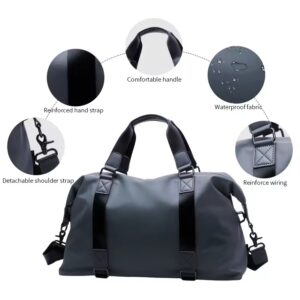
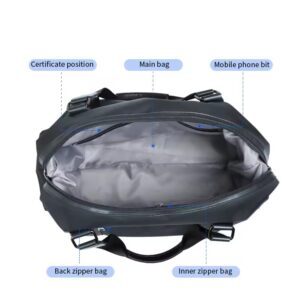


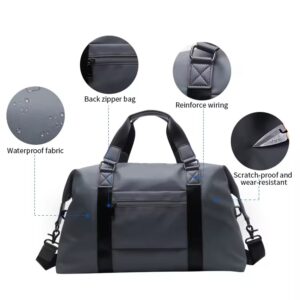


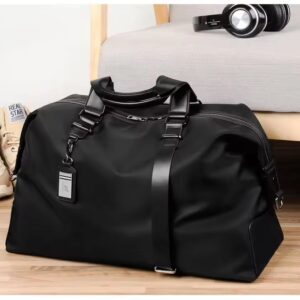

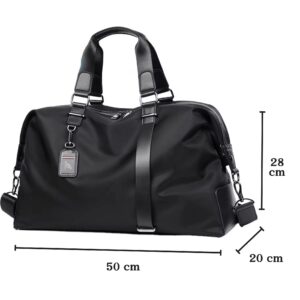


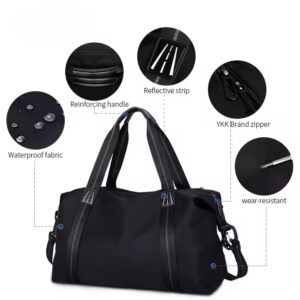


Browse the full weekender and travel tote collection, or send us your brief — tell us your target quantity, the features you need and your timeline, and we’ll suggest a stock style or a starting pattern.