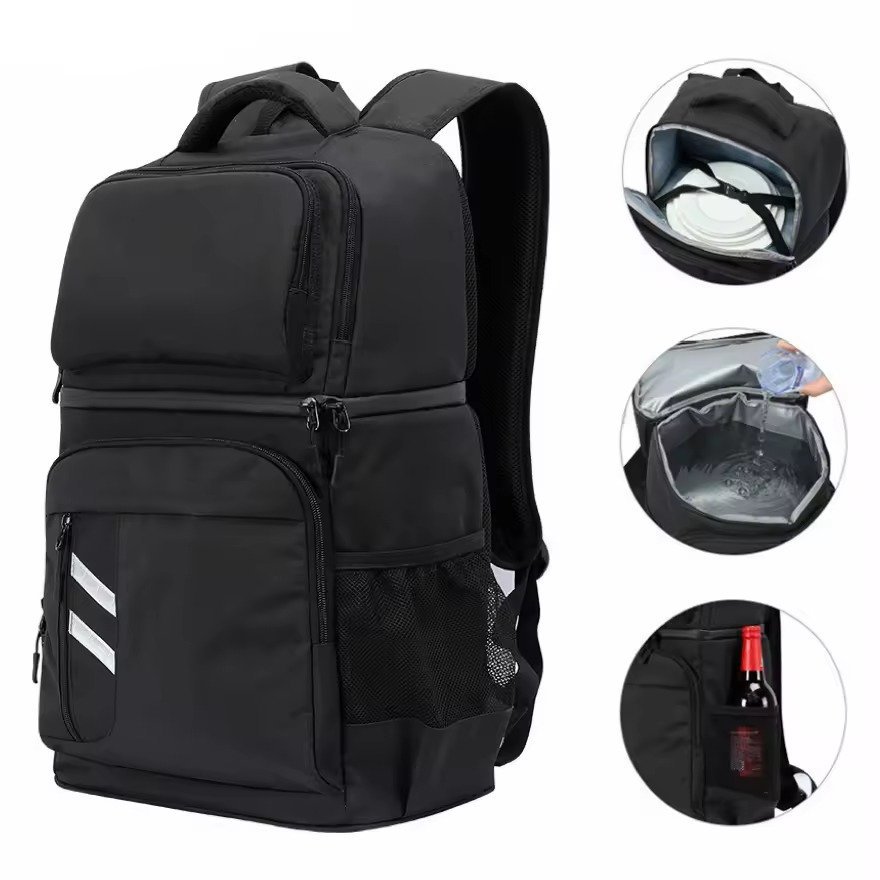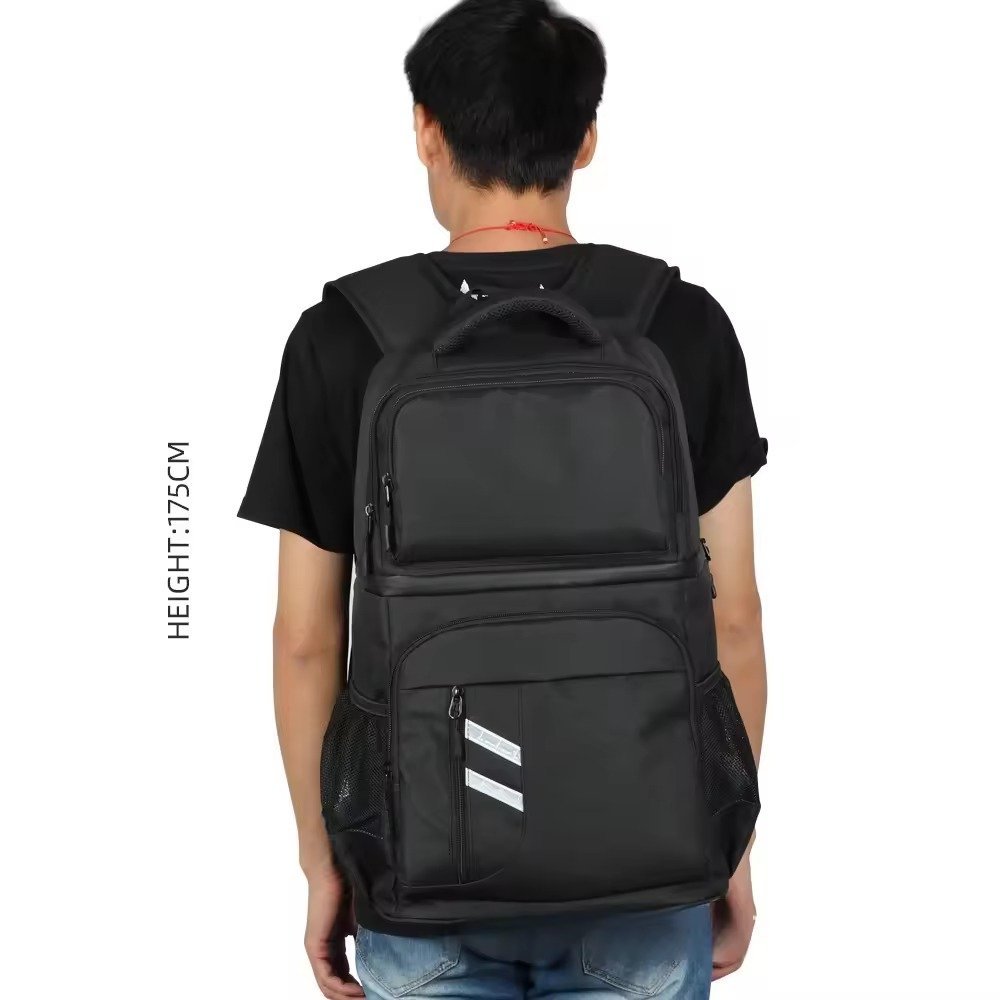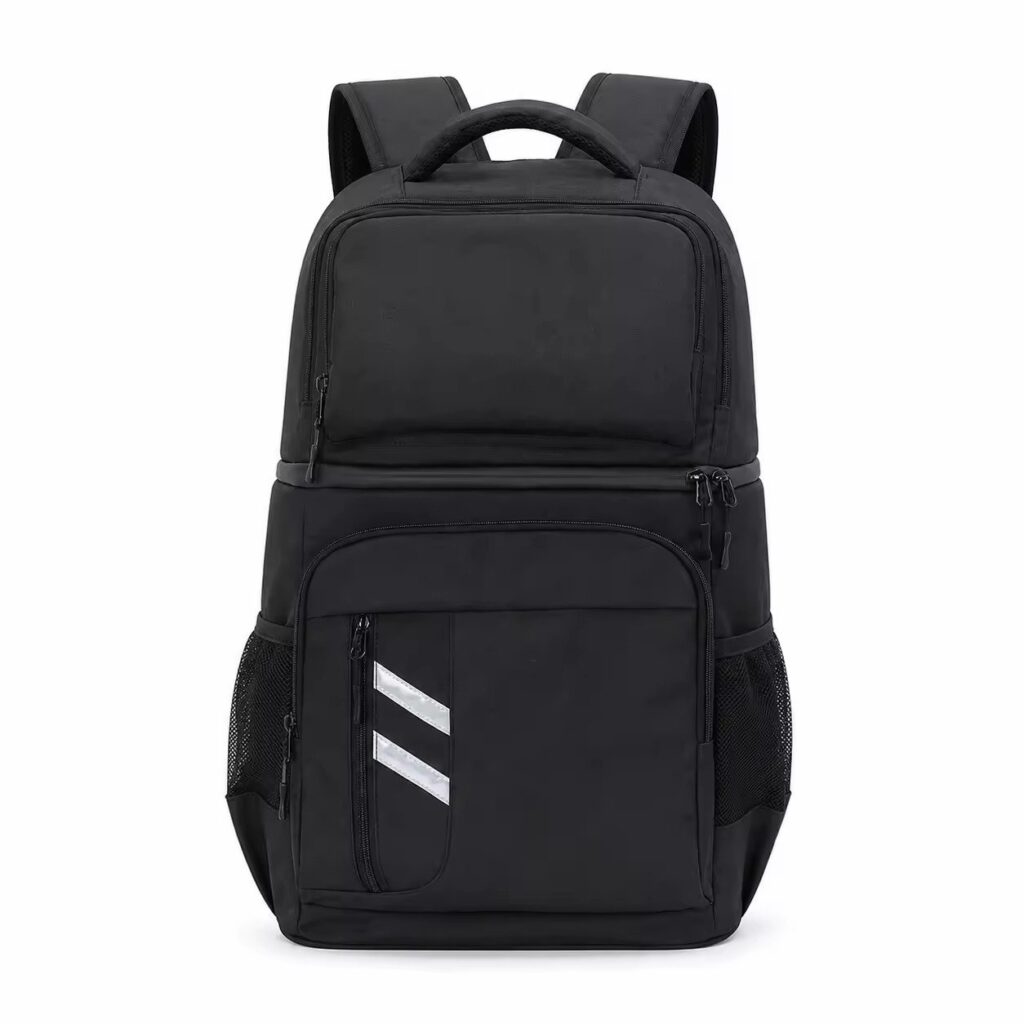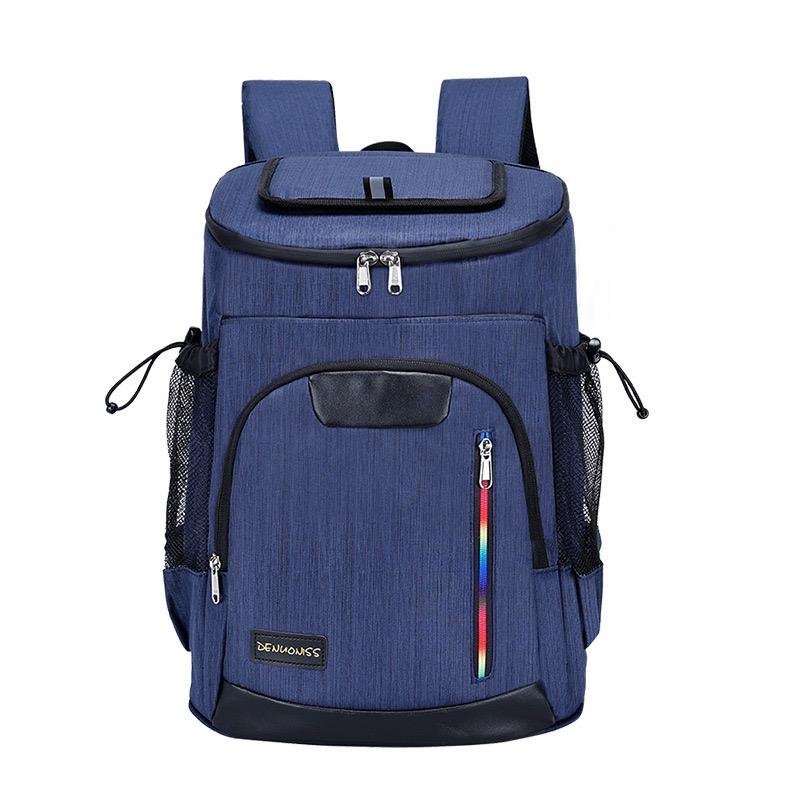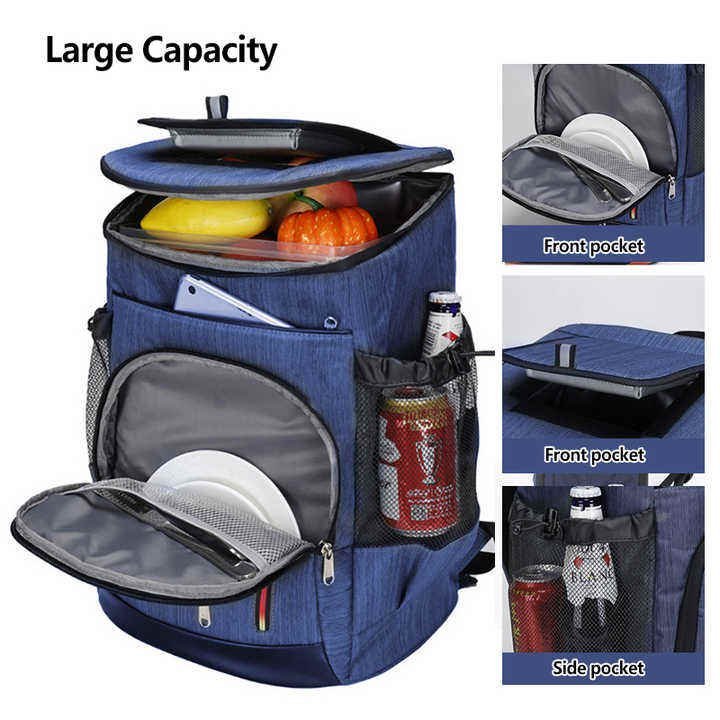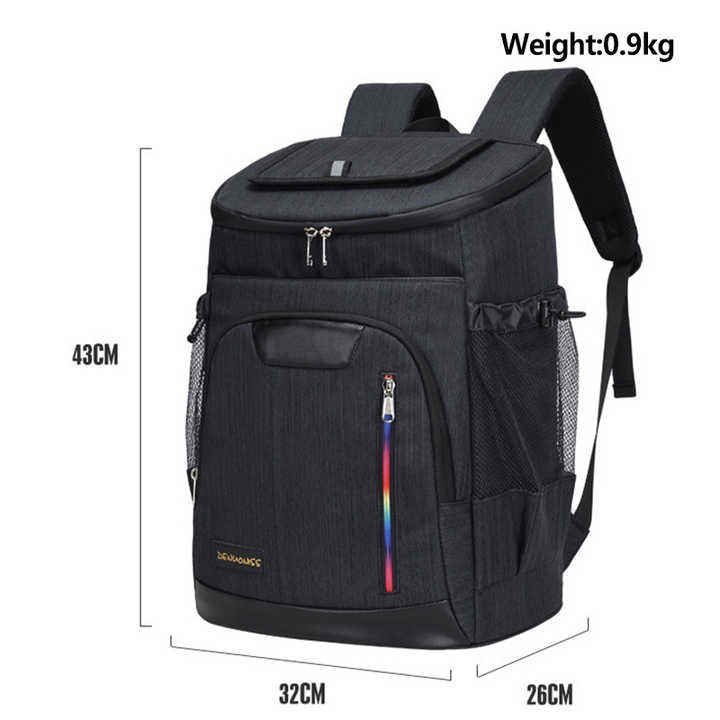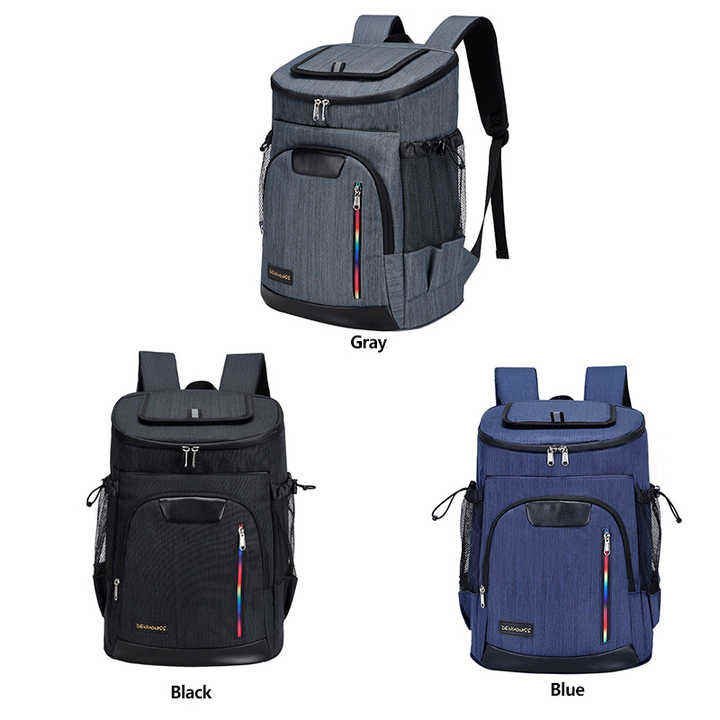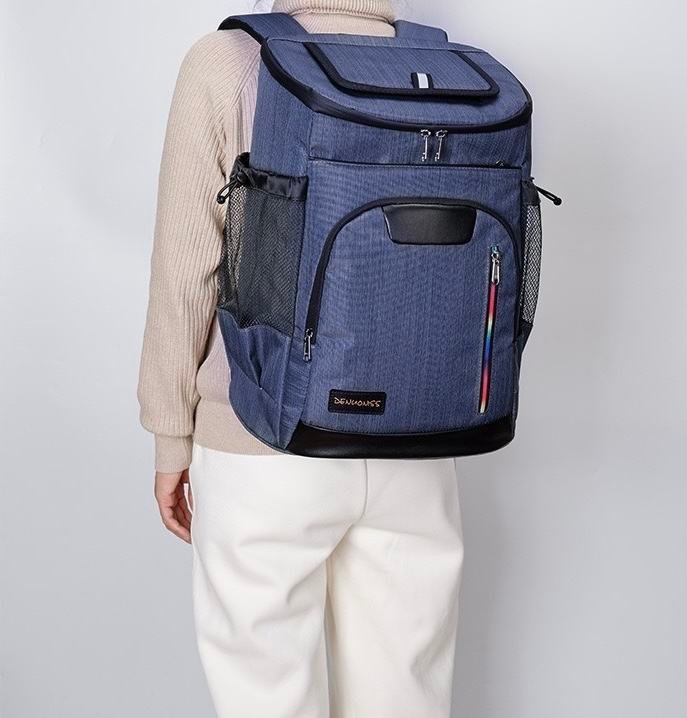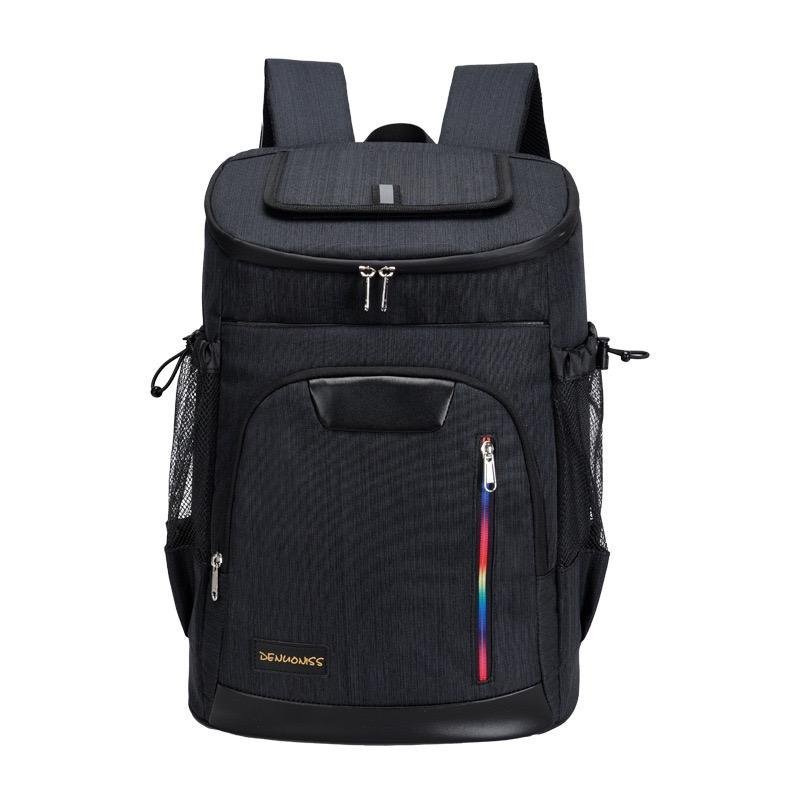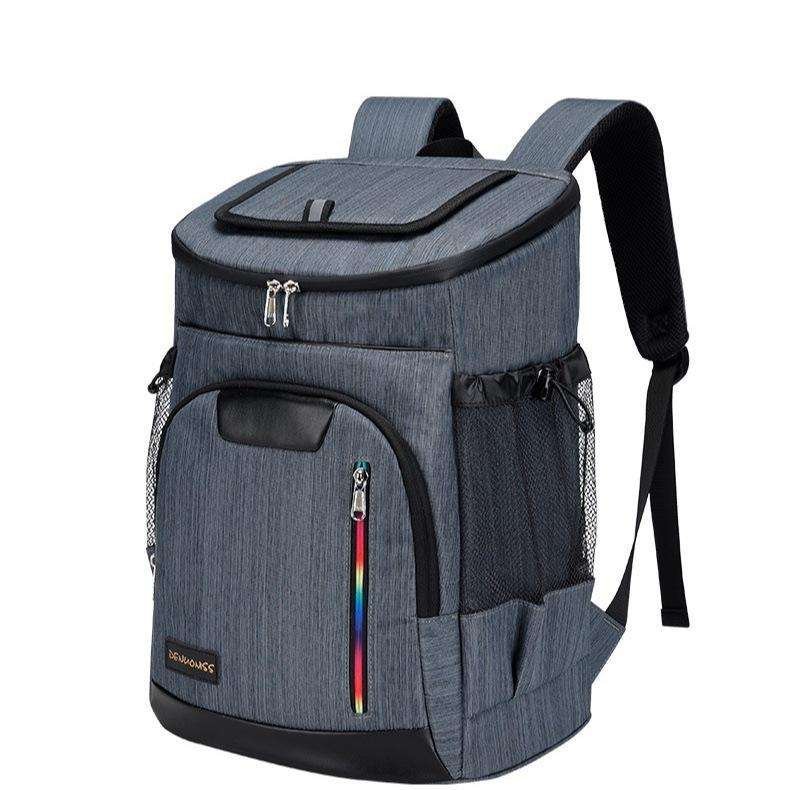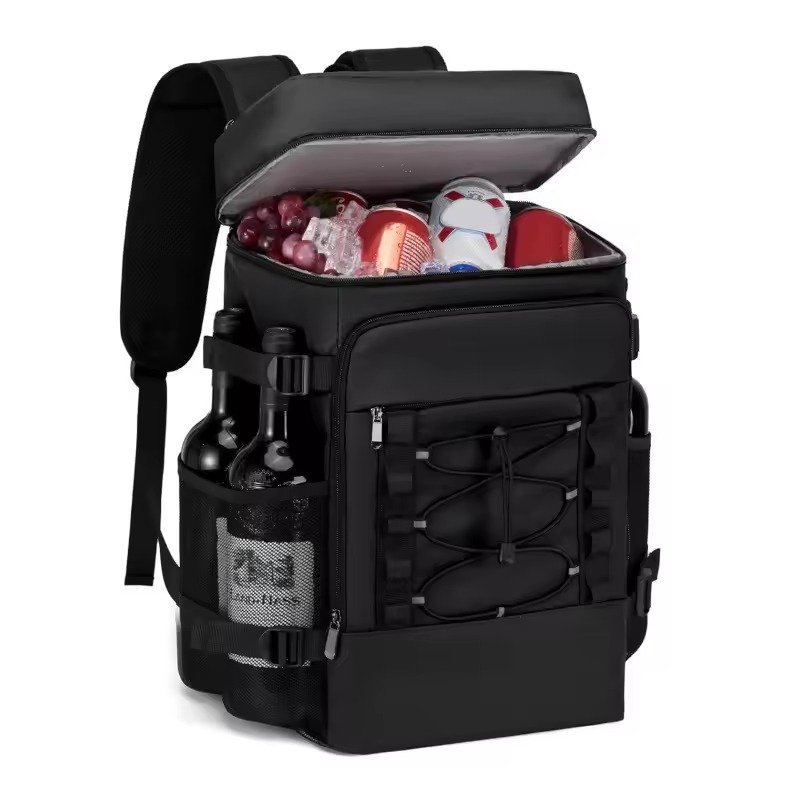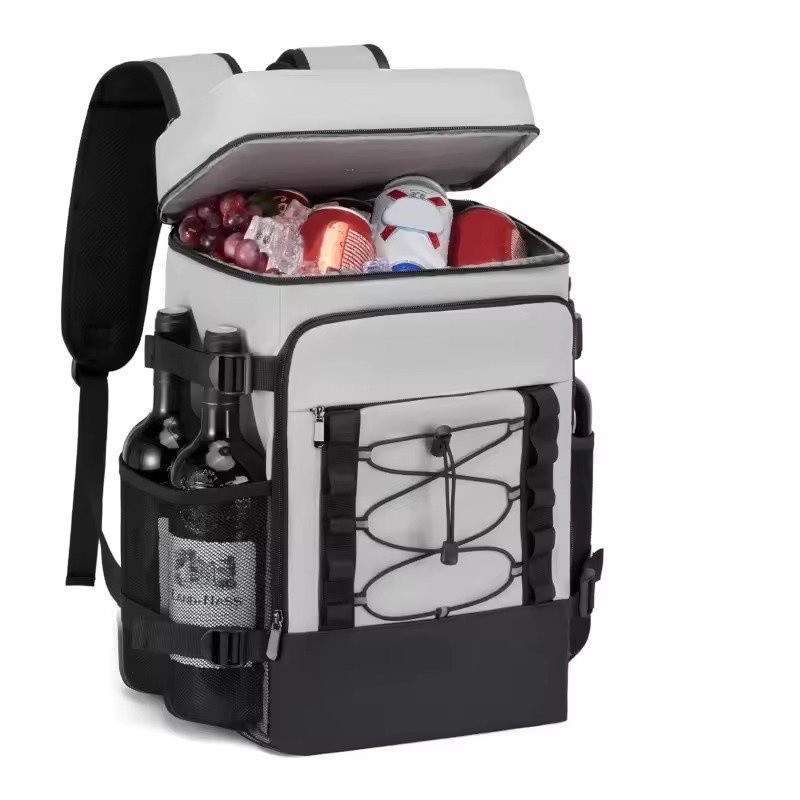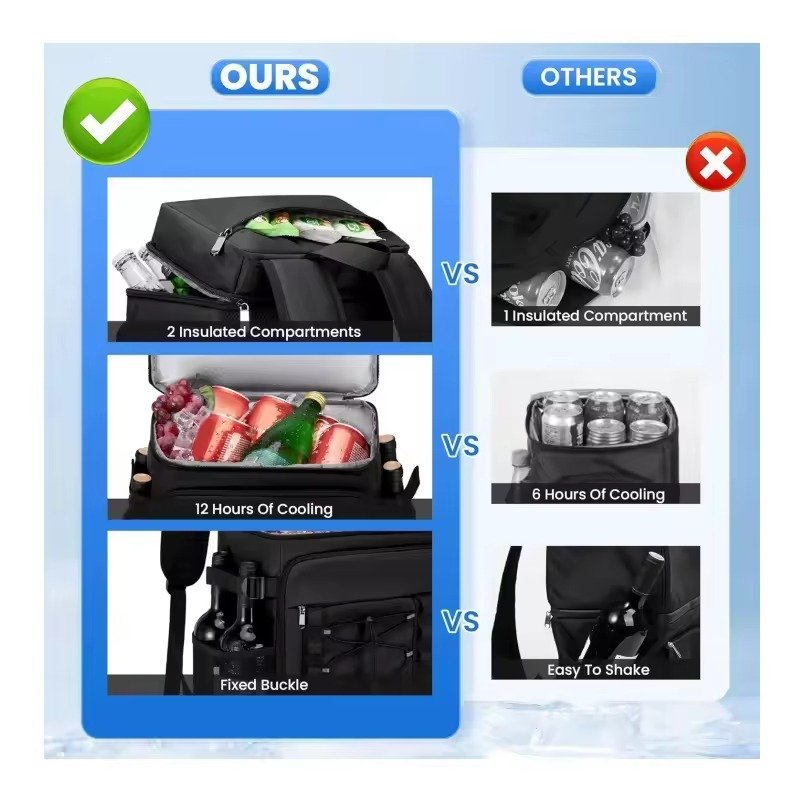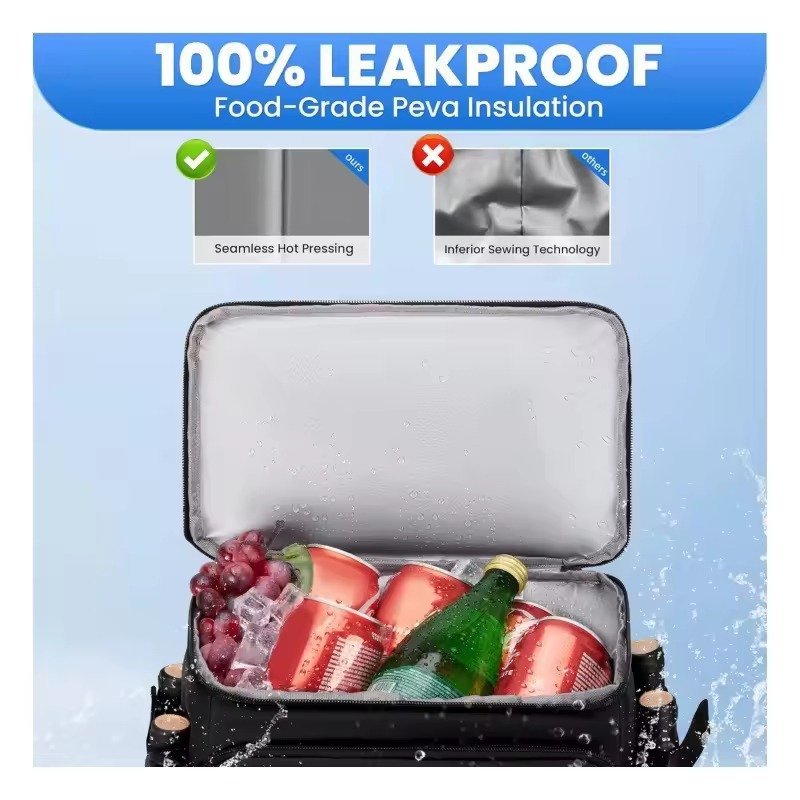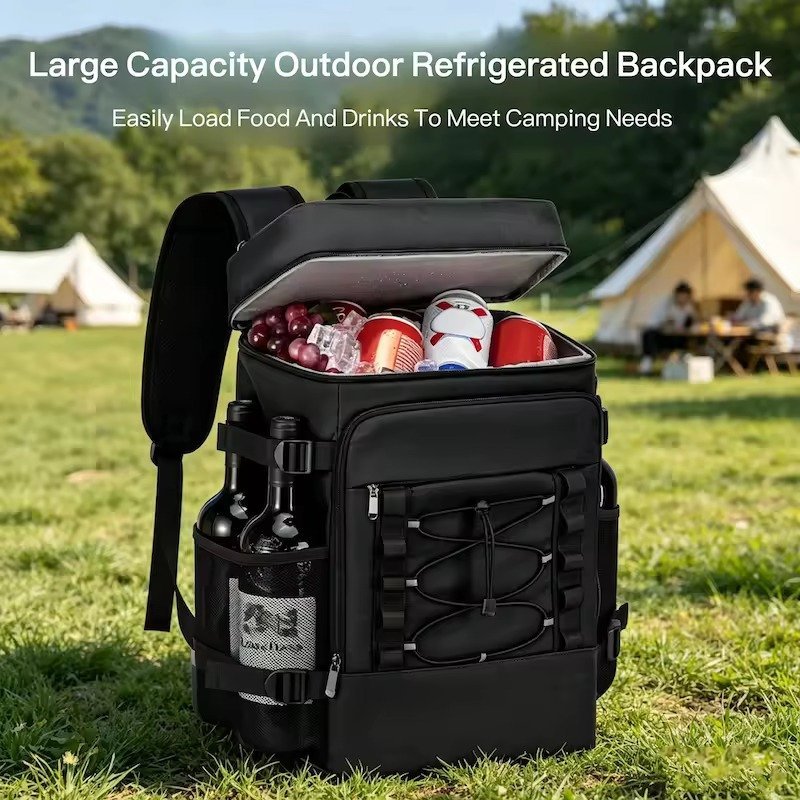

A picnic backpack is an insulated cooler backpack with the details a picnic actually needs: a dry section for plates and cutlery, a leakproof cold section for food and drinks, a holder that keeps a wine bottle upright, and a bottle opener within reach. As a picnic backpack manufacturer, Nice Bags builds these on our existing cooler backpack platforms, so the insulation and liners are already proven and the picnic details are what you specify.
This guide covers what makes a cooler backpack picnic-ready, how tableware and wine compartments are laid out, who buys these bags in bulk, and what MOQ and pricing look like.
Why Don’t We Sell Picnic Backpacks as “2-Person” or “4-Person” Sets?
We build the compartments around your tableware set, not the other way round. Most retail picnic backpacks come as a fixed 2-person or 4-person kit, which forces every brand into the same plates, the same cutlery and the same look.
For a B2B order, the set is usually part of the product idea. A winery may want two glasses and a corkscrew. A gift company may want four bamboo plates with its logo. An outdoor brand may want no tableware at all, just space for it.
So the person count is your call. You can:
- Supply your own tableware. Send us a sample set and we size the slots, straps and pockets to fit it.
- Ask us to source it with the bags. If you need plates, cutlery or cups, we can purchase them alongside the order so everything ships together.
- Leave it empty. Many buyers sell the backpack with organizer space only and let end users fill it.
Either way, tell us the set before sampling. A slot sized for a stainless steel knife will not hold a wooden one well, and that is cheaper to get right at the pattern stage than after bulk production.
Should a Picnic Backpack Have Separate Dry and Cold Sections?
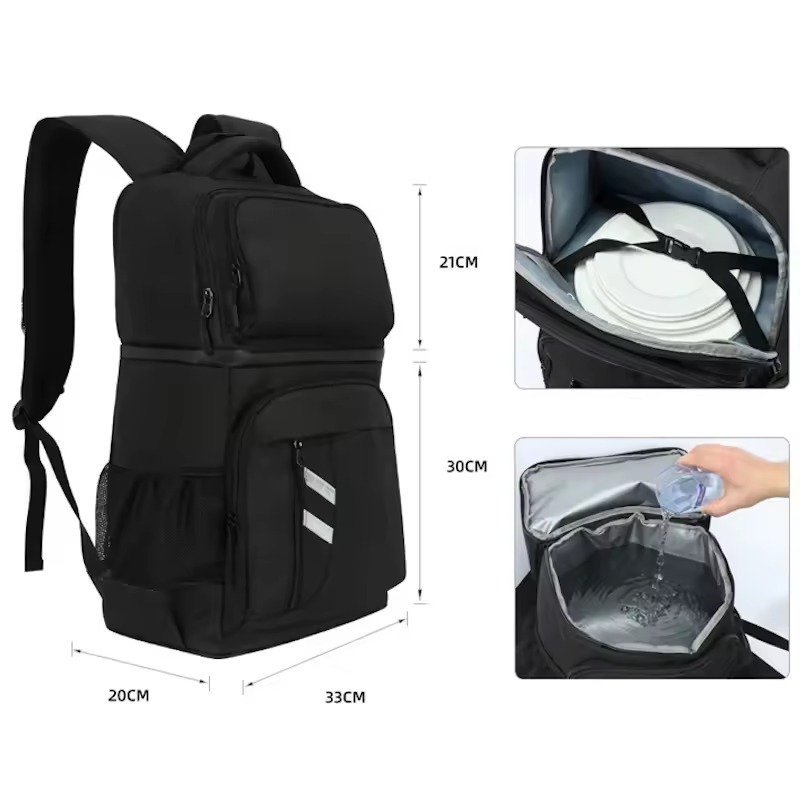
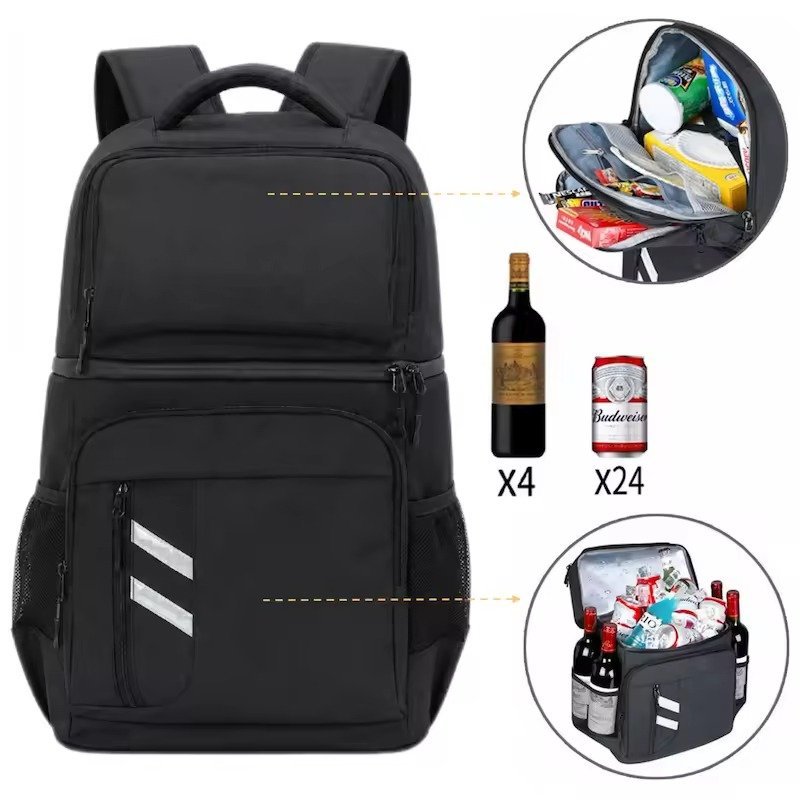
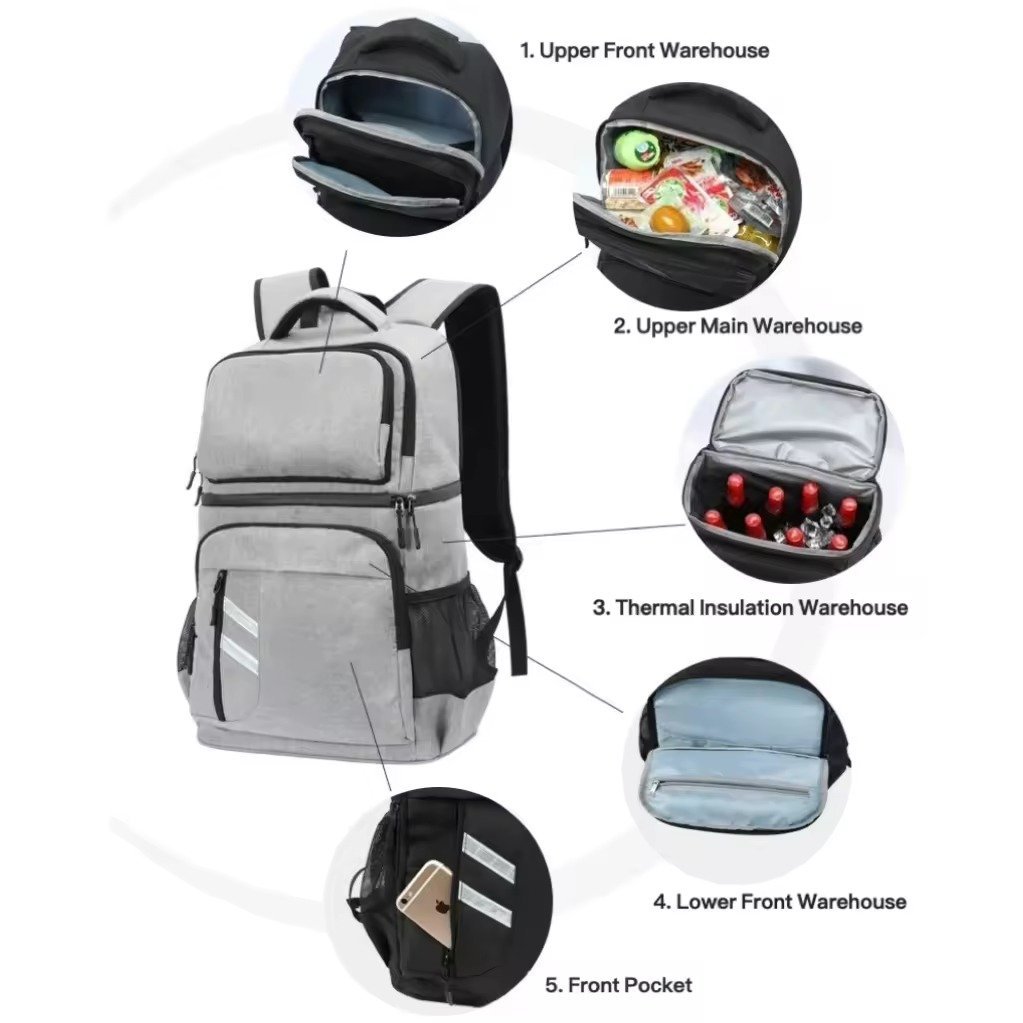
Yes, for most picnic use. A dual-deck layout keeps plates, napkins and snacks dry on top while ice, drinks and perishables sit in a sealed cold section below.
The two decks solve different problems:
| Section | What goes in it | How it is built |
|---|---|---|
| Upper dry deck | Plates, cutlery, napkins, bread, snacks | Unlined or lightly padded; interior straps or mesh dividers hold items in place |
| Lower cold deck | Ice packs, cans, bottles, cheese, fruit | Insulation foam plus a leakproof heat-pressed liner and sealed zippers |

Our 30L CLB-158 uses this layout: a dry upper section with interior straps, and a lower insulated section that holds up to 24 cans. The 25L FLB-012 follows the same idea in a smaller size, with organizer pockets in the top deck.
The trade-off is cold capacity. Every centimetre given to the dry deck comes out of the cold deck, so decide which matters more for your customers. Insulation thickness and liner choice are covered in our cooler backpack manufacturer guide, and how the liner stays leakproof is explained in the leakproof cooler bag guide.
Where Should the Tableware Go?
In a dedicated pocket outside the cold section, so cutlery never sits in melted ice and plates do not get crushed by cans. There are three common layouts, and each suits a different set:
| Layout | Best for | Example |
|---|---|---|
| Upper dry deck with interior straps | Full plates, larger sets, napkins | CLB-158 |
| Front zipped pocket with mesh dividers | Cutlery, small plates, utensils kept in order | CLB-186 |
| Front multi-slot organizer | Individual knives, forks, spoons, a corkscrew | FBB-25083 |

A few details decide whether the tableware pocket works in daily use:
- Slot size follows the set. Cutlery slots are sized to the handle you will use; plate pockets to the plate diameter plus a little clearance.
- Keep items from shifting. Elastic loops, a strap across plates or snug mesh stops rattling and protects the zipper.
- Wipe-clean lining. Food residue ends up in this pocket. A coated or easy-wipe lining is worth specifying.
- Access without unpacking. A front pocket lets users reach cutlery without opening the cold section and letting cold air out.
Many of our cooler backpacks already carry a pocket or extra layer with room for tableware, so a picnic version is often a small change to an existing pattern rather than a new design.
How Do You Carry Wine, Drinks and an Opener?
With a side wine holder that has a buckle, an opener fixed to the strap, and a way to reach drinks without opening the whole bag. These three details are what end users notice first.
Wine holder. A standard 750 ml wine bottle is about 30 cm tall and 7.5 cm across, while a standard champagne bottle is about 33 cm tall and 8.9 cm across (Dimensions.com). Size the side pocket for the bottle your customers actually carry. On ALBP-234, the side wine pocket has a buckle strap that holds the bottle upright, so it does not tip out when the backpack is set down or swung onto a shoulder.

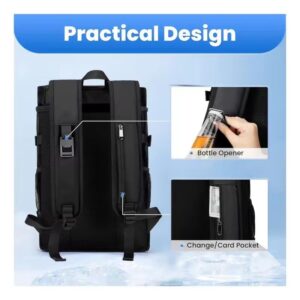
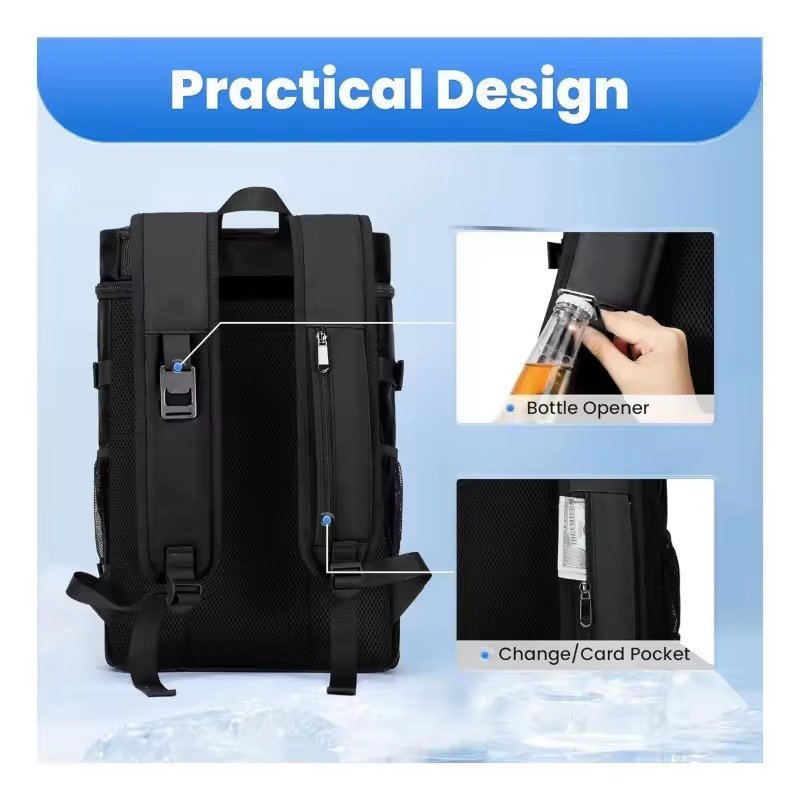
Bottle opener on the strap. CLB-158, FBB-25083, CLB-164 and FLB-012 all have an opener built into the shoulder strap. It costs little, and it is the detail people reach for at the picnic spot.
Quick-access top flap. CLB-186 has a hook-and-loop flap on top, so users can pull out a drink without unzipping the main cold section. Less opening means the ice lasts longer. For how long the cold actually holds, see how long cooler bags keep food cold.
How Comfortable Is a Full Picnic Backpack to Carry?
A loaded picnic backpack is heavier than a day pack, so the carry system matters as much as the cooler. Drinks, ice and a glass bottle add up quickly on a walk from the car park to the picnic spot.
What we usually build in, and what you can add:
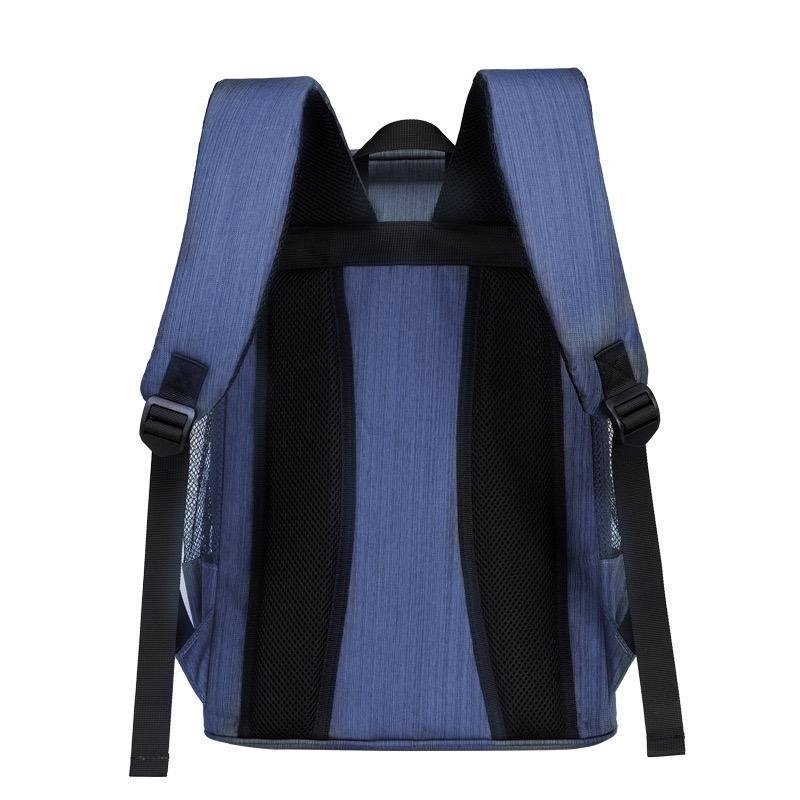
- Padded, breathable back and straps. Mesh back padding and padded shoulder straps are standard on our cooler backpacks.
- Blanket straps. Bungee cords on the front or top (as on CLB-164 and FLB-012) can hold a rolled picnic blanket. Dedicated blanket straps can be added on request.
- Trolley sleeve. FBB-25083 has a back strap that slides over a suitcase handle, useful for buyers selling into travel or beach trips.
- Small extras. Reflective strips for the walk back after dark, a phone pocket on the strap, and side mesh pockets for water bottles.
If your customers will walk long distances, ask about adding a chest strap or waist belt during sampling.
Who Buys Picnic Backpacks in Bulk, and What Do They Specify?
Picnic backpacks are bought as gifts, as branded merchandise, and as retail products. Each buyer type cares about different details:
| Buyer | Typical use | What they usually specify |
|---|---|---|
| Corporate gift and promotional companies | Client gifts, staff rewards, event giveaways | Logo placement, gift packaging, often a sourced tableware set |
| Wineries and wine brands | Tasting-room merchandise, wine club gifts | A secure wine holder, glasses and corkscrew slots, premium fabric |
| Outdoor and camping brands | Retail range alongside coolers and hiking packs | Water-resistant fabric, blanket straps, rugged hardware |
| Amazon and DTC sellers | Seasonal spring and summer listings | Competitive cost, distinctive colour or print, retail packaging |
Whichever group you are in, a useful RFQ covers six points:
- Capacity and layout. Total litres, and whether you want a dry deck plus a cold deck.
- Tableware. Your own set, a set we source, or empty organizer space.
- Wine and drinks. Bottle type for the side holder, and whether you want an opener or a top flap.
- Materials. Outer fabric and liner type (PEVA for standard builds, TPU for premium leakproof builds).
- Branding. Logo method and placement. See our bag branding techniques guide.
- Packaging. Polybag, printed gift box, or retail-ready packaging with barcode labels.
What Are the MOQ and Price for a Custom Picnic Backpack?
In-stock cooler backpacks start from 50 pcs, including a heat-transfer logo. Custom picnic backpacks usually start from 300 pcs. Because our picnic versions are built on existing cooler backpack patterns, a small change such as adding a cutlery pocket or a wine holder is usually quicker to sample than a new design.
As a market reference, cooler backpacks fall into three rough price bands (EXW, near MOQ):
| Build | Typical price range |
|---|---|
| Standard fabric with PEVA liner | US$3–8 |
| Upgraded fabric, thicker insulation, more pockets | US$8–13 |
| TPU welded leakproof body | US$25–50 |
Picnic details add to these bands. A tableware organizer, a buckled wine holder, a top flap or blanket straps each add material and sewing time. A tableware set we source for you is quoted separately from the bag.
The fastest way to a firm price is to send your target capacity, layout and tableware set to our team through the contact page.
FAQ
Is a picnic backpack the same as a cooler backpack? It is a cooler backpack with picnic-specific details: a dry deck or pocket for tableware, a wine holder, an opener and often blanket straps. The insulation and liner are the same as on our standard cooler backpacks.
Do you include plates and cutlery? Not by default. Most buyers supply their own set or choose no set. If you need one, we can source it alongside the bags and pack it in.
Can you make a 2-person or 4-person version? Yes. The number of settings is up to you. We size the compartments to the set you choose.
Will the wine bottle stay cold? A bottle in an outside side holder is protected but not insulated. If the wine must stay cold, specify an insulated bottle sleeve or place the bottle inside the cold deck.
Can I put my logo on the backpack and the tableware? The backpack, yes, by printing, embroidery or a patch. Logo tableware depends on the set and is quoted with it.
What if I want a tote or basket instead of a backpack? See our custom picnic bag guide for picnic totes and collapsible baskets, and the custom cooler bags guide for the full cooler range.
Ready to Build Your Picnic Backpack?
Tell us the capacity, the layout and the tableware set you have in mind, and we will suggest the closest existing pattern to start from. Request a quote or browse our cooler backpack range.