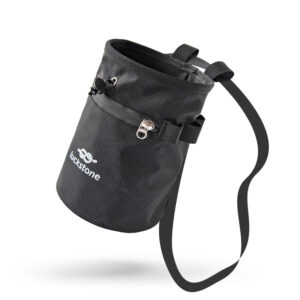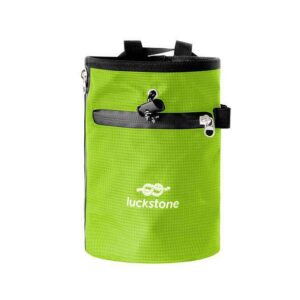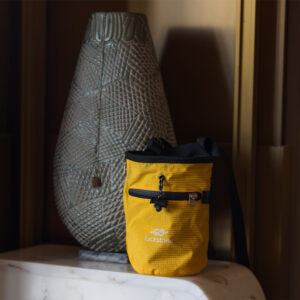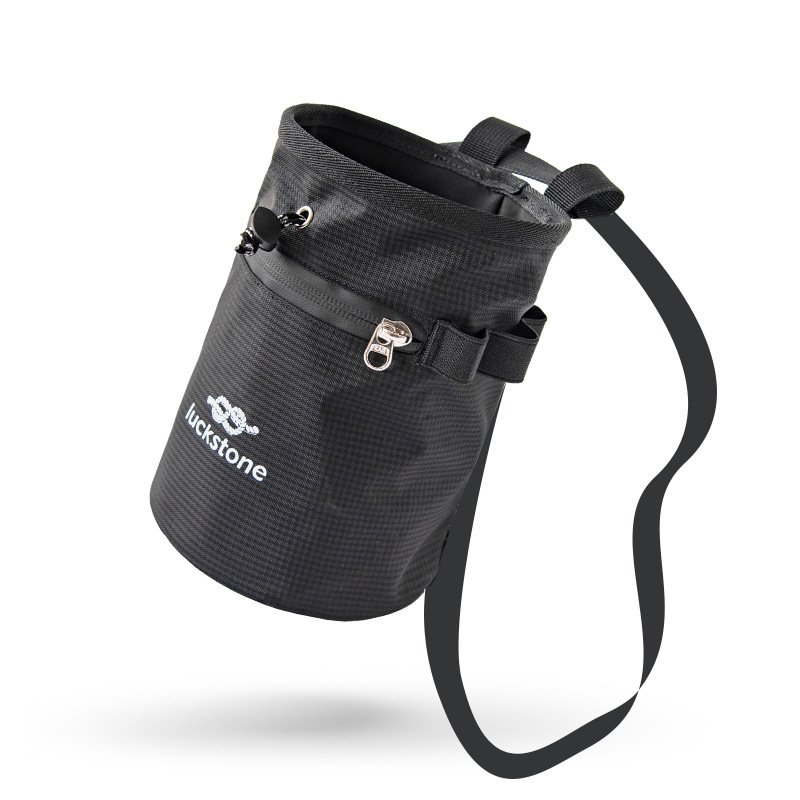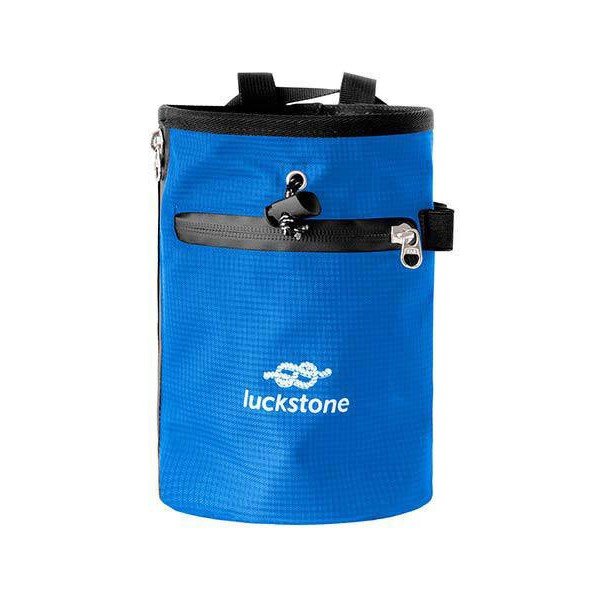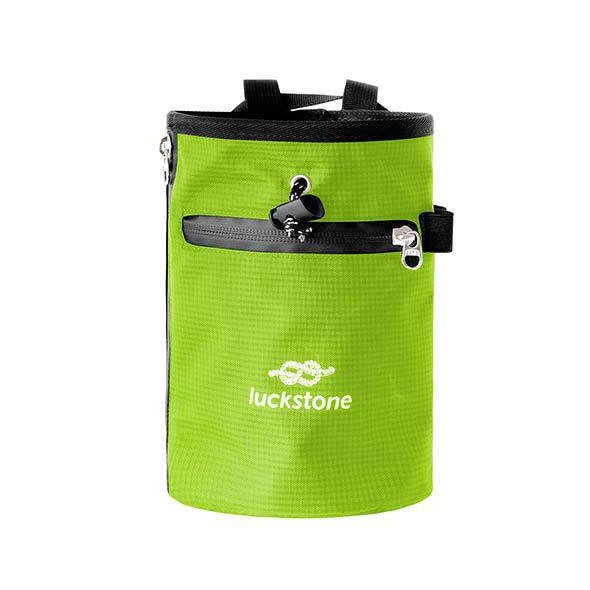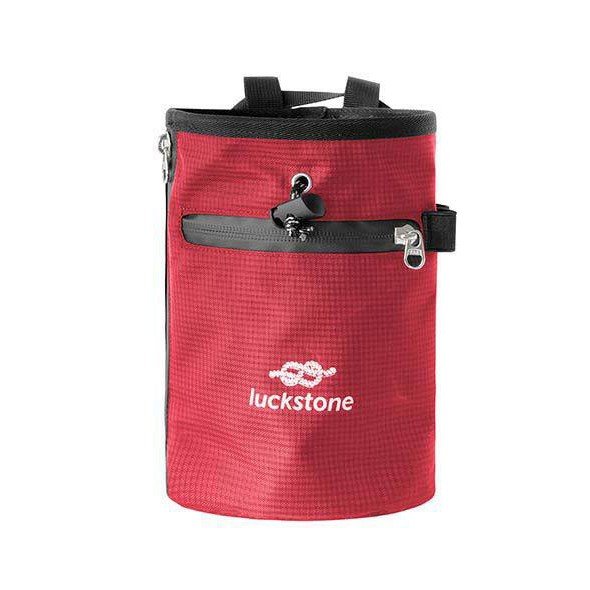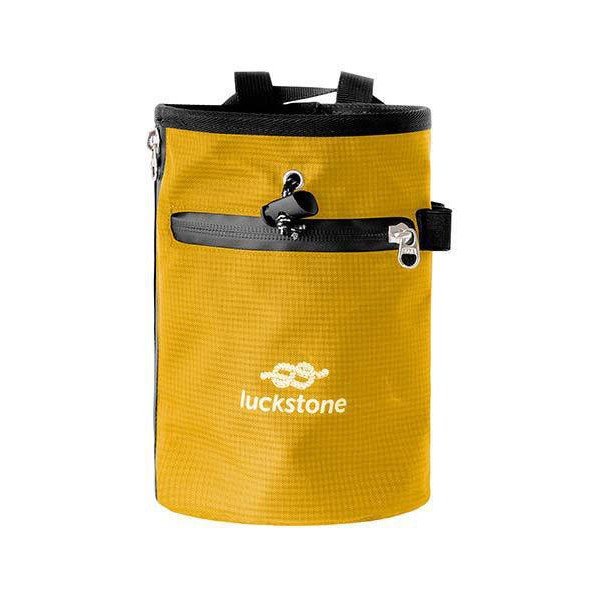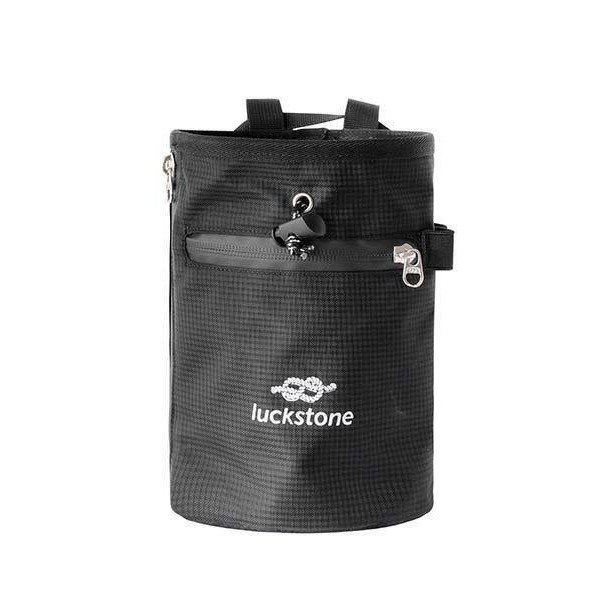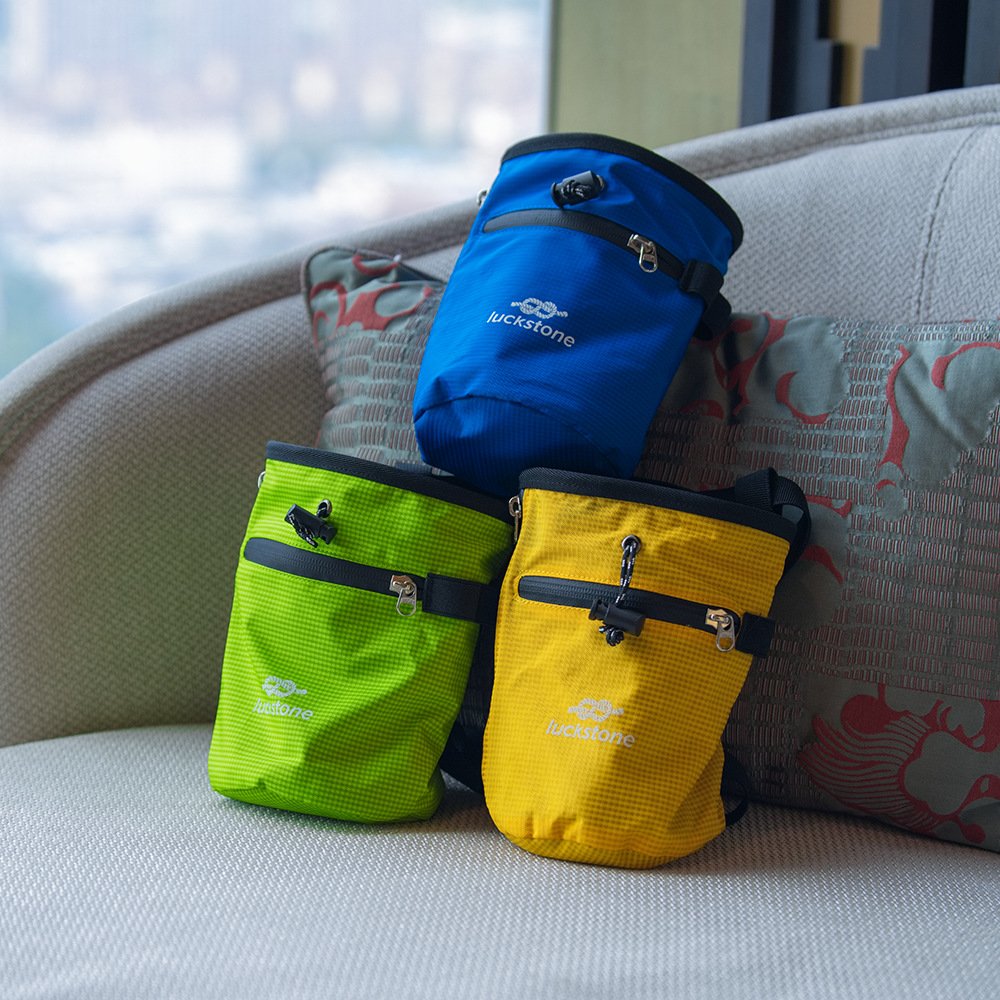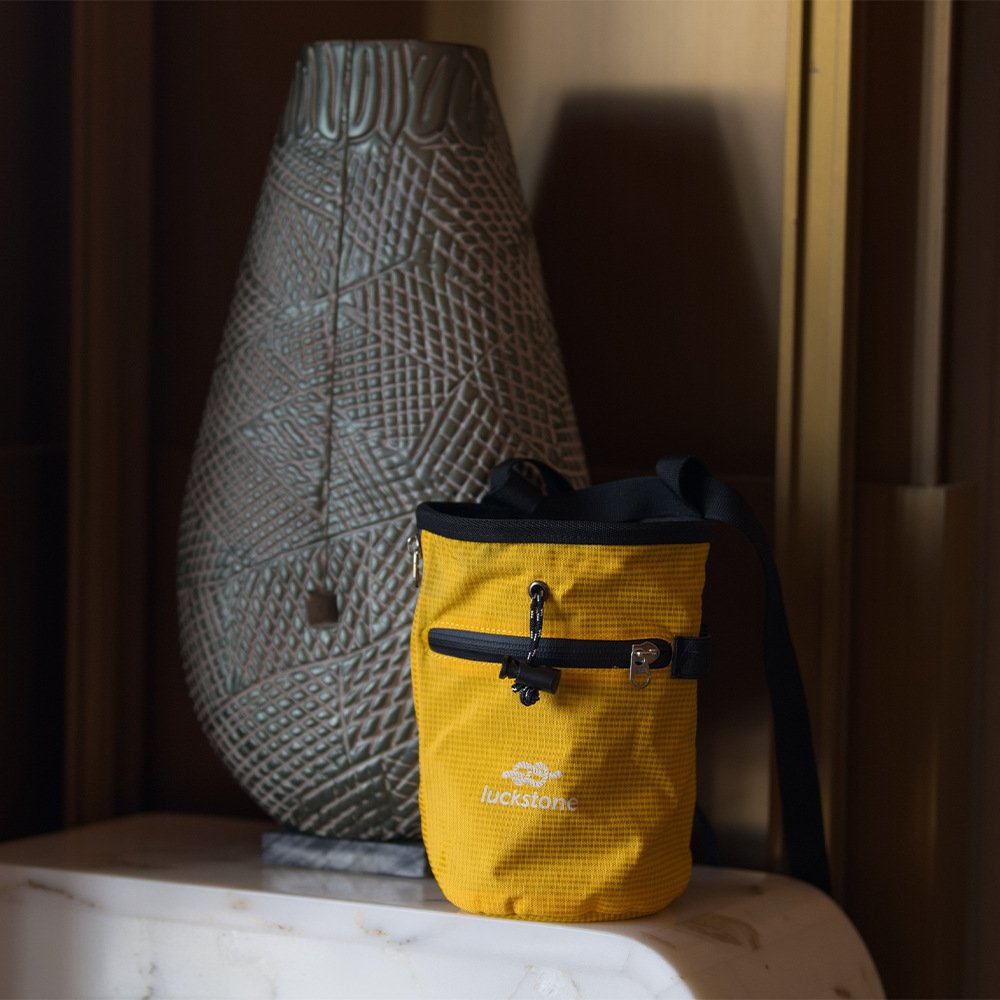
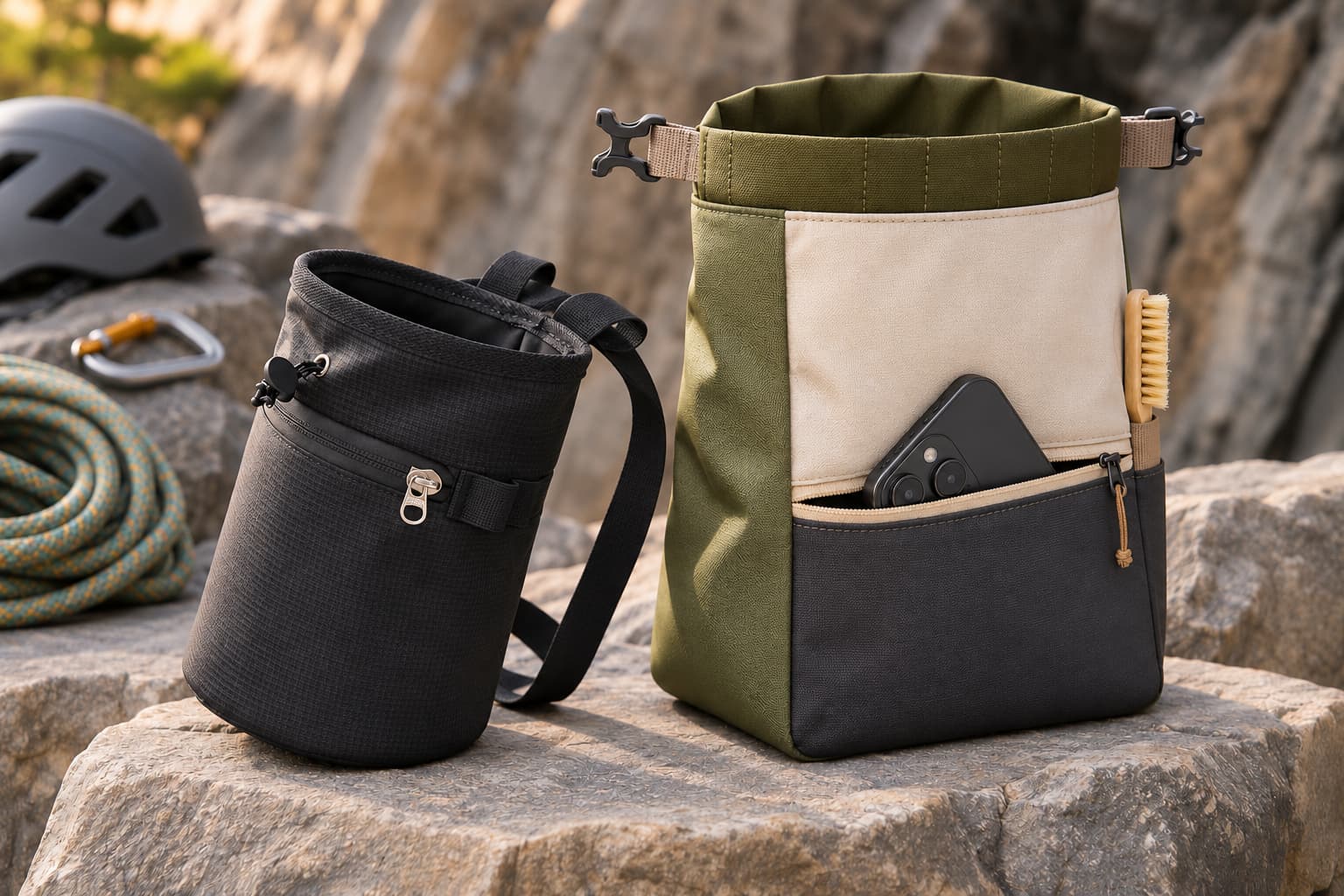
A chalk bag manufacturer makes a small product with very little room for error: if the opening collapses, the closure leaks or the brush falls out, climbers notice on the first session. Most of the decisions that matter come down to five details: the style (waist bag or freestanding bouldering bag), the rim, the lining, the closure and the outside design. At Nice Bags, stock chalk bag styles start at 50 pieces, and fully custom chalk bags start at 500 pieces.
We make chalk bags in fabric only: woven fabrics such as Oxford, polyester and nylon. We don’t make rigid plastic chalk buckets or hard-shell chalk pots. Within fabric construction, we can usually build what you send us a picture or drawing of.
Who Works With a Chalk Bag Manufacturer?
Most chalk bag inquiries we receive come from two groups, and they want quite different things.
Outdoor brands and streetwear labels. Climbing is a young sport, and the chalk bag is one of the few pieces of gear that is seen on every climber, at every wall, in every photo. That makes it a natural product for brands that care about look and identity. These buyers usually come to us with their own artwork: unusual shapes, color-blocked panels, printed patterns, woven labels, contrast binding. For them the questions are about whether a design can be made in fabric, how it will hold its shape, and how close the sample is to the drawing.
Amazon sellers and distributors. These buyers usually want a proven style that already sells: a classic cylinder waist bag or a roll-top bouldering bag, in their colors with their logo. The design is mostly settled, so the conversation is about price, materials and a few features that photograph well. Small cost differences matter a lot at this level, so it pays to know exactly which features you are paying for (more on that below).
If you are building a wider outdoor range, our custom hiking bags guide covers how we approach packs for the same customers.
Waist Chalk Bag or Freestanding Bouldering Bag: Which Style Do You Need?
There are two main fabric styles, and they match the two ways people climb (chalk bag buying guide from Rock+Run).
| Waist chalk bag | Freestanding bouldering bag | |
|---|---|---|
| Used for | Rope climbing: sport, trad, gym routes | Bouldering, indoor bouldering gyms, shared use |
| How it’s carried | On a waist belt or clipped to the harness | Sits on the ground at the base of the problem |
| Typical size | Small cylinder; ours is about 19 cm high × 13 cm across | Wide and low, with a big opening for both hands |
| Typical closure | Drawstring with a cord lock | Roll-top, closed with a magnetic strip or buckle |
| Extras | Brush loop, small zip pocket | Several brush holders, one or more zip pockets, carry handle |
Waist chalk bags are the classic style. The climber carries one up the wall and dips one hand in mid-route, so the bag needs to stay open, sit at the back of the waist and keep chalk in when it moves.
Freestanding bouldering bags (often called chalk buckets, even when they are made of fabric) are what you see on the floor of a bouldering gym. They need a flat, stable base so they don’t tip over, an opening wide enough for both hands, and a closure that seals properly for the trip home. One of our stock-style bouldering bags, for example, measures about 19 × 17 cm at the base and 31 cm high, with a 28 cm wide opening, and uses 600D Oxford with 420D twill nylon panels so it stands up on its own.
Many brands sell both: a waist bag for route climbers and a bouldering bag for gym customers, in matching colors and fabrics. Planning the two together saves on fabric minimums and keeps the range consistent.
Why Does the Rim Matter So Much?
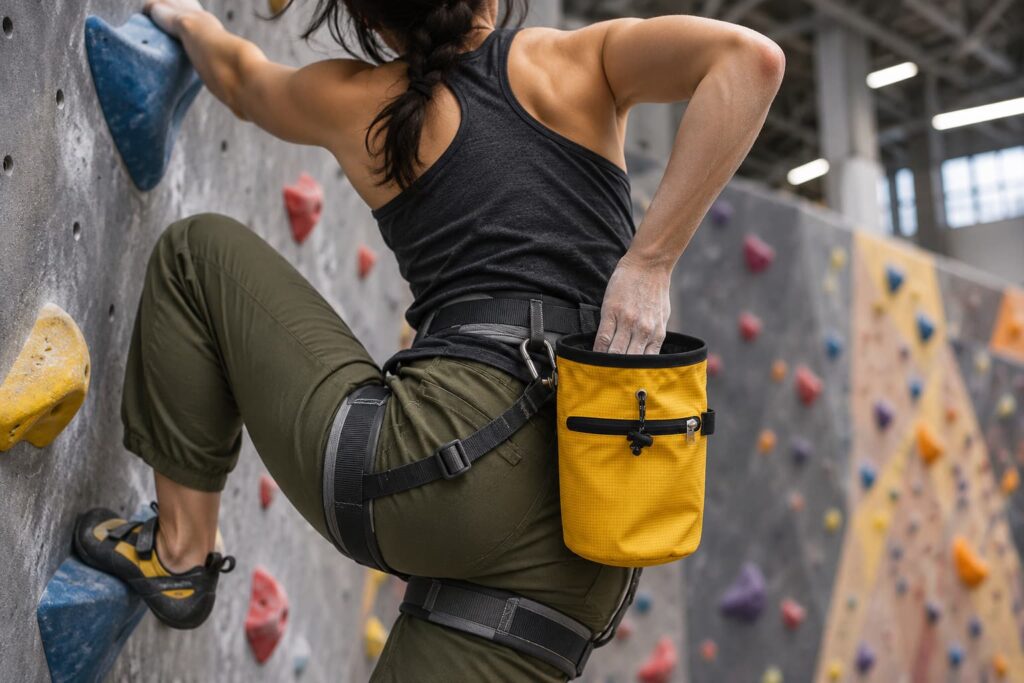
The rim is the detail climbers judge first. A chalk bag needs to stay open on its own, so a climber can reach in with one hand without looking. A soft, unsupported opening folds in on itself, and the climber ends up fumbling at the bag halfway up the route.
To keep the mouth open, the rim is usually stiffened. This is typically done by sewing a wire or a semi-rigid strip into the binding around the opening. Black Diamond’s Mojo, for example, uses a pliable wire rim (Mojo product details). For your spec, two points matter:
- Stiff enough to hold a round opening, even when the bag is half empty.
- Flexible enough to survive being packed. Chalk bags get squashed into packs and gear bags. A rim that creases permanently, or pokes through the binding, is a common complaint on cheap bags.
The size of the opening is a separate choice. A wider opening is easier for large hands, but it lets out more chalk when the bag moves. If your customers include a lot of people with large hands, it’s worth testing a size up at sampling stage.
Bouldering bags rely more on the fabric itself. Heavier fabrics such as 600D Oxford, sometimes combined with a firmer base panel, let the bag stand open without a wire rim.

Fleece Lining or Standard Lining?
We make chalk bags with both, and the choice depends on your customer.
Fleece (or pile) lining is what most climbing-focused brands use. The soft fibers hold a little chalk and spread it evenly onto the fingers, which is why climbers like it (fleece lining on the Wild Country Session). If you are selling to climbers who will compare your bag with established brands, fleece is the expected choice.
A standard woven lining costs less and is lighter. It suits budget lines, multi-use pouches (gymnastics, weightlifting, pole fitness) and bags where the buyer mainly wants a branded product at a sharp price.
On bouldering bags, many designs are unlined or only partly lined, because the climber is dipping the whole hand into loose chalk anyway. Tell us how your customers use the bag, and we’ll suggest the lining that fits.
Which Closure Works Best for Chalk Bags?
The closure decides whether the bag leaks chalk in a backpack, on a car seat or in a gym locker. Three options cover almost every chalk bag:
- Drawstring with a cord lock. This is the standard closure on waist bags. It is simple, light and cheap, and it closes the mouth tightly enough for normal use. The binding and the channel for the cord need to be sewn neatly, because that is where chalk escapes.
- Roll-top with a magnetic strip. This is popular on bouldering bags because it opens and closes in one movement. The catch is that a magnet on its own rarely seals tightly. On one well-known roll-top bucket, some users report chalk escaping through gaps (user reviews of the Petzl Sakab). As we noted in our roll top backpack manufacturer guide, magnetic closures also tend to be less durable than they look.
- Roll-top with a buckle. It is slower to open but very secure for transport, and the buckle strap can double as a carry handle.
Our recommendation for magnetic chalk bags: keep the drawstring too
When a buyer asks for a magnetic closure, we usually suggest keeping a drawstring inside the opening as well. The two closures do different jobs:
- During a session, the climber leaves the drawstring open and lets the magnet close the top between attempts. Reaching in for chalk stays quick and one-handed.
- For transport, the climber pulls the drawstring tight and closes the magnet. The bag is then properly sealed in a backpack or car.
Many established bouldering bags already work on this two-level idea, but they use a buckle or clips as the second closure instead of a drawstring. The Petzl Sakab, for example, pairs a magnet with a roll-top and buckle for transport. A drawstring does the same job, adds very little cost, and is easy to use with chalky hands. In our experience it’s one of the simplest upgrades you can make to a magnetic chalk bag.
What about zippers? We rarely put a zipper on the main opening of a chalk bag. Chalk gets into the teeth, and a zipper is awkward to use with chalky hands. A zipper is very common, though, on a separate small pocket on the front or side, for keys, tape, a phone or a spare chalk ball. That pocket is one of the most-requested features, especially on bouldering bags.
What Features Do Buyers Usually Add?
Beyond the core body, these are the details that shape the final product:
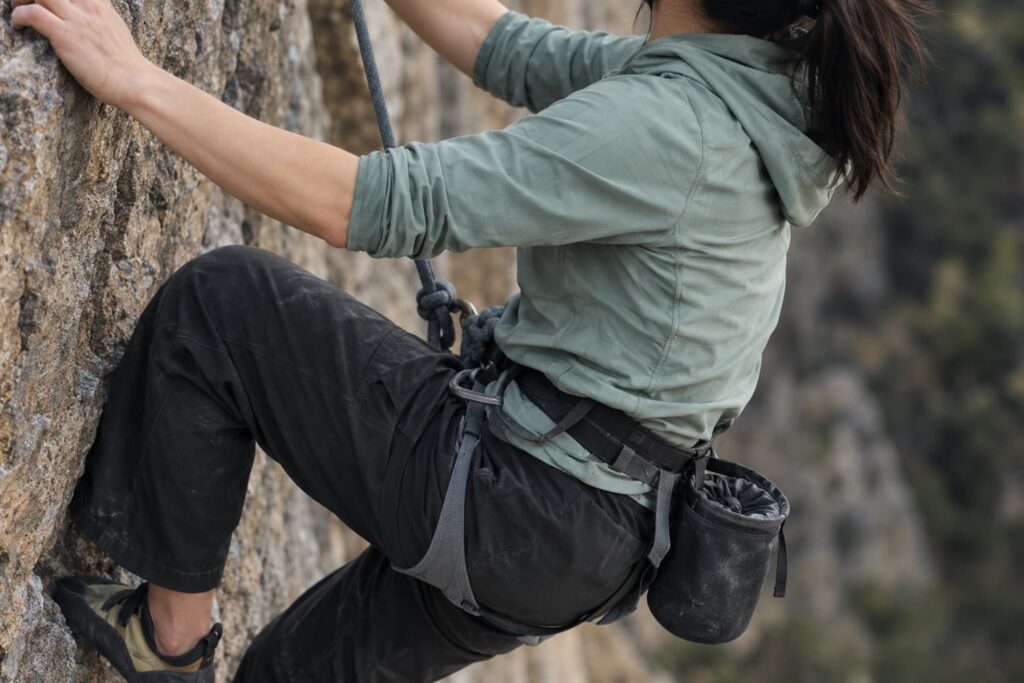
- Brush holders. On a waist bag, usually one elastic loop on the side. On bouldering bags, often several holders on the back or sides for brushes of different sizes.
- Waist belt. On a waist bag, this is a webbing belt with a quick-release buckle, plus a reinforced loop so the bag can be clipped to a harness instead.
- Zip pocket. On a waist bag, a small one for keys. On a bouldering bag, a larger one for phone and tape.
- Abrasion-resistant panels. Climbing bags get scraped against rock and walls. A tougher fabric on the lower part or the base helps the bag last.
- Carry handle and clip points. These matter most on bouldering bags, which travel between the car, the crag and the gym.
Each feature adds a little material and labor. For price-sensitive Amazon lines, it’s worth deciding which two or three features your listing really needs, rather than adding everything.
How Much Design Freedom Do You Have?
Quite a lot, as long as the bag is made in fabric. Common design requests we see include:
- Color blocking with different fabrics on the front, sides and binding
- Printed patterns across the full body
- Unusual shapes, such as character or animal-shaped bags, or cylinders with a sloped opening
- Branding with woven labels, rubber patches, embroidery or screen prints. See our bag branding techniques guide for how each method holds up.
Two practical notes for design-led projects. First, a chalk bag is small, so a logo or pattern that looks fine on a drawing can lose detail at the real size. We recommend a printed mock-up at actual size before you sign off. Second, a special shape still has to keep its opening round and stable, so expect the first sample to include some adjustments to the rim and base.
On fabric wording: most chalk bags use coated Oxford or nylon that is water-resistant, not waterproof. The body is sewn, and every stitch line is a gap. If you plan to use the word “waterproof” in your listing, read our dry bag sourcing guide first, which explains why seams, not fabric, decide waterproofing.
What Are the MOQ and Price for Custom Chalk Bags?
MOQ at Nice Bags:
- Stock styles: from 50 pieces
- Custom chalk bags: from 500 pieces. This covers any change beyond the logo, such as fabric, color, shape, lining, closure or features.
Rough price ranges (for reference only; your actual quote depends on size, fabric, features, design and quantity):
| Type | Typical construction | Rough price range |
|---|---|---|
| Waist chalk bag | From a simple drawstring bag with a belt and brush loop, up to fleece-lined designs with zip pockets and upgraded fabrics | about $2–10 |
| Freestanding bouldering bag | From a basic roll-top with brush holders, up to design-led bags with mixed fabrics, magnetic closures and several pockets | about $6–25 |
Projects with complex artwork, special shapes or premium materials can go above these ranges. If price is your main concern, the biggest levers are usually the lining (fleece or standard), the number of pockets, the closure type and how many different fabrics the design uses.
Timing: samples can be ready in as little as 3–5 days for simple changes, and take longer if a new fabric or a new shape is involved. Bulk production for custom orders typically takes about 30 days, give or take a week. For the difference between adapting one of our existing styles and building from your own design, see OEM vs ODM bag manufacturing.
What Should You Confirm Before Sampling?
Before you approve a chalk bag sample, send your supplier a short spec that answers these questions:
- Style: waist bag, freestanding bouldering bag, or both?
- Size: height, diameter or base size, and the width of the opening
- Rim: how stiff, and does the opening stay round when the bag is half empty?
- Lining: fleece, standard lining, or unlined?
- Closure: drawstring, magnetic roll-top, buckle roll-top, or a combination?
- Features: brush holders (how many), zip pocket, belt, harness loop, carry handle
- Fabric and colors: main fabric, any abrasion panels, and Pantone references
- Branding: method, size and position, checked at actual size
Then test the sample the way climbers will: fill it with chalk, wear it or carry it for a full session, pack it in a bag upside down, and check for leaks and for a creased rim.
FAQ
What is the MOQ for custom chalk bags? At Nice Bags, stock chalk bag styles start at 50 pieces. Fully custom chalk bags, with any change beyond the logo, start at 500 pieces.
Can you make hard plastic chalk buckets? No. We make chalk bags in fabric only, including waist chalk bags and freestanding fabric bouldering bags. We don’t make rigid plastic buckets or hard-shell chalk pots.
Should a chalk bag have a fleece lining? Fleece lining is common on climbing-focused bags because it spreads chalk evenly onto the fingers. A standard lining costs less and suits budget or multi-use bags. We make both.
Why don’t most chalk bags have a zipper on the main opening? Chalk gets into the zipper teeth, and a zipper is awkward to open with chalky hands. Most chalk bags use a drawstring or roll-top for the main opening, and keep a zipper for a separate small pocket.
How much does a custom chalk bag cost? As a rough guide, waist chalk bags range from about $2 to $10, and freestanding bouldering bags from about $6 to $25, depending on fabric, lining, closure, pockets and design. Complex or premium designs can cost more.
Should a magnetic chalk bag also have a drawstring? We recommend it. A magnet alone rarely seals tightly. With an inner drawstring, climbers can leave the drawstring open and use the magnet for quick access during a session, then close both for transport.
Are chalk bags waterproof? Most are water-resistant rather than waterproof. The fabric may be coated, but the bag is sewn, and water and fine chalk can pass through the stitch lines.
Start Your Chalk Bag Project
If you’re planning a chalk bag line, send us a picture or drawing, your target price and which style you need: waist, bouldering, or both. We’ll tell you how it can be made in fabric, suggest a rim, lining and closure that fit your budget, and sample quickly. Browse our chalk bag range or contact our team for a quote.