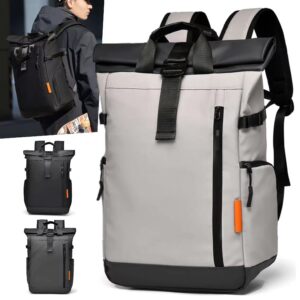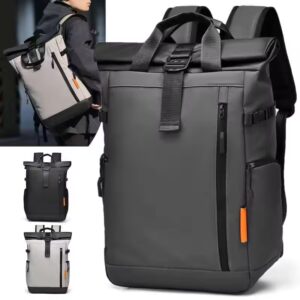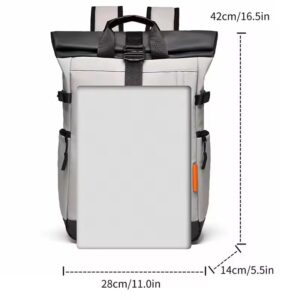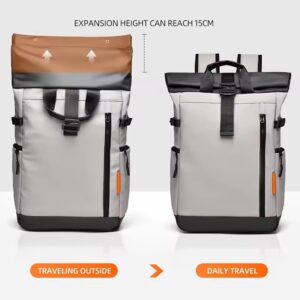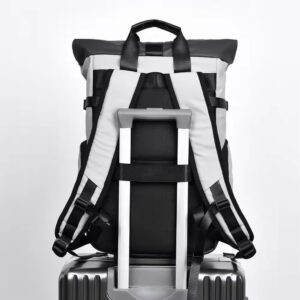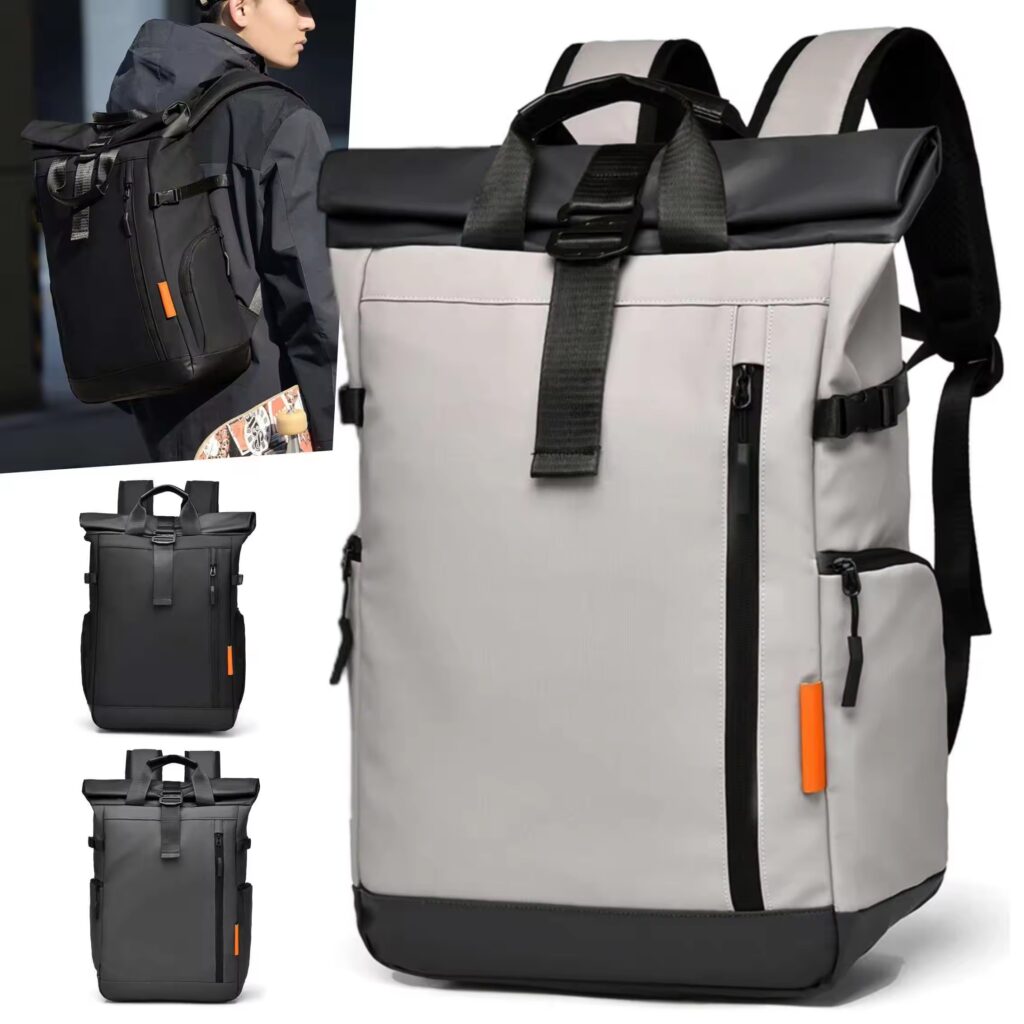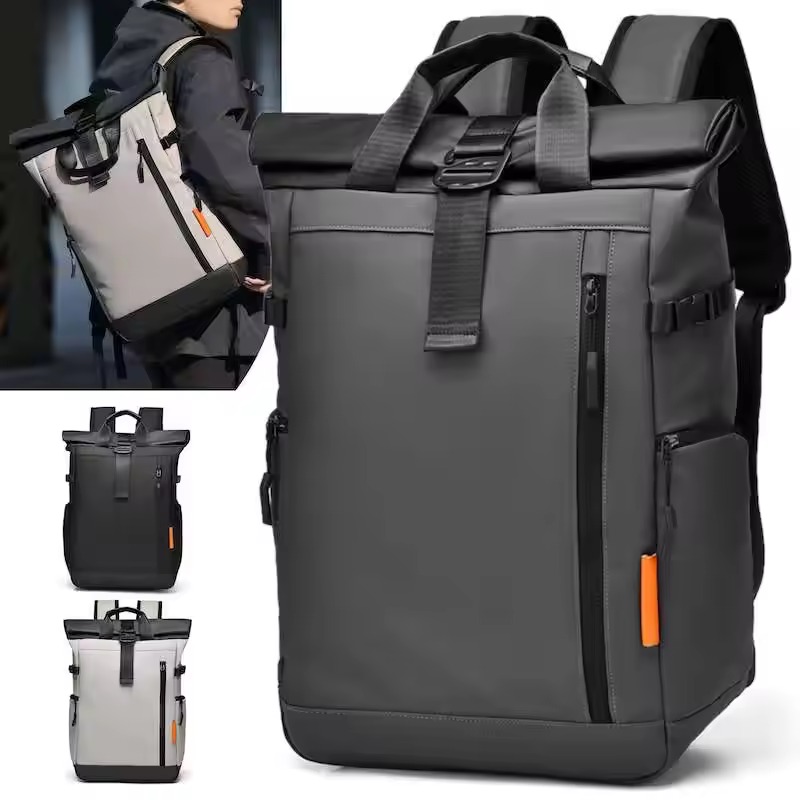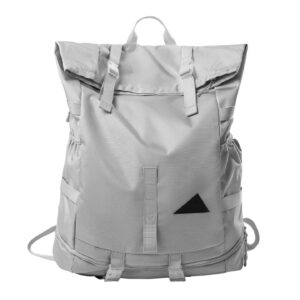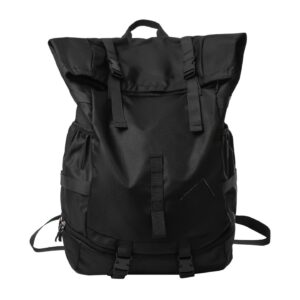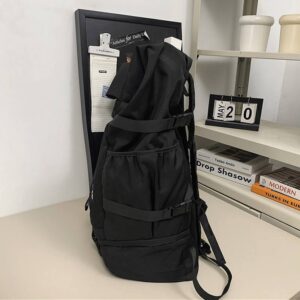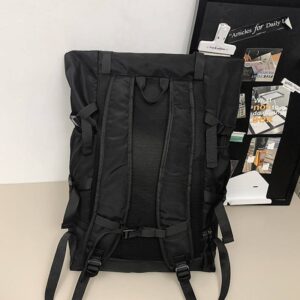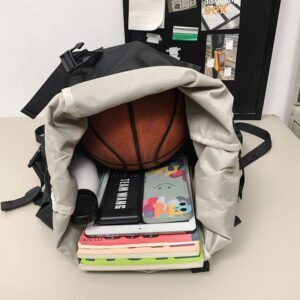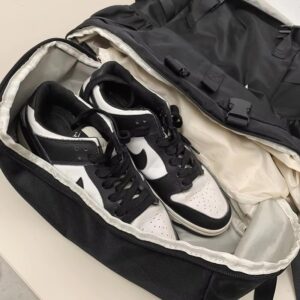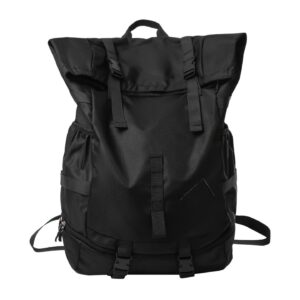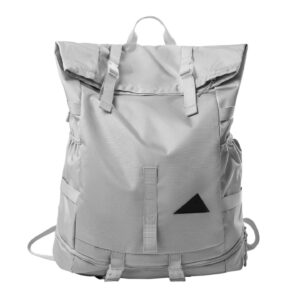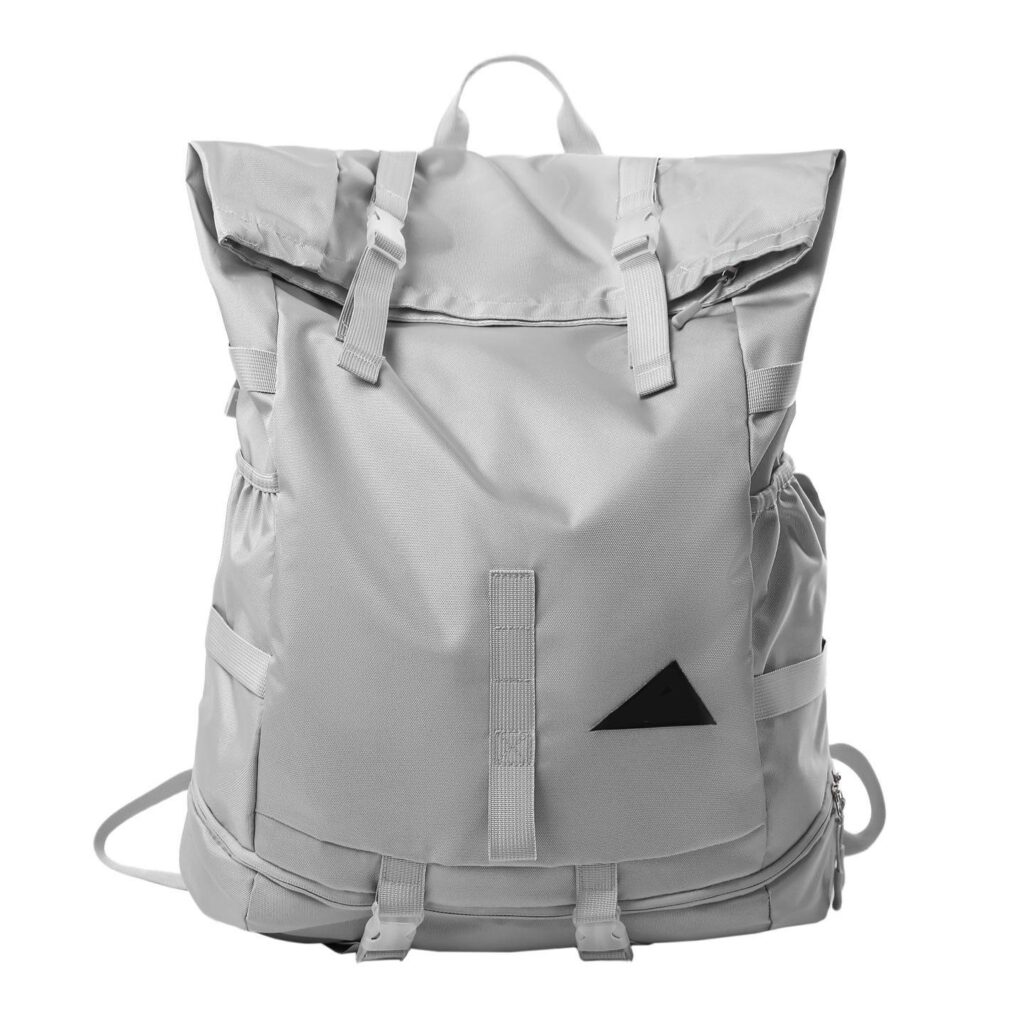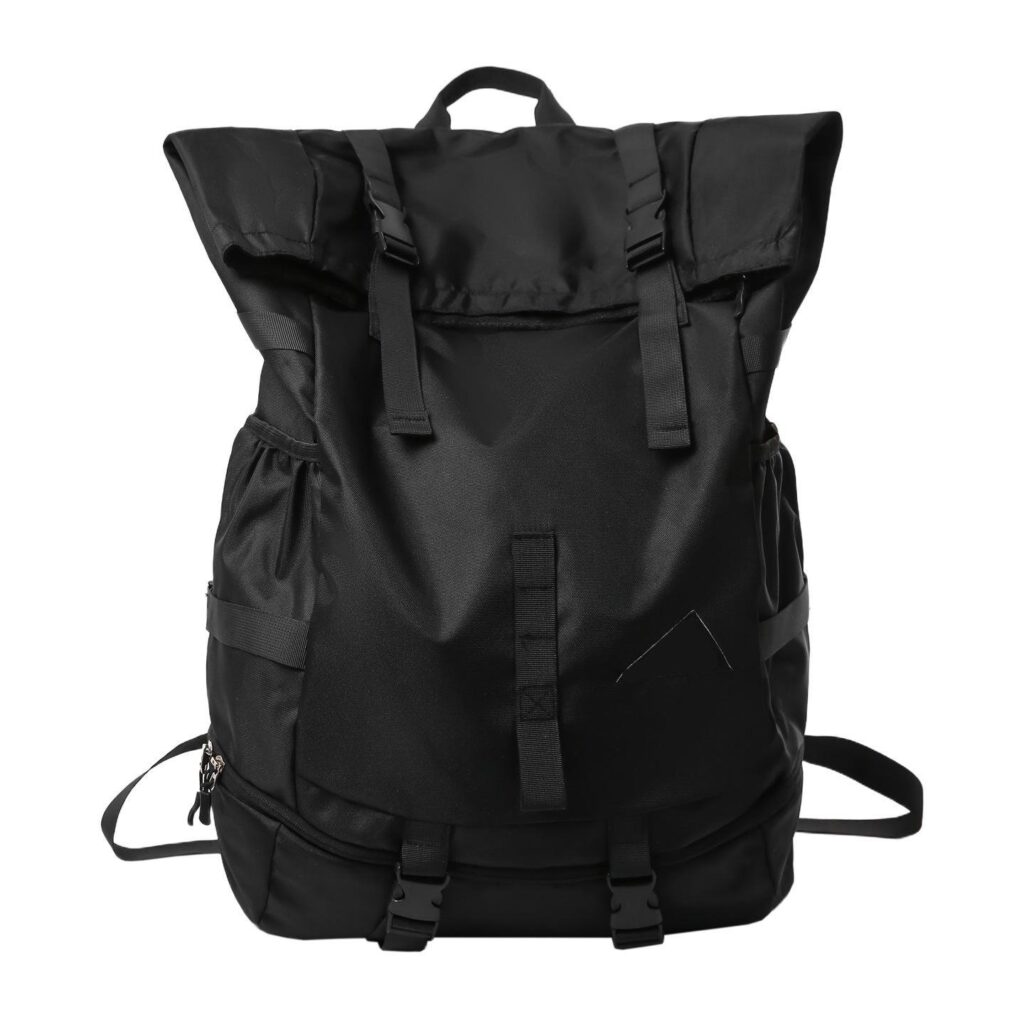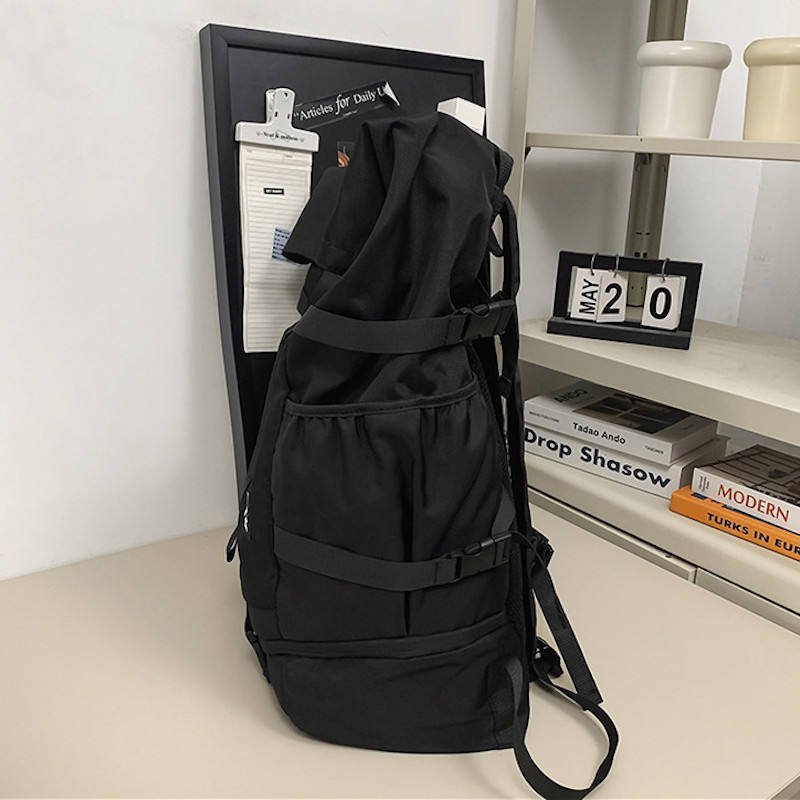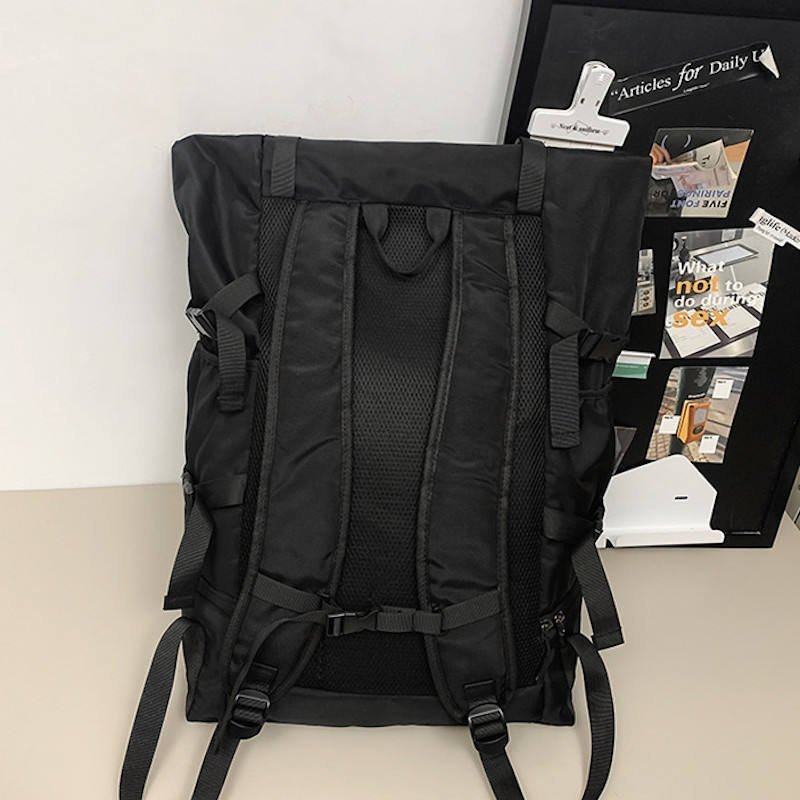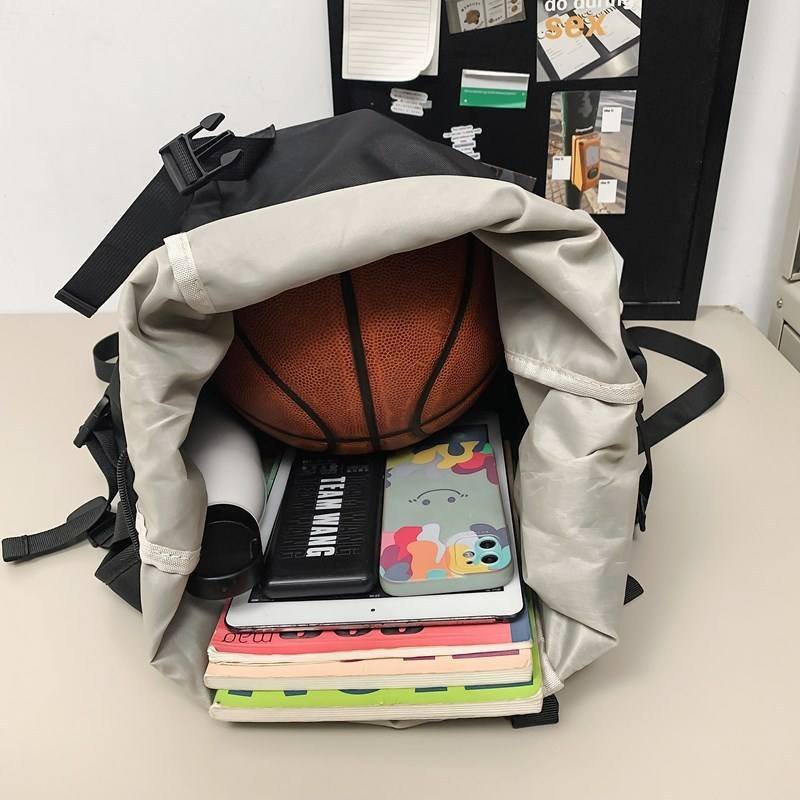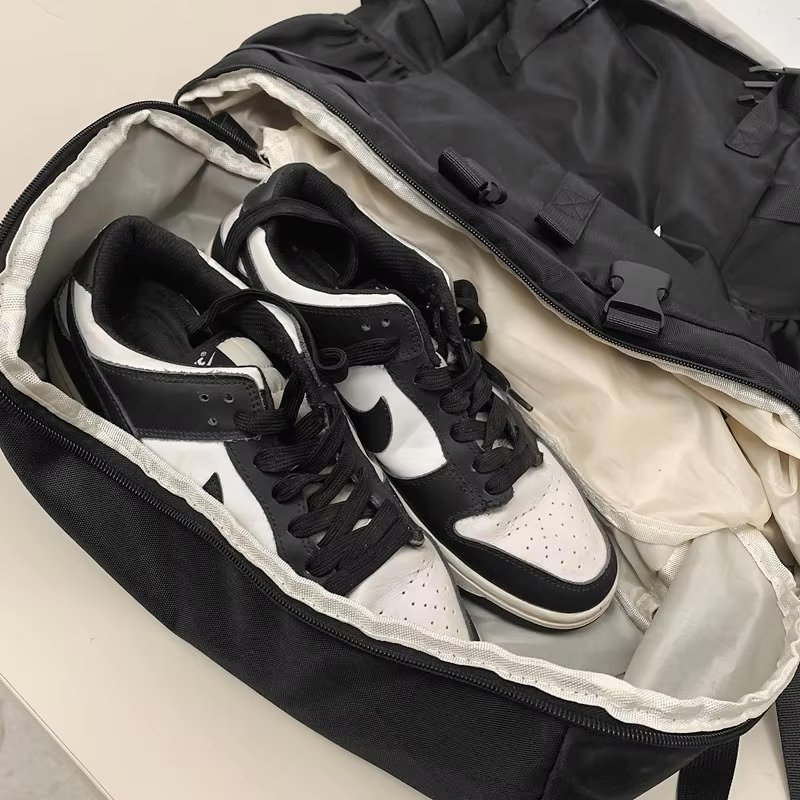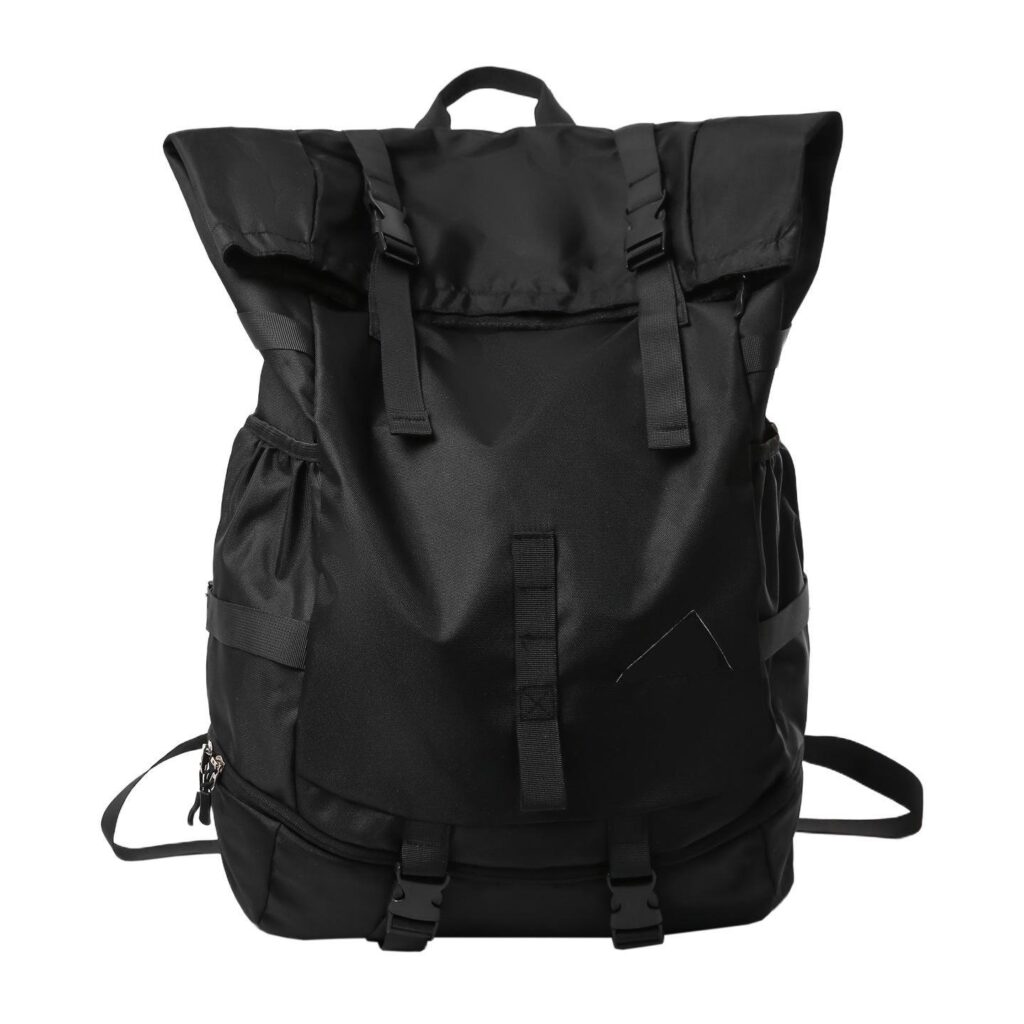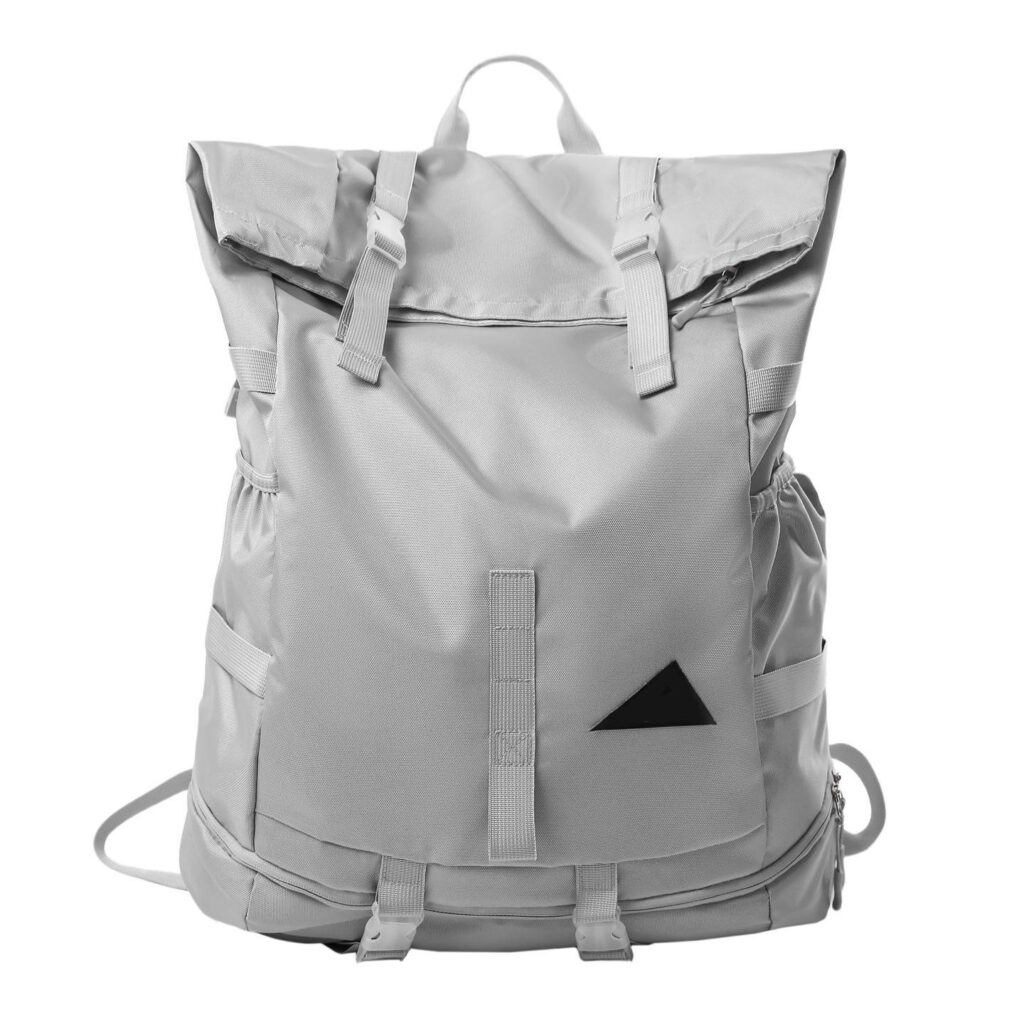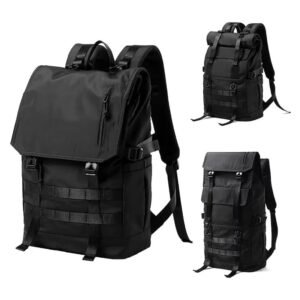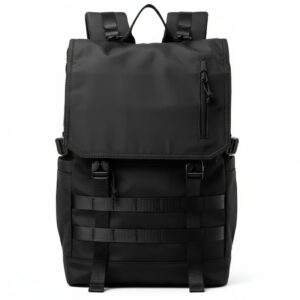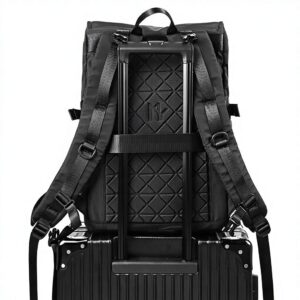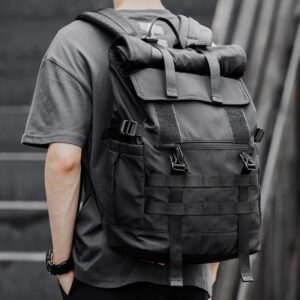
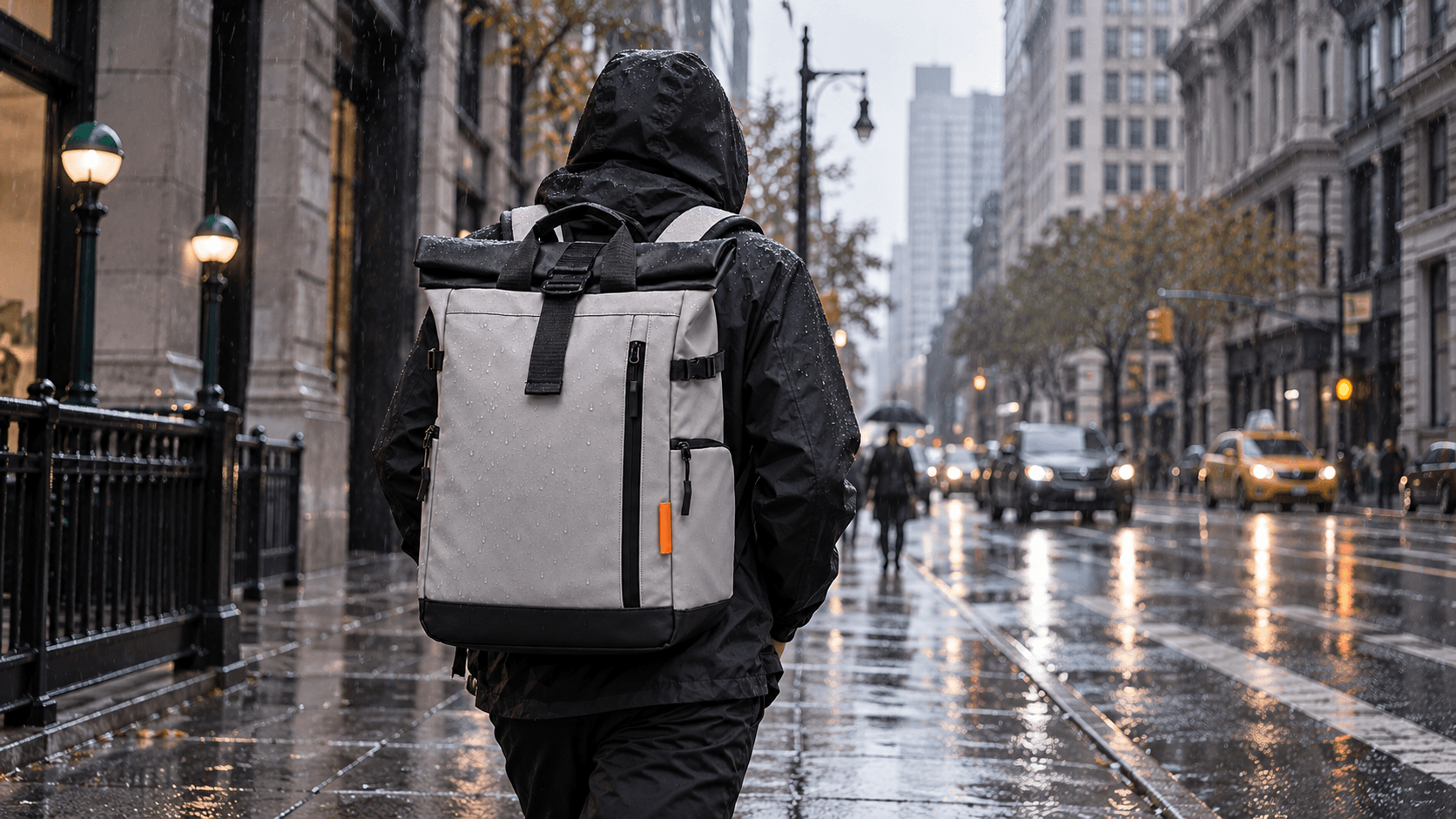
If you’re talking to a roll top backpack manufacturer for the first time, the useful thing to know up front is that a roll-top is mostly a closure decision, not a waterproofing decision. The rolled collar sheds rain at the opening and lets the bag grow or shrink, but whether water gets in somewhere else depends on the seams, the zippers and the fabric coating. Nearly every commuter roll-top on the market, ours included, is a sewn, splash-proof bag, and for daily use that’s the right call. In-stock styles start at 50 pieces, fully custom designs at 500, and most projects land somewhere between $5 and $20 a unit depending on fabric, hardware and how much organization goes inside.
The rest of this guide is the detail behind those numbers: when a flap makes more sense than a roll, where splash-proof bags actually let water in, which closure hardware causes the most complaints, and what to have ready before you ask for a quote. (For general business backpack sourcing — laptop protection, ergonomics, the OEM/ODM process — start with our Custom Business Backpacks B2B Sourcing Guide.)
Who Works With a Roll Top Backpack Manufacturer?
The roll-top look started in outdoor and cycling gear and moved into city bags, so the buyers who come to us for it tend to fall into a few groups.
Urban and lifestyle brands. The clean, minimal front panel is the whole appeal here. These buyers care about silhouette, color and how the bag looks rolled versus unrolled, and they usually want a laptop sleeve because their customer carries one every day.
Bike-commuter and active-lifestyle brands. Rain at the opening is a real problem for someone riding to work, so the roll is functional, not just styling. Reflective strips, a chest strap and a back panel that doesn’t trap heat come up much more often in these briefs.
Amazon and DTC sellers. Roll-tops sit in the “minimalist backpack” and “expandable travel backpack” niches, where a few clear selling points (expands from daypack to overnight size, fits a 15.6″ laptop, splash-proof) carry the listing. This buyer often starts from an in-stock style and adds a logo, then moves to custom once a design has proven itself.
Corporate and business buyers. A roll-top with a hidden magnetic closure or a buckled flap reads as smart-casual rather than outdoorsy, and that has made it a regular corporate gift item. We’ve made custom roll-tops for large international brands, including a global automotive brand that ordered them as branded gifts. For this buyer the bag has to look premium in the hand on day one, so PU leather fabrics and metal or magnetic hardware come up much more often than in retail briefs.
Roll-Top or Flap: Which Closure Fits Your Customer?
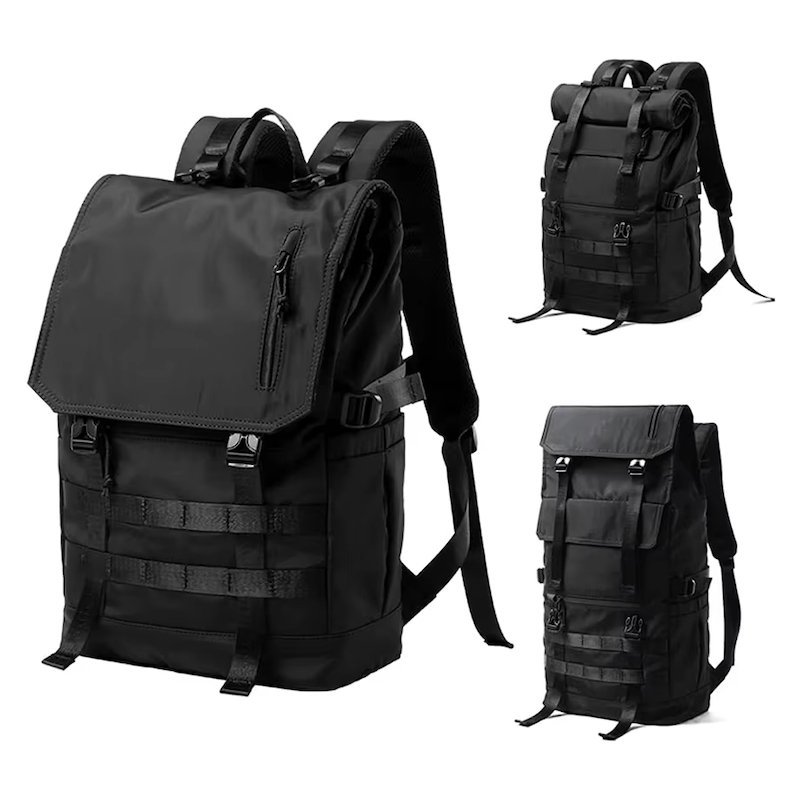
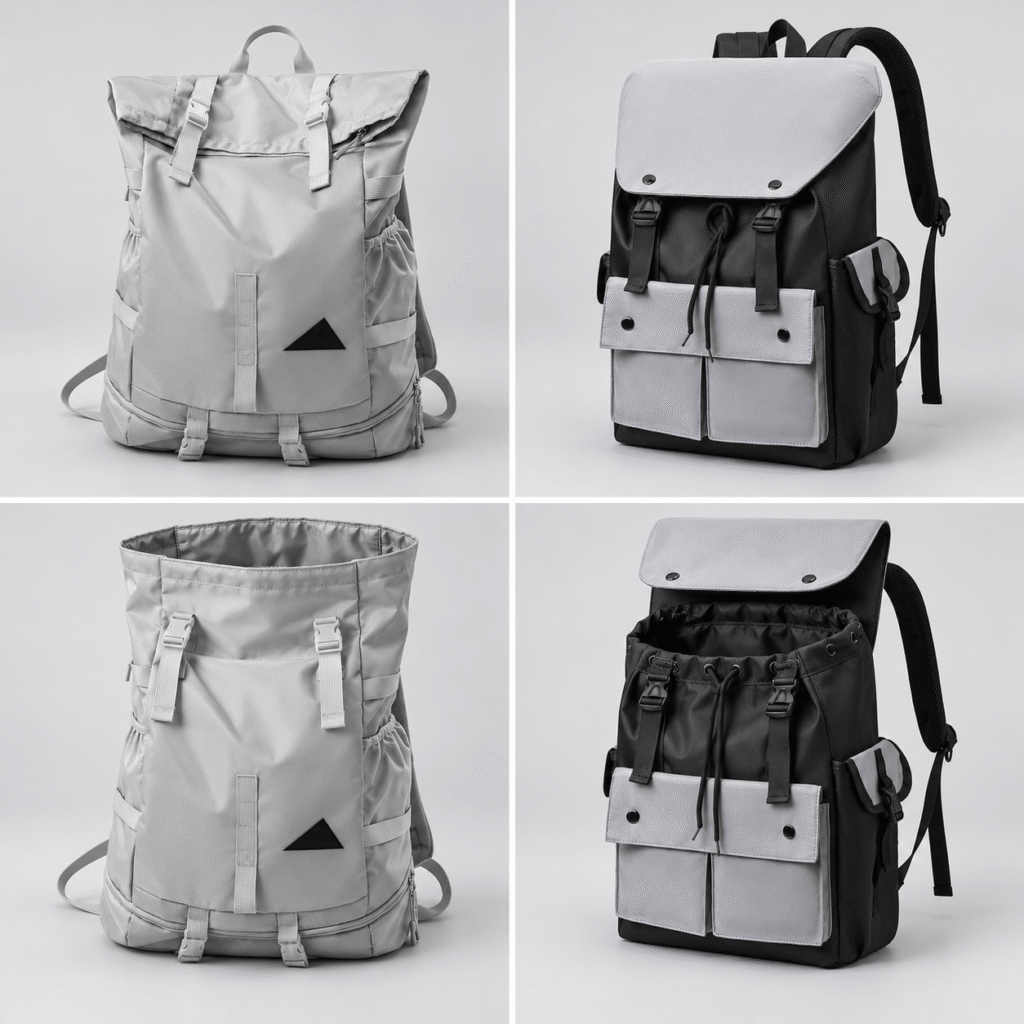
Our flap and roll-top styles sit in the same product category because buyers usually compare them side by side. They solve slightly different problems.
| Roll-top | Flap (buckle or magnetic lid) | |
|---|---|---|
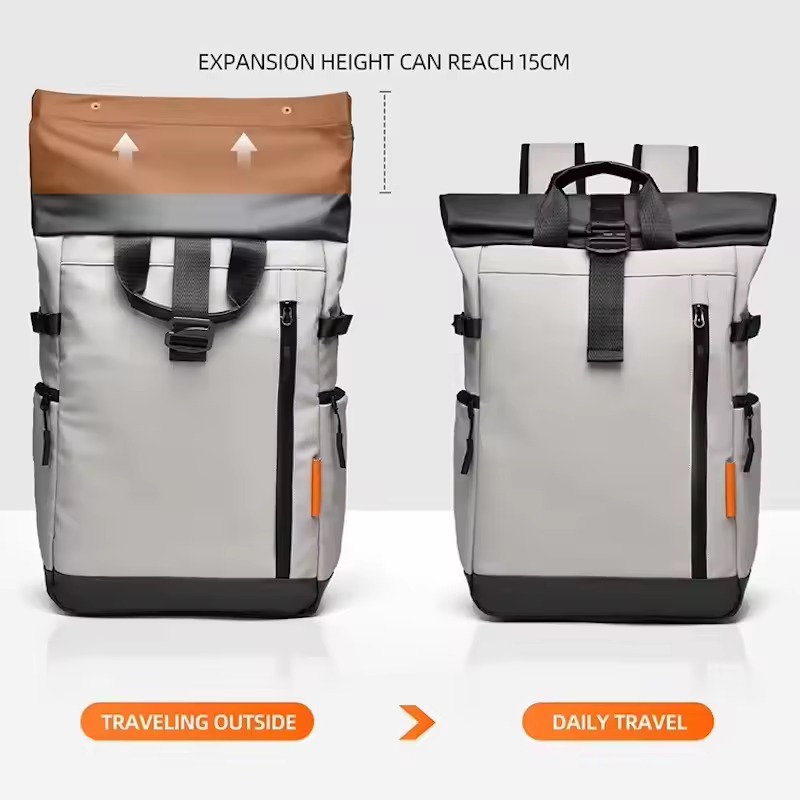
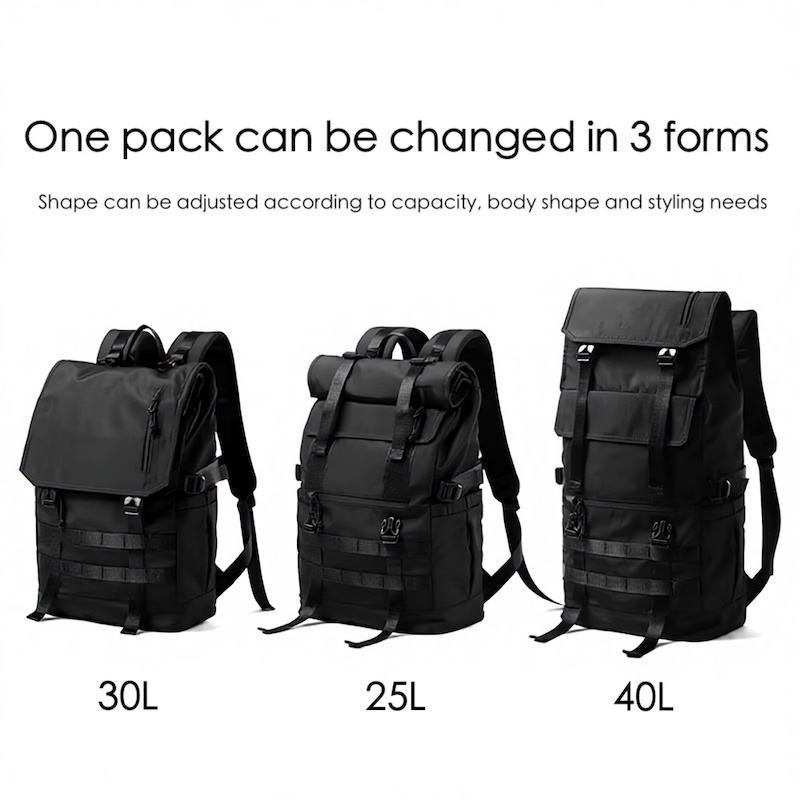
| Capacity | Adjustable: roll down for a slim daily bag, unroll for groceries or a gym kit | Fixed, though some flaps have an expandable gusset underneath |
| Rain at the opening | Good when rolled properly; the folds shed water | Good; the lid overlaps the opening and sheds water |
| Speed of access | Slowest: unclip, unroll, reach in | Faster: lift the lid |
| Look | Casual, cycling and outdoor heritage | Neater and more structured, easier to make look “business” |
| Best logo spot | Front panel (the rolled collar disappears when rolled) | The flap itself, which is the largest flat surface |
Two practical points that don’t show up in product photos:
- Roll-tops punish short collars. The roll only works if there’s enough fabric above the main opening to fold over properly. Dry bag makers recommend at least three folds for a proper seal (Cascade Designs / SealLine). A commuter bag doesn’t need a dry bag’s seal, but if the collar only allows one loose fold, the closure looks sloppy and the “expandable” claim on your listing gets thin. Collar length is one of the first things we check on a sample.
- Flaps hide what’s underneath. A flap backpack usually has a zippered or drawstring opening under the lid. That’s fine for access, but it means the flap is doing the rain-shedding and the zipper is the backup. If the flap is short at the sides, water runs straight onto that zipper.
Hybrid designs exist too, like a flap that folds over a short roll, as in our geometric flap roll-top style. They look distinctive, but they add fabric and hardware, so expect them toward the upper end of the price range.
Is a Roll-Top Backpack Actually Waterproof?
Usually not, and it doesn’t need to be.
A roll closure deals with water coming in from the top. But a sewn bag has needle holes along every seam. Stitching two panels together leaves “hundreds – if not thousands – of tiny holes” that water can get through unless the seam is taped or welded (Advnture). Fully waterproof bags close those paths by welding the seams with heat (the high-frequency, or RF, welding we covered in our custom dry bag guide) and by avoiding ordinary zippers altogether.
That construction is the right answer for kayaking or bikepacking in heavy weather. For a daily commuter backpack it’s usually the wrong one:
- It limits the design. Welded construction suits simple shapes. Front zip pockets, padded laptop sleeves and bottle pockets all mean more seams, and every one of them has to be sealed too.
- It costs more and narrows your fabric choice. Welding needs thermoplastic-coated fabrics and dedicated equipment, which shows up in unit price and sampling time.
- The end customer doesn’t need it. A ten-minute walk in rain, a coffee spill or a bag set down on a wet floor is what a commuter bag has to survive, and a well-built splash-proof bag handles that.
So almost all of the roll-tops we make for backpack clients are sewn, splash-proof bags: coated fabric, a roll closure and sensible zippers. If your product truly has to survive submersion, treat it as a dry bag project from the start rather than upgrading a commuter design halfway through sampling.
One wording point for your listings: “waterproof” sets an expectation a sewn bag can’t meet, and a review saying “my laptop got wet” is hard to recover from. “Splash-proof,” “water-resistant” or “weather-resistant” describes these bags honestly.
Where Splash-Proof Backpacks Actually Let Water In
When a splash-proof roll-top fails, it’s almost never the roll. It’s one of these:
1. The front zip pocket. Almost every commuter roll-top has a vertical or horizontal zip pocket on the front panel for keys, cards and a phone, and that zipper faces the rain whenever the bag is worn. Standard coil zippers let water through. PU-coated zippers help with everyday rain but aren’t fully waterproof, and the coating can stiffen over time (Nomads Nation). Even YKK sells its AquaGuard line as water-resistant, not waterproof (YKK). The cheapest fix is often a storm flap, a strip of fabric covering the zipper, rather than a pricier zipper. It also helps to keep anything that must stay dry, like a laptop or documents, in the main compartment under the roll rather than in a front pocket.
2. The base and lower corners. The bottom takes the most abrasion and sits in puddles. A heavier base panel or a double layer at the bottom lasts much longer than the same fabric used all over.
3. A badly rolled top. Covered above. If the collar is too short or too stiff to roll neatly, users leave it half-rolled and water finds the gap.
4. Coating wear. Coated fabrics keep water out through the coating, not the weave. Once the coating cracks at a fold line (and the roll collar is folded every day), that spot starts to wick. This is a material choice, covered below.
Closure Hardware: Small Part, Most of the Complaints
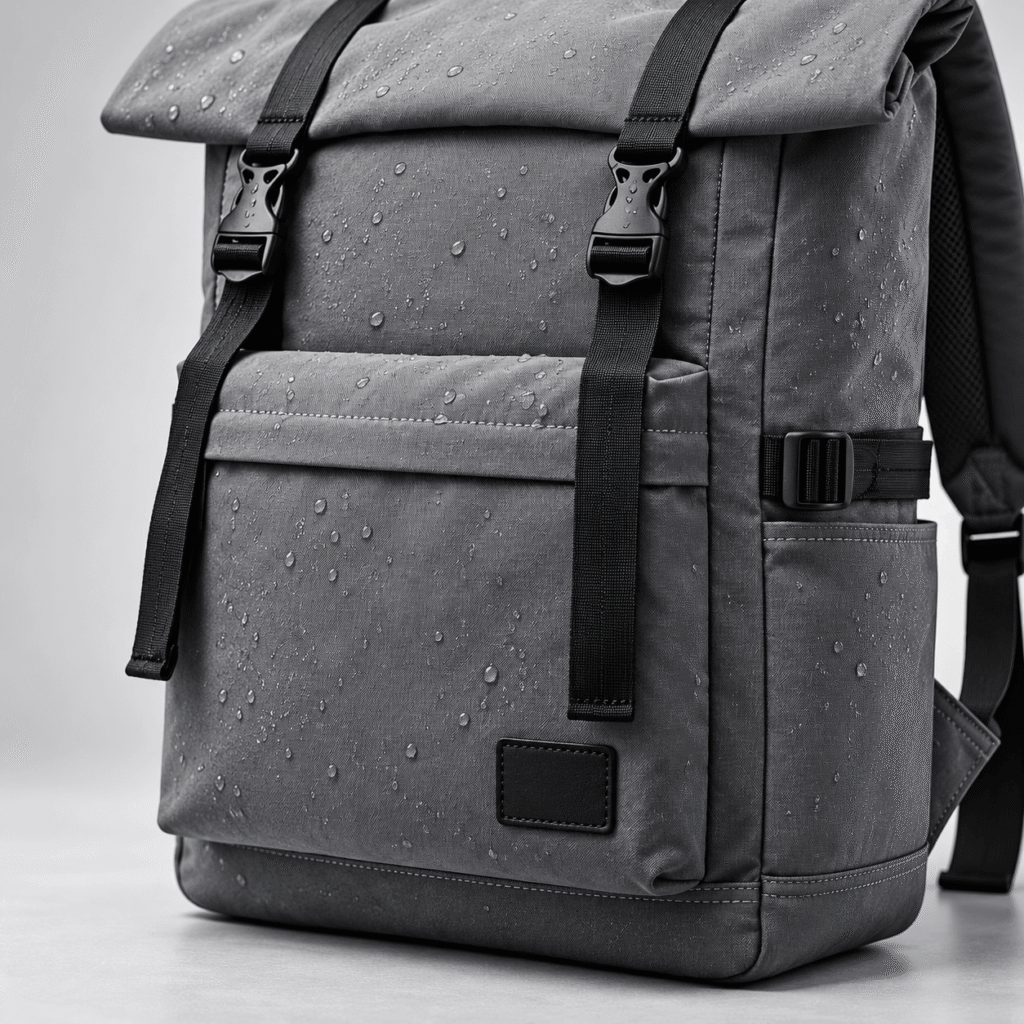
The buckle or clip holding the roll down gets used several times a day, which makes it the part customers notice most when it goes wrong. It’s also where the most expensive-looking option isn’t always the most durable one. From cheapest to most expensive:
- Hook-and-loop (Velcro). The most basic closure. It works and costs almost nothing, but it’s noisy, collects lint and reads as budget. It’s fine as a secondary closure, and rarely the right main closure on a mid- or upper-range bag.
- Side-release plastic buckles. Cheap, strong and familiar. They take two hands and can feel a bit “outdoor gear” on a bag meant for the office, but they’re hard to open by accident even under a hard pull (Nayo Smart). Over years of daily use they’re often the hardest-wearing option on this list.
- Magnetic buckles. Clearly pricier than plastic, and they look designed: a one-handed snap that shows well in product videos and makes a mid-range bag feel premium. The catch is that a nicer look doesn’t mean a longer life. The magnet itself is the weak point, and in our experience a magnetic closure doesn’t necessarily outlast a basic plastic buckle. If you go magnetic, choose a buckle where a mechanical lock takes the load and the magnet only helps the parts line up.
- Hidden magnetic closures. The magnet sits inside the collar or under the flap so the front stays completely clean. It’s popular on business-styled roll-tops. Because nothing is visible, closing it has to feel obvious, or customers think the bag is broken.
- All-metal hardware (hooks, buckles, clasps). The most expensive option. Earlier on, a lot of our clients asked for it: it looks premium and feels solid in the hand, which corporate gift buyers in particular like. The trade-offs are weight, because a few metal pieces make a noticeable difference on a commuter bag, and finish. Plated or painted metal can chip with daily wear, so ask how the finish is applied and look at a worn sample if you can.
There’s no single right answer here. It depends on who the bag is for. A budget retail line usually wants plastic, a design-led DTC brand often wants magnetic, and a corporate gift order may want metal despite the weight. If you’re torn between two, ask for both on the first sample. Swapping a buckle at sampling stage costs very little. Swapping it after a production run costs a lot more.
Laptop Access, Pockets and Expandability
Most of the design work in a good commuter roll-top goes into making that tube easy to live with:
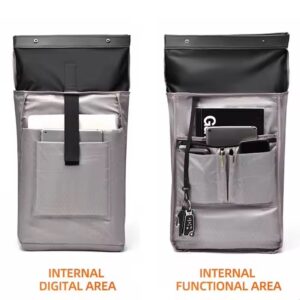
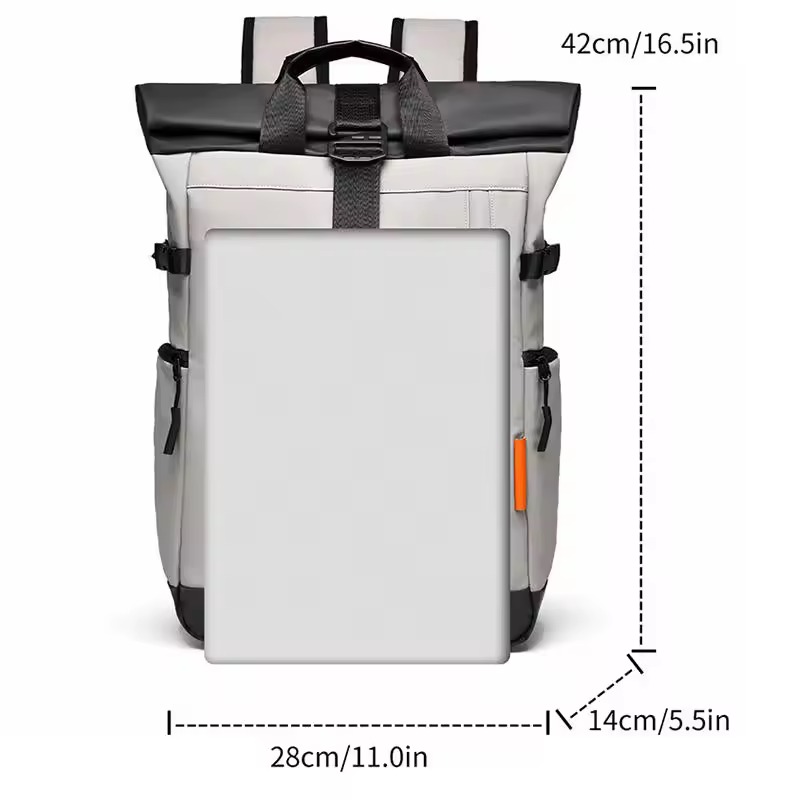
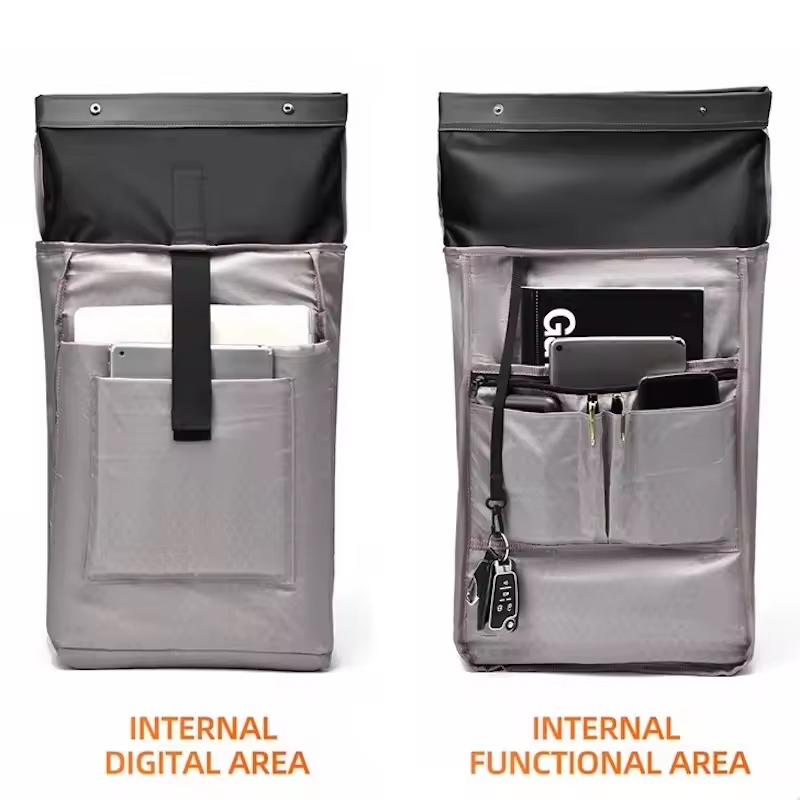
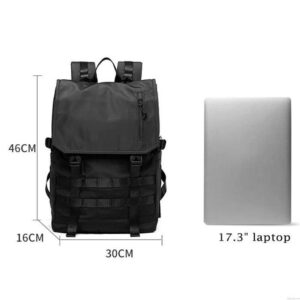
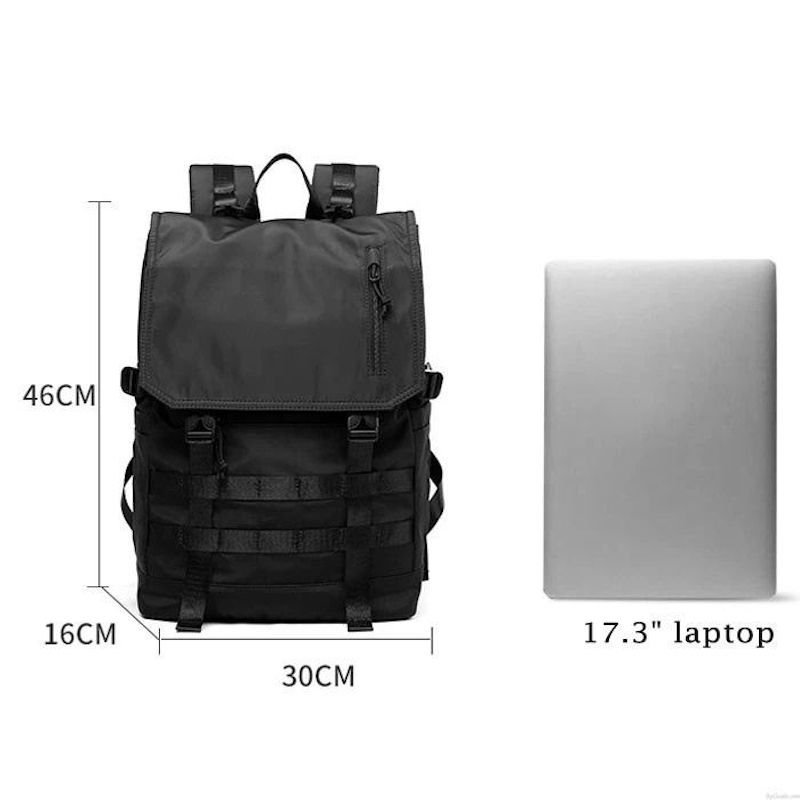
- A padded laptop sleeve inside the main compartment. This is the standard layout on most roll-tops, ours included: the laptop sits against the back panel, under the roll, which is also the best-protected spot in the bag when it rains. The trade-off is that the bag has to be unrolled to get the laptop out. A separate side or back zipper straight into the sleeve is possible as a custom option, but it’s uncommon, and it adds another zipper where water can get in. Whichever layout you choose, specify the laptop size (13″, 15.6″, 17″) rather than “fits a laptop,” and ask for a sleeve that sits slightly above the base so the laptop doesn’t take the impact when the bag is set down.
- A front zip pocket for keys, cards and a phone, so daily essentials don’t end up at the bottom of the roll.
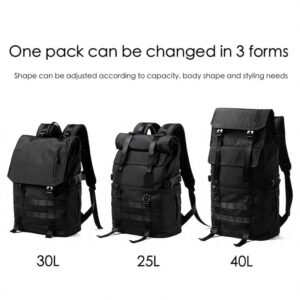
- Expandable capacity. The roll lets the same bag work as a slim daily pack or an overnight bag. If you sell it as expandable, list both volumes and make sure the side straps or compression points still hold the shape when it’s fully unrolled.
- Reflective details on the collar, straps or front panel for bike-commuter lines.
- Anti-theft features such as hidden zippers on the back panel or a lockable laptop compartment. These are popular with travel-focused buyers.
Fabric Choices for Roll-Top Backpacks
Fabric drives both the price and how the bag looks after a year. The common choices for commuter roll-tops:
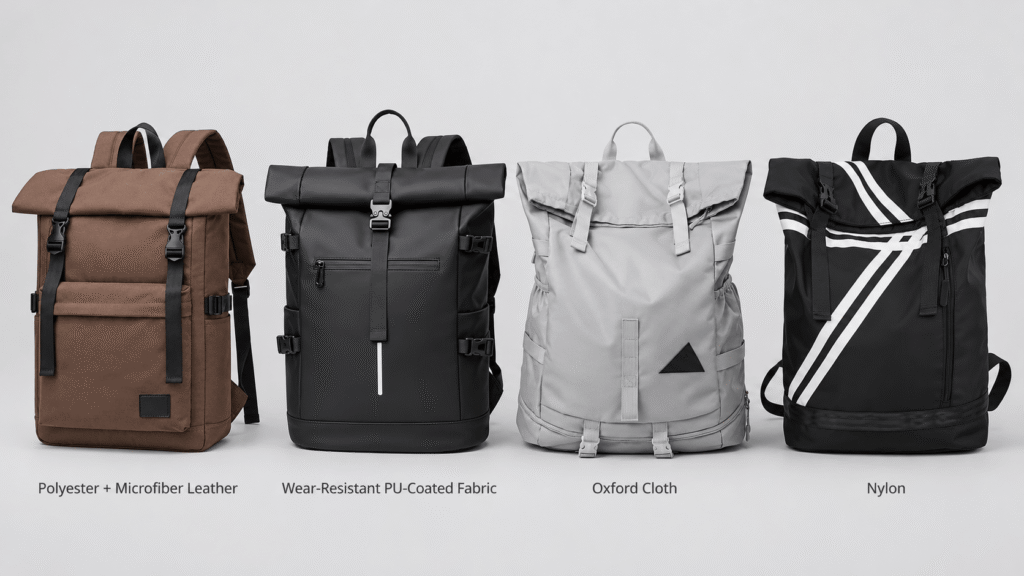
- PU-coated polyester or Oxford. The workhorse. It’s affordable, comes in a wide range of colors and is easy to sew and brand. The coating gives the splash resistance. The trade-off is that PU coatings can break down with heat, humidity and moisture over time (hydrolysis), which is why coating quality matters more than the face fabric for long-term durability (Maxwell Fabrics coated fabrics guide).
- PVC tarpaulin. The glossy, rubbery look many people picture when they think “roll-top.” PVC isn’t subject to hydrolysis the way PU is, and it wipes clean easily. It’s heavier and stiffer, so pay attention to how well the collar rolls in cold weather.
- PU leather and PU film fabrics. A smooth, leather-like surface that looks clearly more upmarket than coated polyester, which is why business and corporate gift roll-tops so often use it. These bags are usually built with heat pressing, which gives cleaner edges and a neater, more structured shape than the same design simply sewn in a soft fabric. Scuffs show more than on Oxford, so it’s better suited to a city bag than a rugged one.
- Nylon. Lighter and softer, and it rolls and packs down easily. It’s often used in the coated versions for travel and expandable styles.
For a wider side-by-side on weight, durability and cost, see our Backpack Material Guide.
Branding a Roll-Top
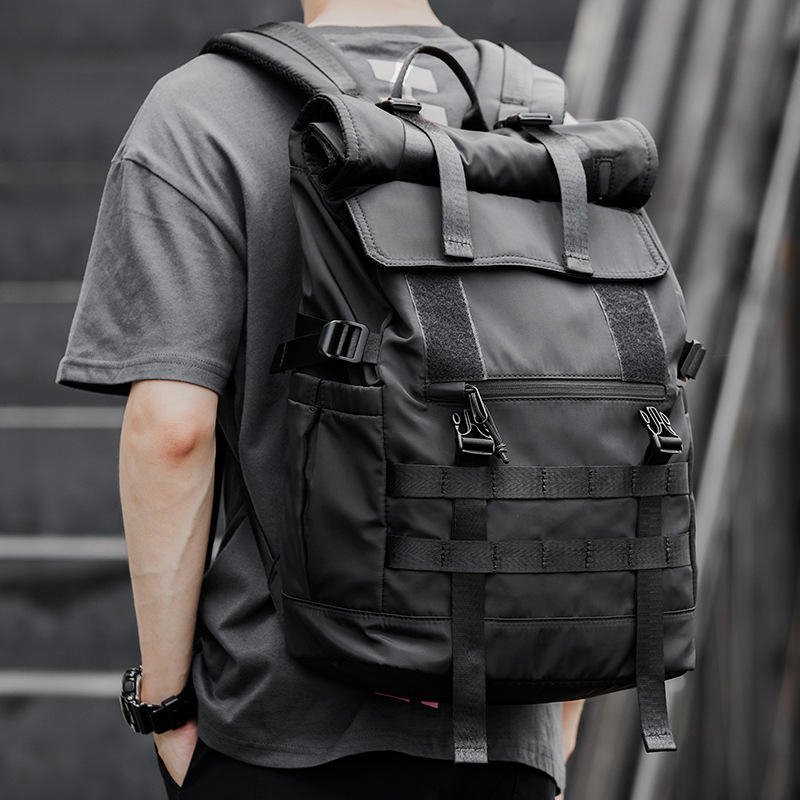
A logo on the roll collar disappears as soon as the bag is rolled. On a roll-top the front panel is the main branding area. On a flap style, the flap is. Smaller, subtle placements (a woven label on the shoulder strap, a rubber patch, a debossed tab) suit the minimalist look most roll-top buyers are after.
Coated and film fabrics react differently to printing and embroidery than plain Oxford does. Embroidery punches more holes into a splash-proof surface, and print adhesion varies by coating. Ask to see the logo on the actual fabric at sampling stage, not on a swatch of something similar. Our bag branding techniques guide covers how screen printing, embroidery and heat transfer compare.
MOQ & Pricing
- In-stock styles: from 50 pieces. Pick an existing roll-top or flap design and add your logo. This is the usual way to test a market before committing to a custom design.
- Custom designs: from 500 pieces. New patterns, custom fabric colors, your own hardware or a changed layout (say, adding a separate laptop access zipper to a style that doesn’t have one). Below that, the setup work for cutting dies, sampling and sourcing fabric and hardware doesn’t spread across enough units.
Unit prices run from about $5 to $20. The low end is a simple roll-top in standard coated polyester with plastic buckles and a basic interior. The high end adds a padded, separately accessible laptop sleeve, better zippers or storm flaps, magnetic or metal hardware, a heavier fabric such as tarpaulin or PU film, and more pockets. Order quantity, packaging and branding method move the number within that range. (Our low MOQ guide explains in more detail how customization level changes the minimum.)
OEM/ODM: Starting From Ours or From Yours
Most roll-top projects we see start as ODM: a buyer finds a close existing style, then changes fabric, color, hardware and branding. That’s faster and cheaper to sample than a new pattern. If you already have a tech pack or a reference sample, we work OEM to your specification. Our OEM vs ODM guide walks through how the two routes differ in timelines and cost.
What to Have Ready Before You Request a Quote
- Roll-top, flap or hybrid, and a reference photo if you have one
- Laptop size, and whether a sleeve in the main compartment is enough or you need a separate access zipper
- Fabric preference (coated polyester, tarpaulin, PU film, nylon), or the look you’re after so we can suggest one
- Closure hardware: plastic buckle, metal hook, magnetic or hidden magnetic
- Rolled and unrolled capacity, if you’re selling it as expandable
- Logo method and placement
- Rough quantity, so we know whether you’re looking at an in-stock style (50+) or a custom build (500+)
FAQ
Is a roll-top backpack waterproof? Most aren’t fully waterproof. A sewn roll-top with coated fabric is splash-proof: it handles rain, spills and wet floors in daily use. Full waterproofing needs welded seams and no standard zippers, which is dry bag construction and usually more than a commuter bag needs.
What’s the minimum order for a custom roll top backpack? 50 pieces for in-stock styles with your logo, and 500 pieces for custom designs.
How much does a custom roll top backpack cost? Roughly $5–20 per unit, depending mainly on fabric, closure hardware, laptop compartment design and how many pockets and features it has.
Roll-top or flap: which sells better for a commuter line? It depends on the customer. A roll-top offers adjustable capacity and an outdoor/cycling feel. A flap opens faster and looks more structured and business-like. Many brands carry one of each in the same line.
Where does the laptop go in a roll-top backpack?
Usually in a padded sleeve inside the main compartment, under the roll. That’s the best-protected spot in rain. A separate side or back access zipper can be added as a custom option, but it means another zipper to keep water out of, so it’s worth asking whether your customer really needs it.
Whether you’re building a minimalist city bag, a bike-commuter pack or an expandable travel roll-top, we can help you choose the closure, fabric and hardware that fit the customer you’re selling to. Get in touch with your reference and quantity, or browse our full flap and roll top backpack range.