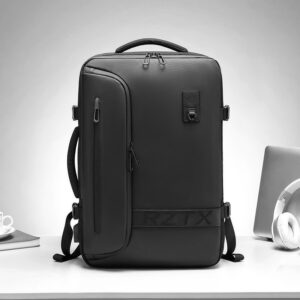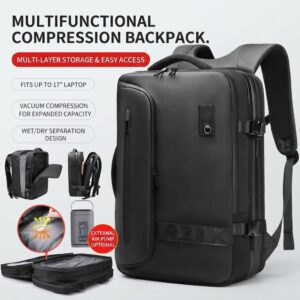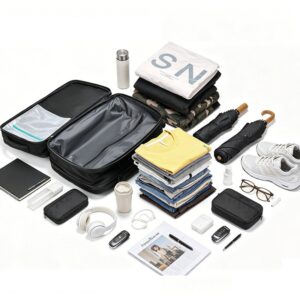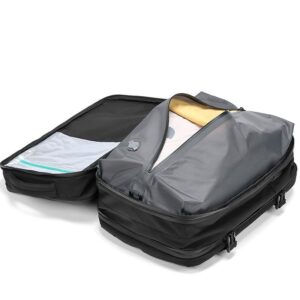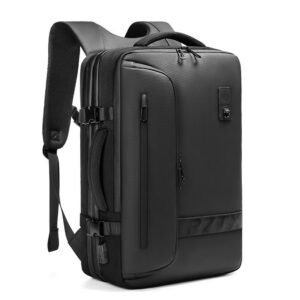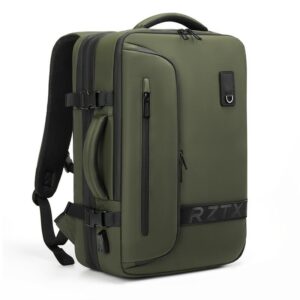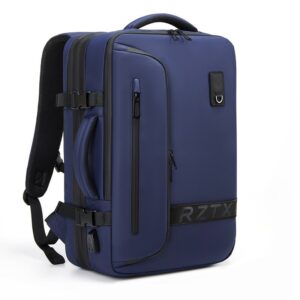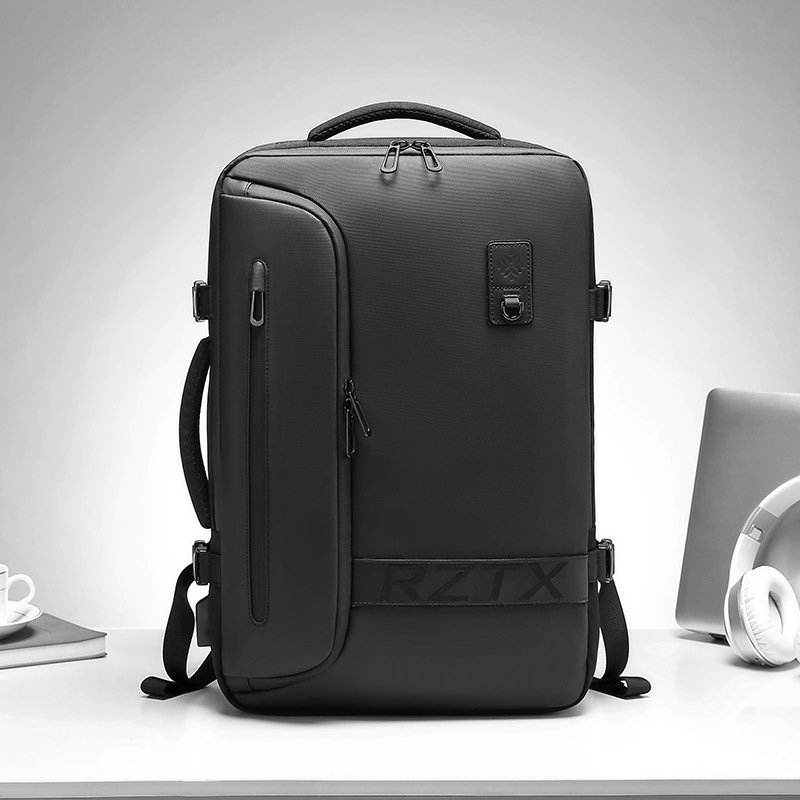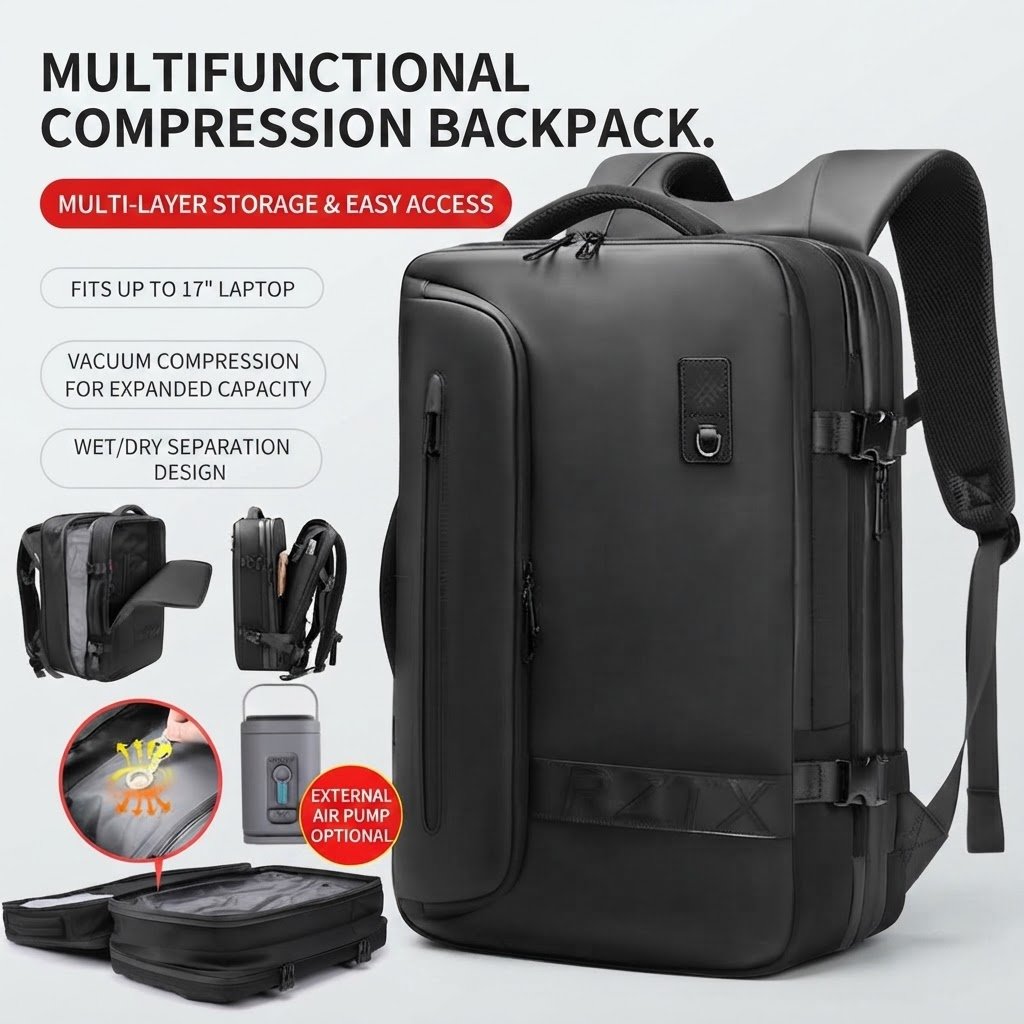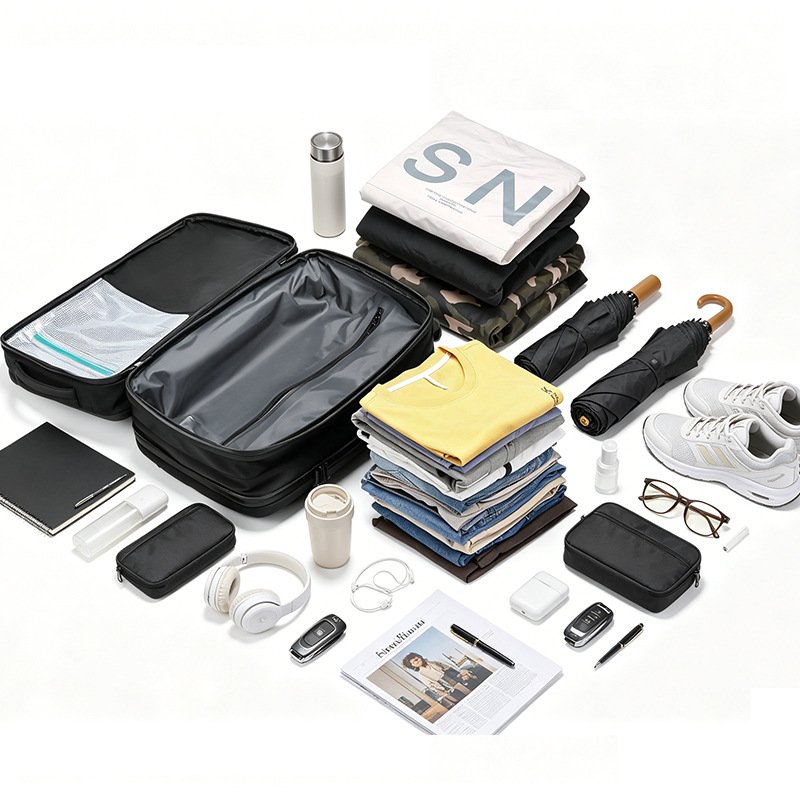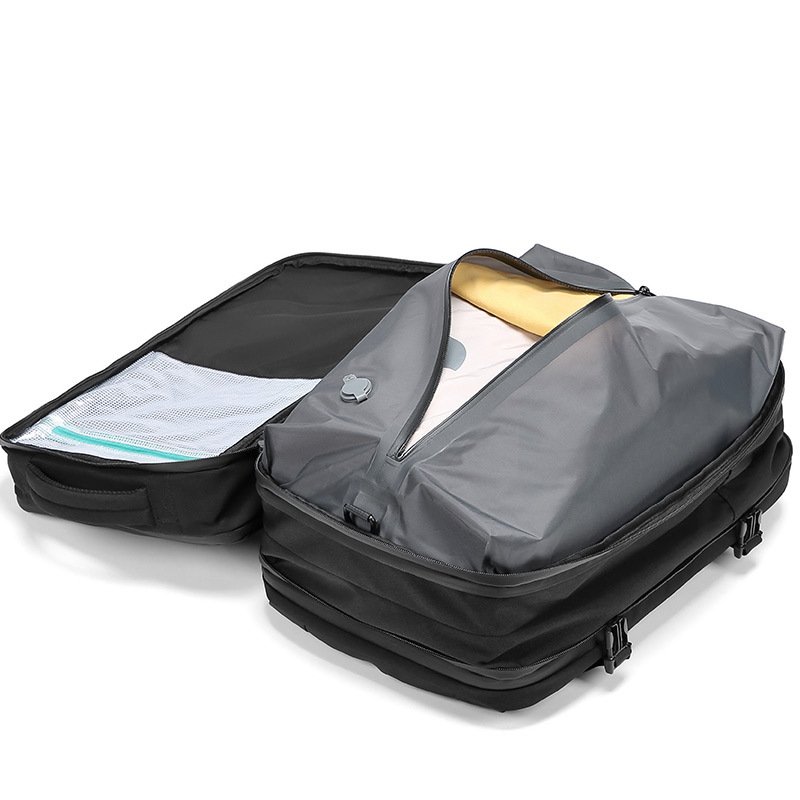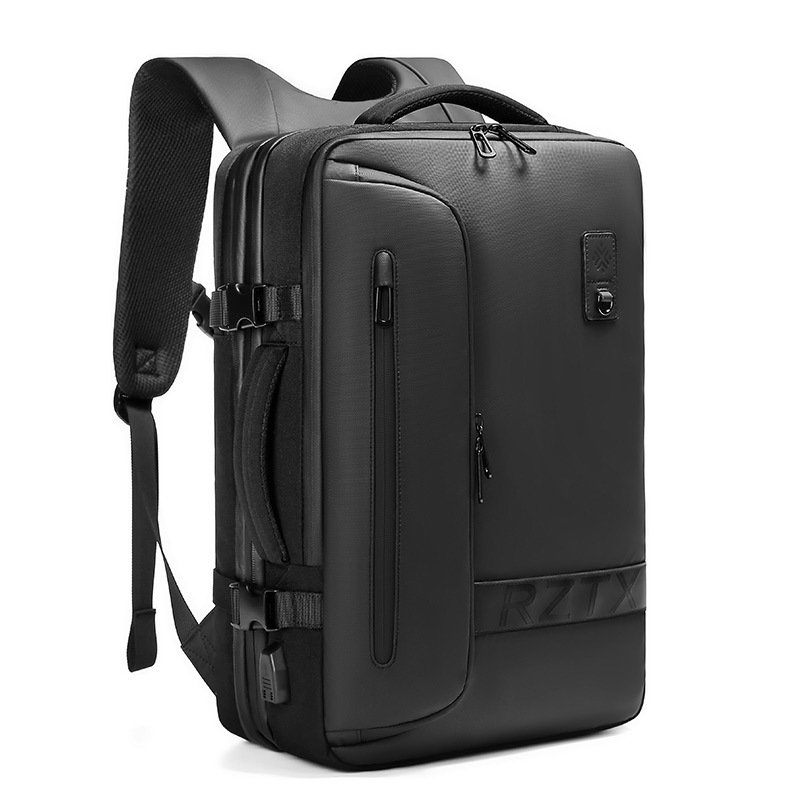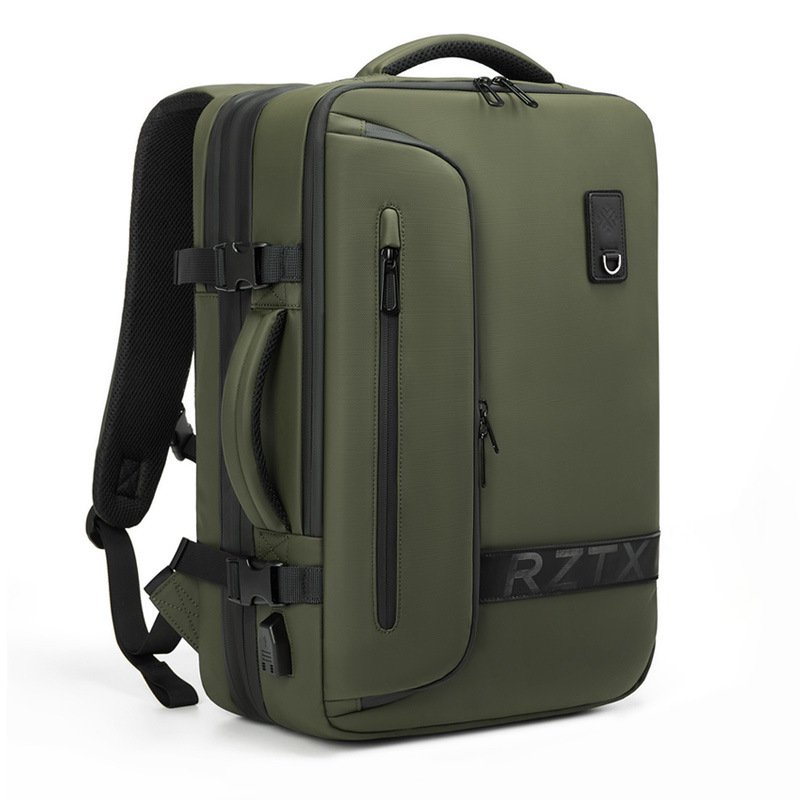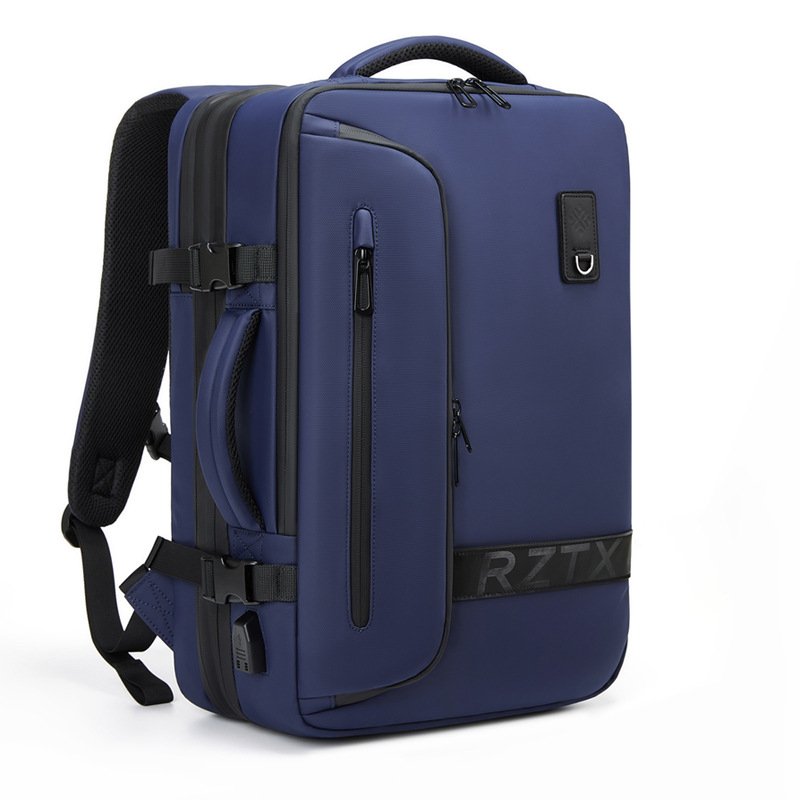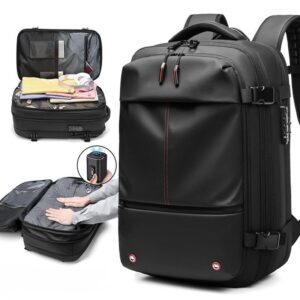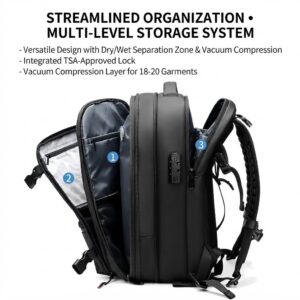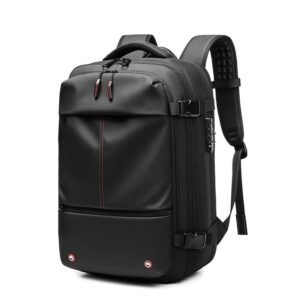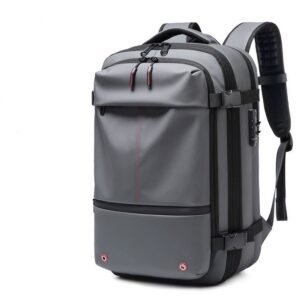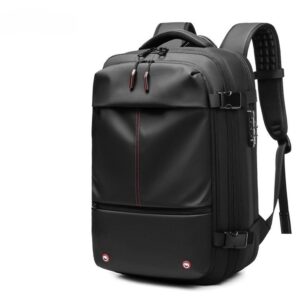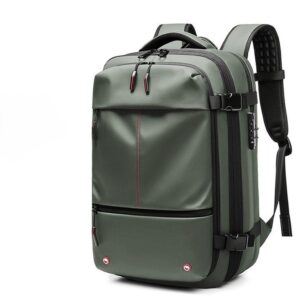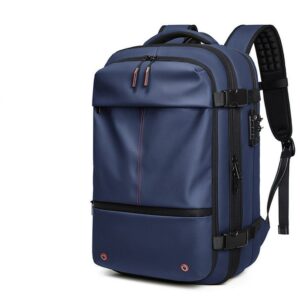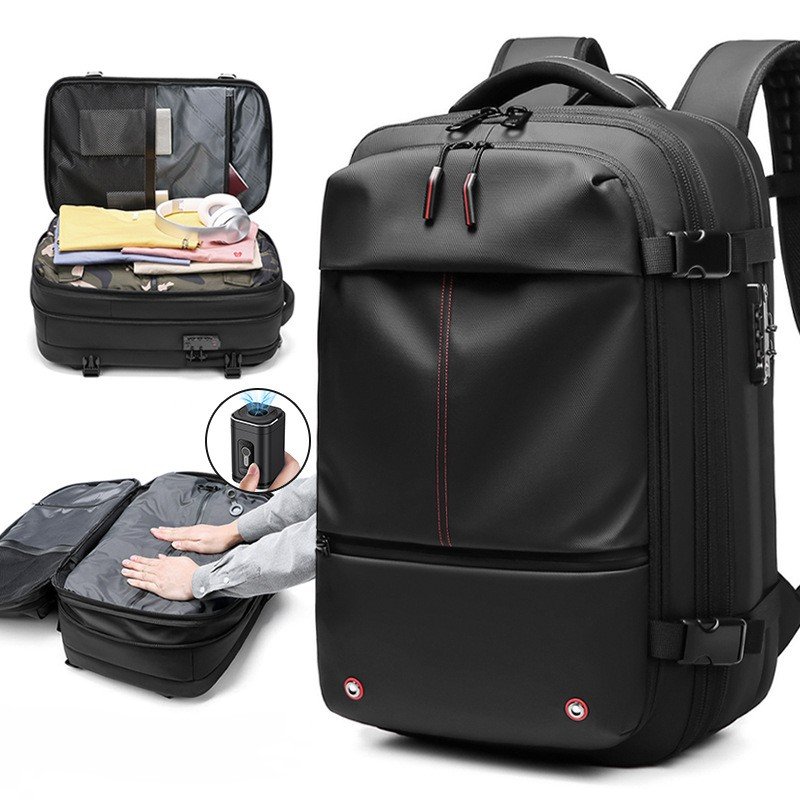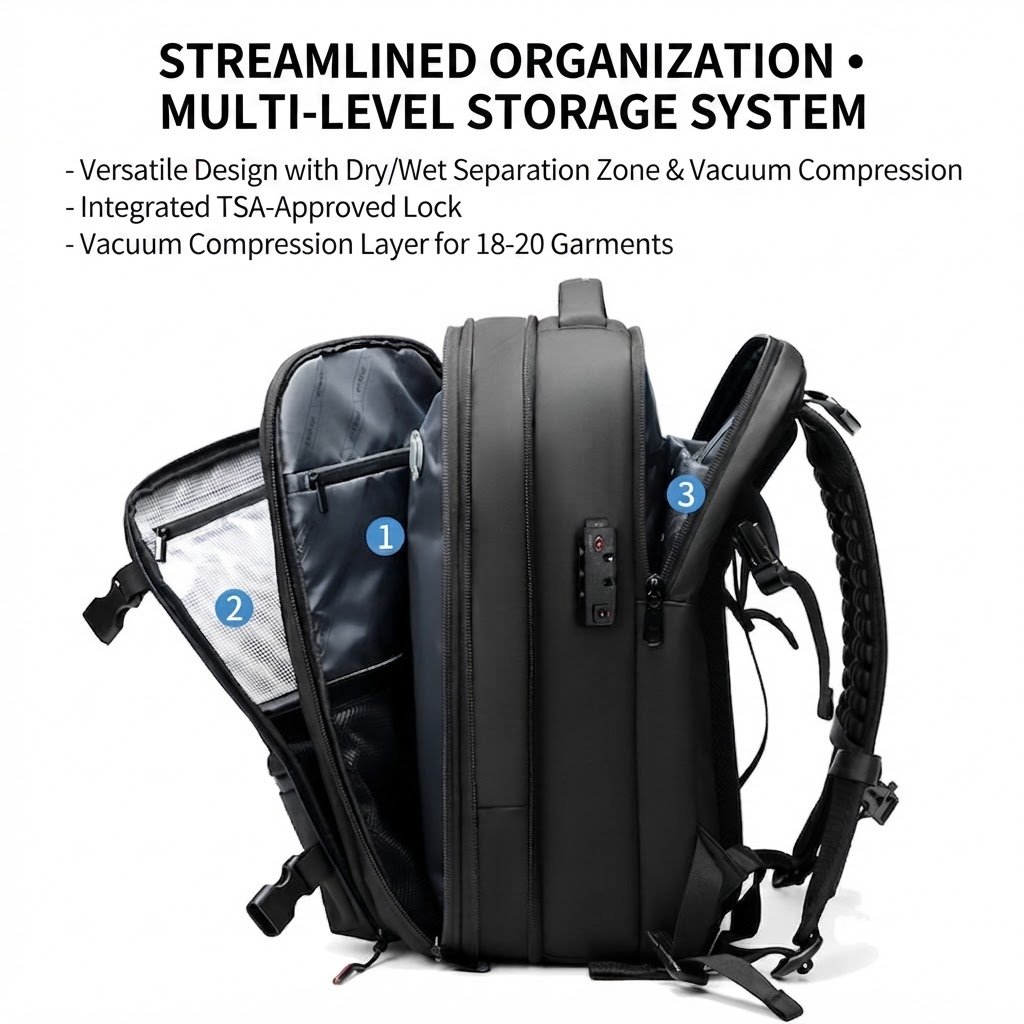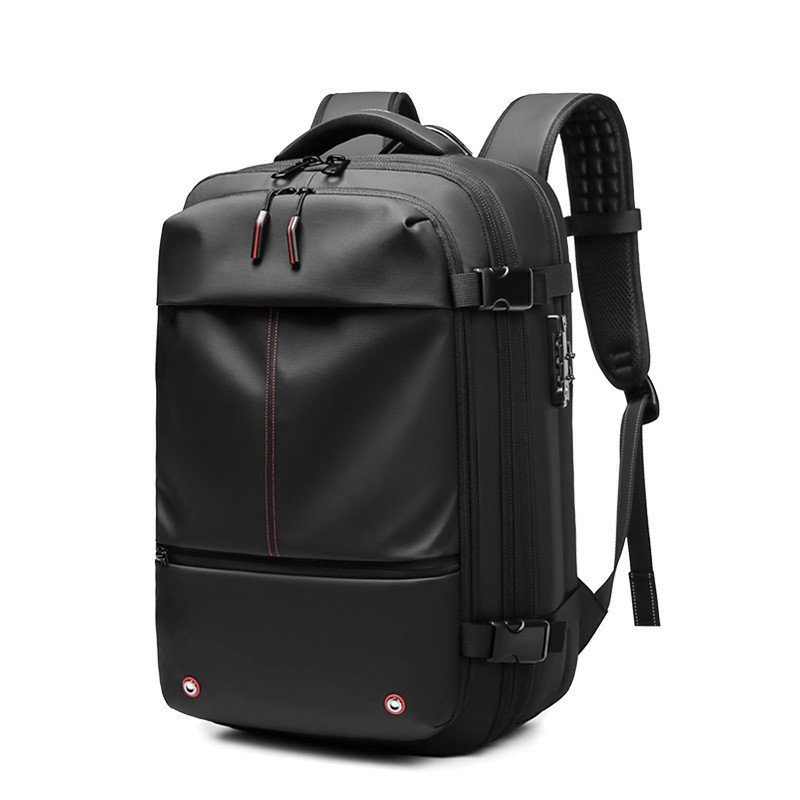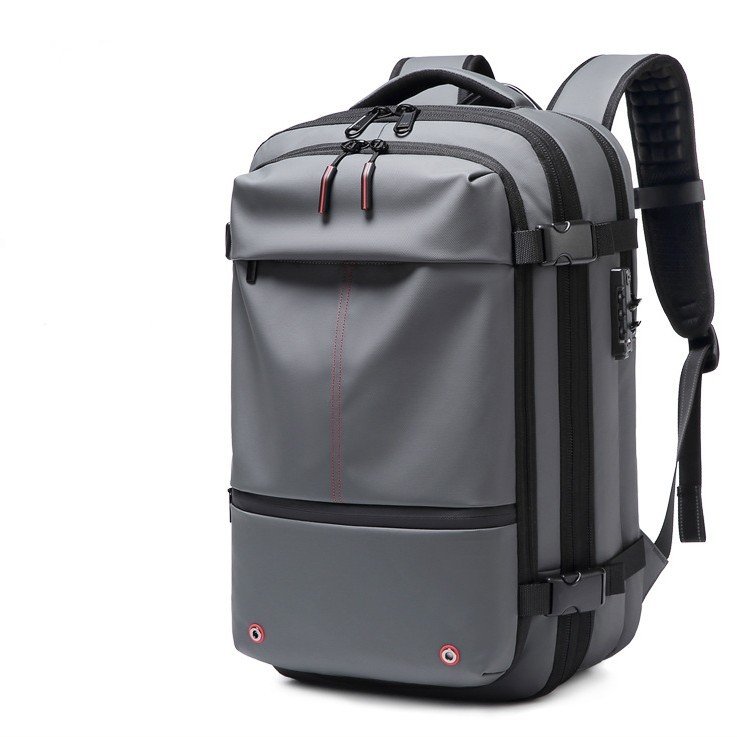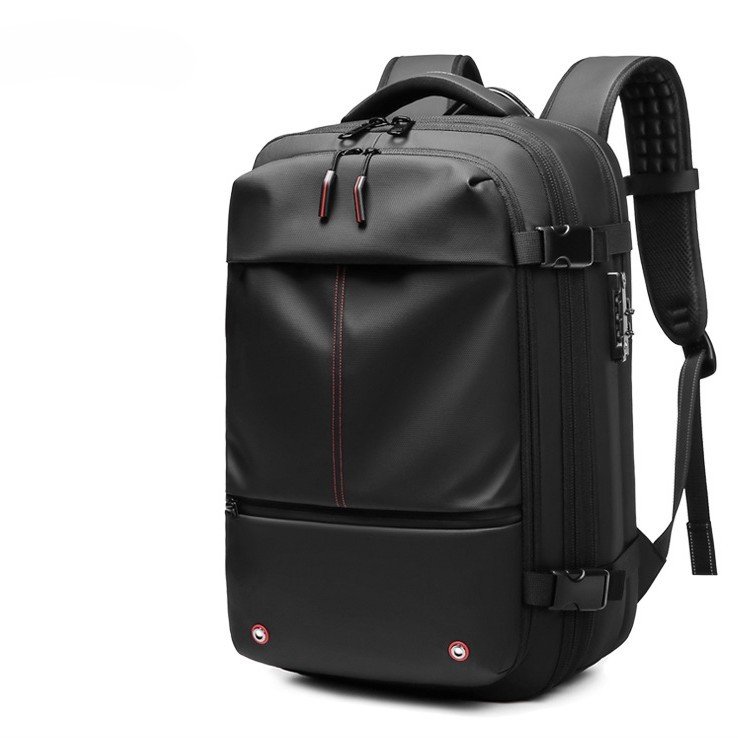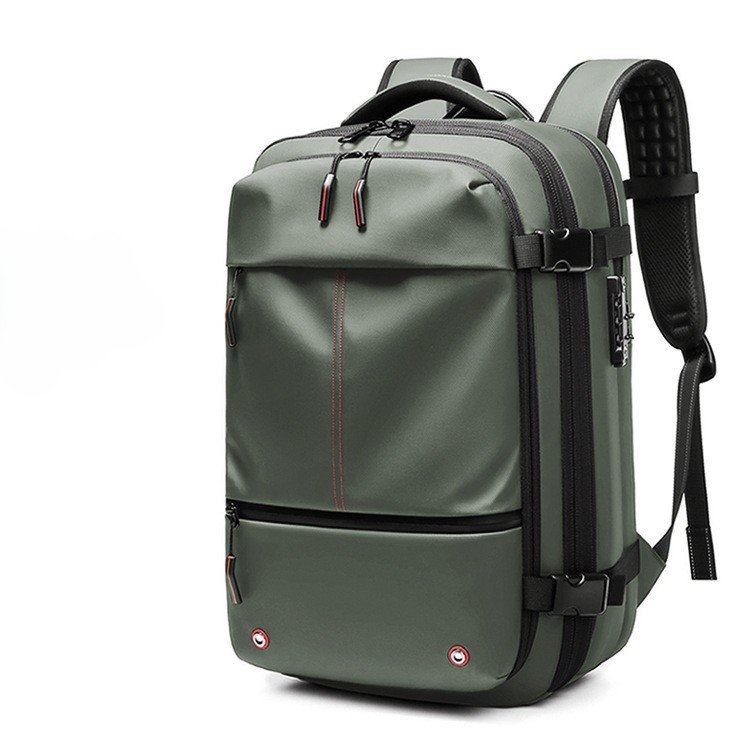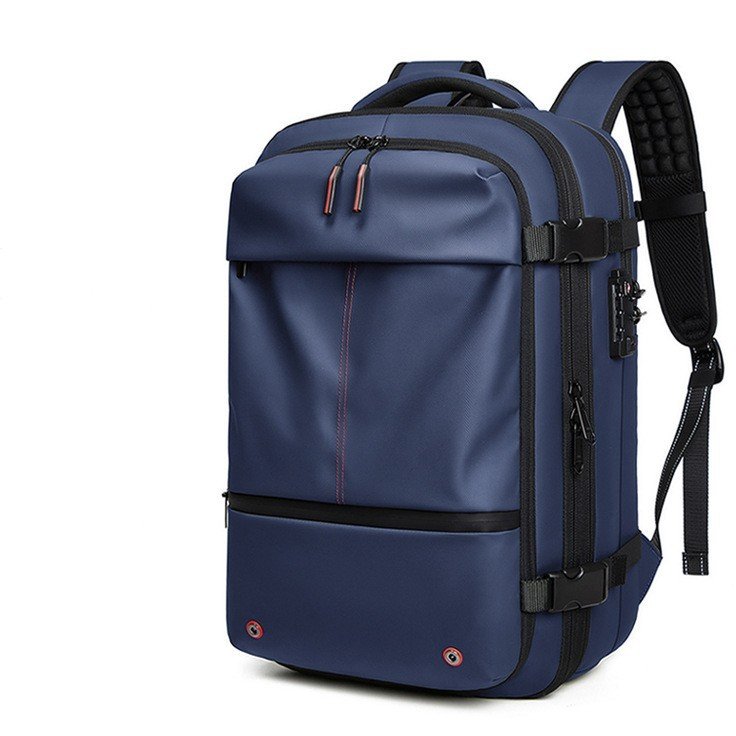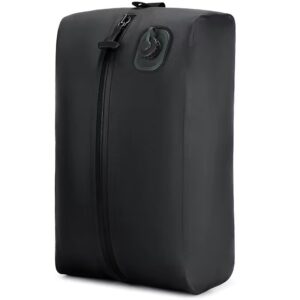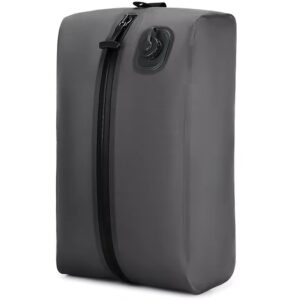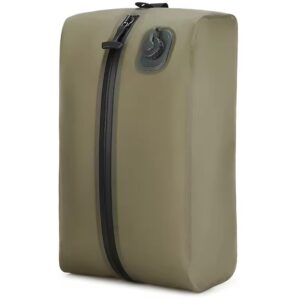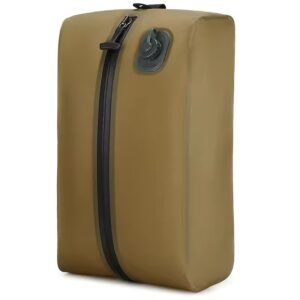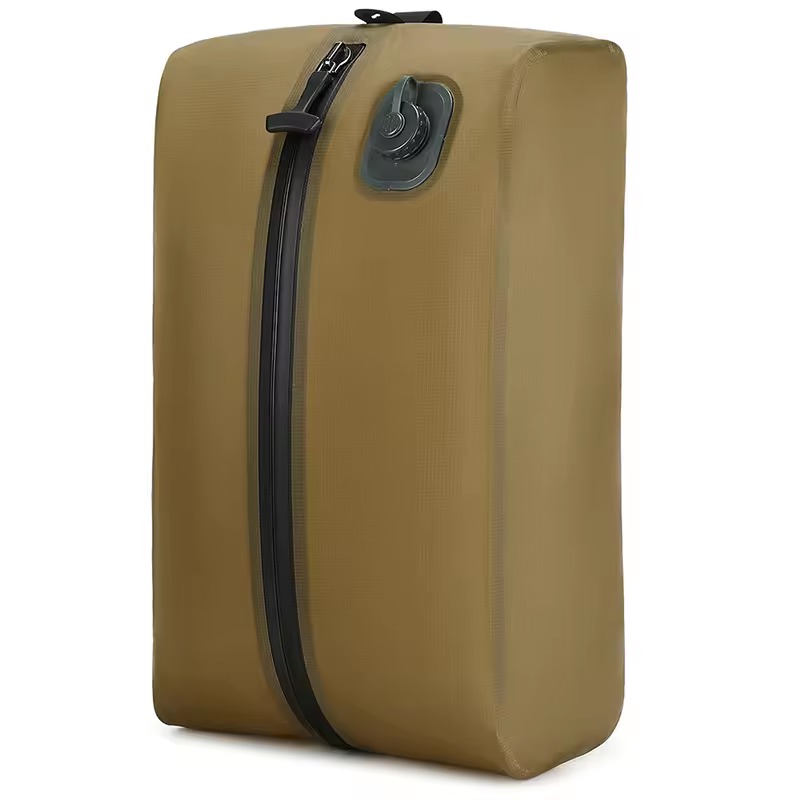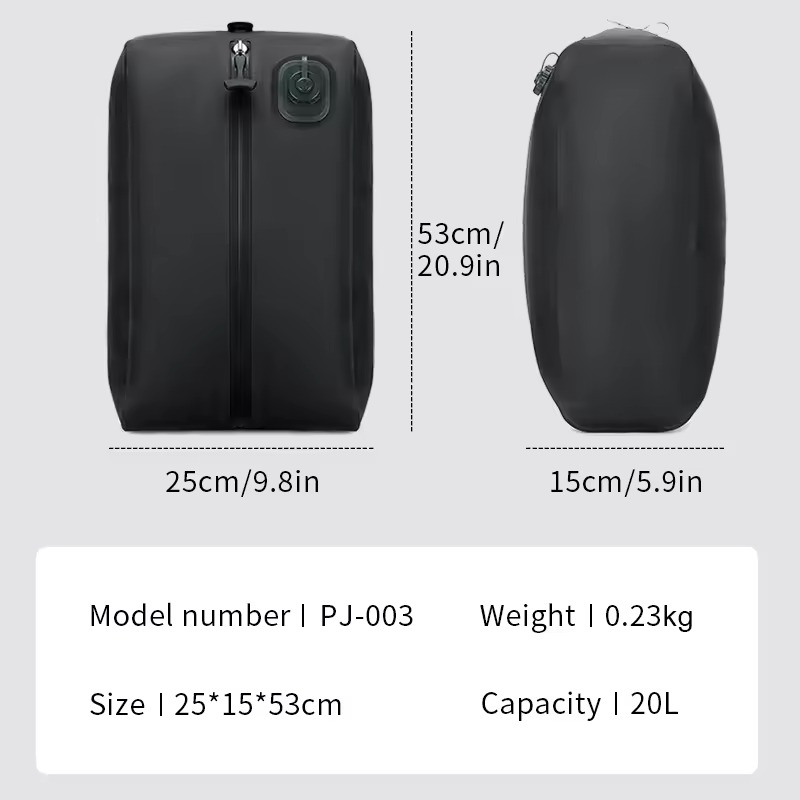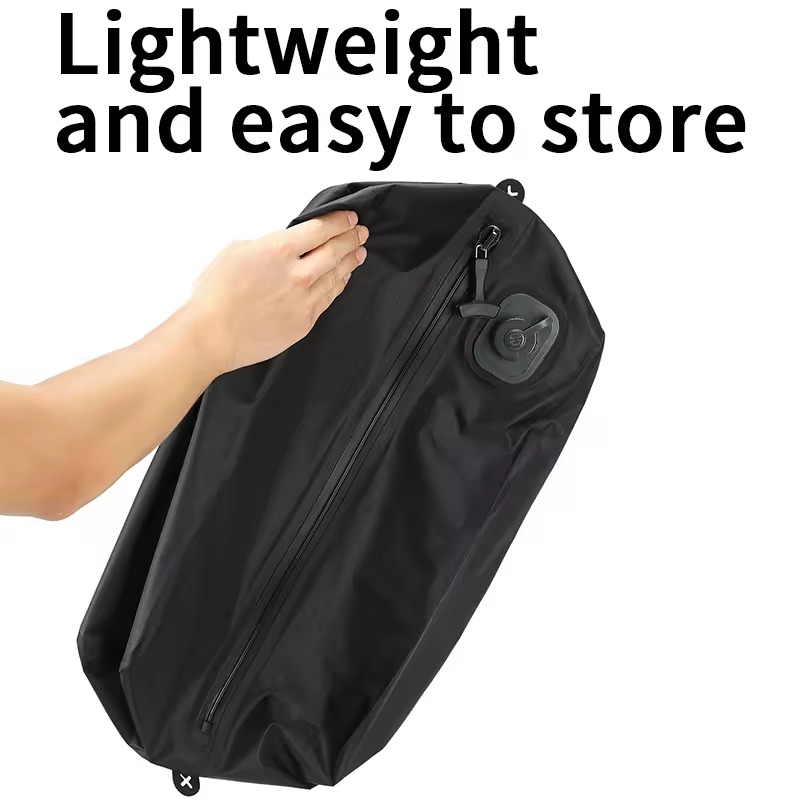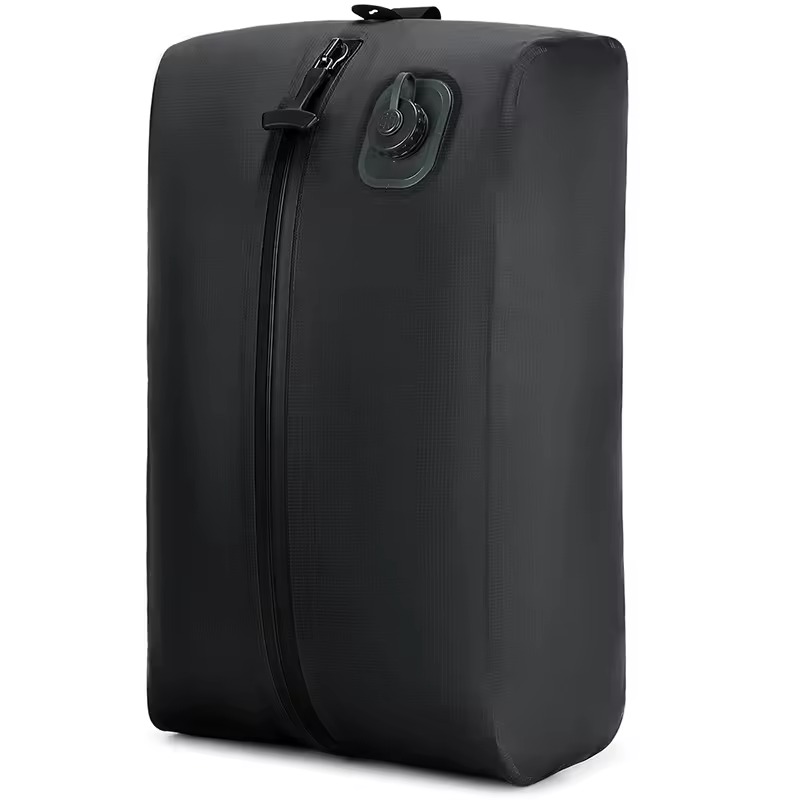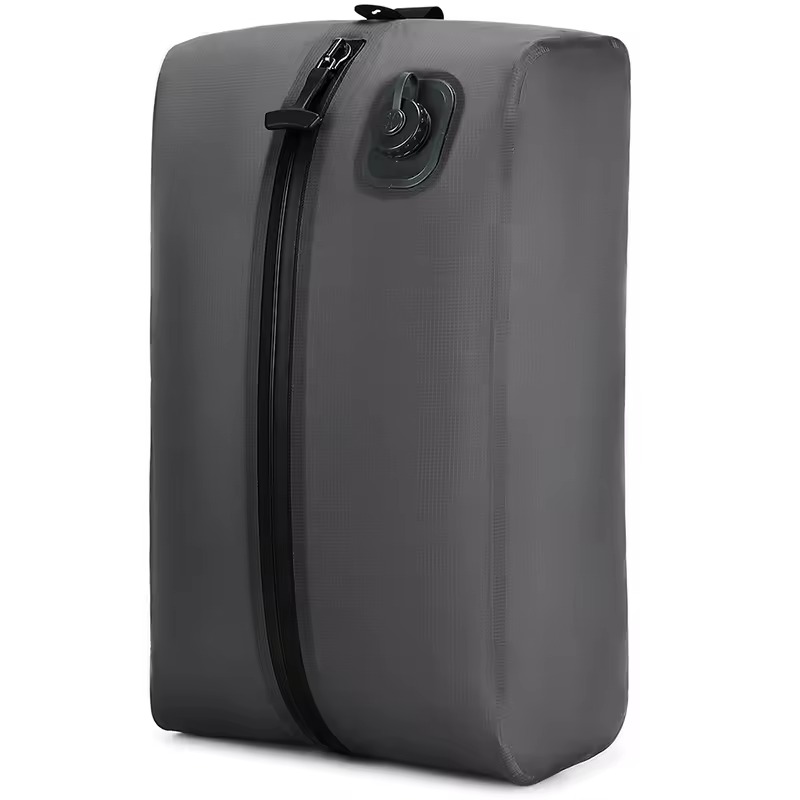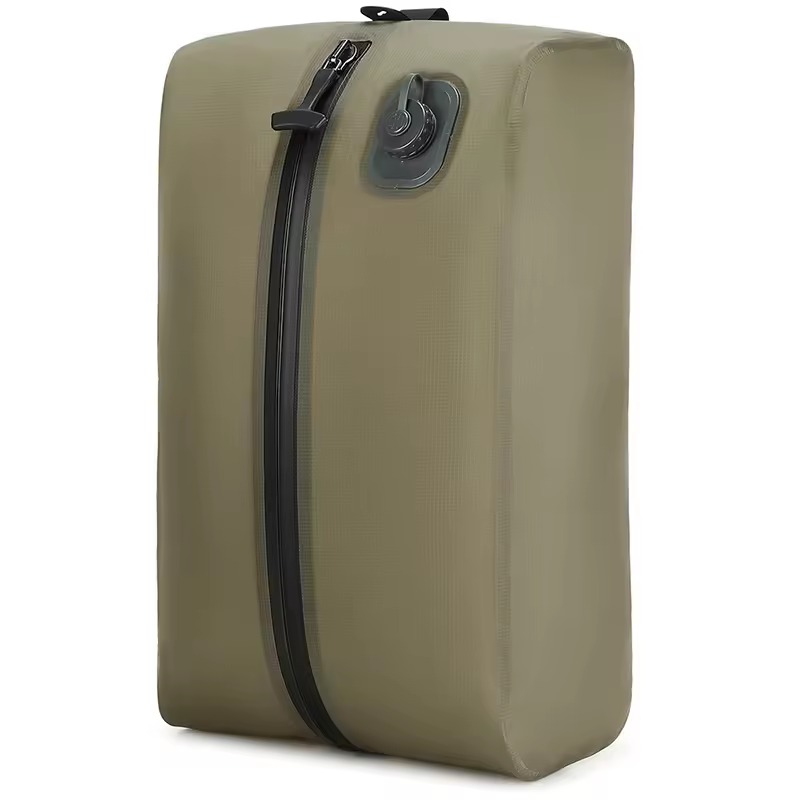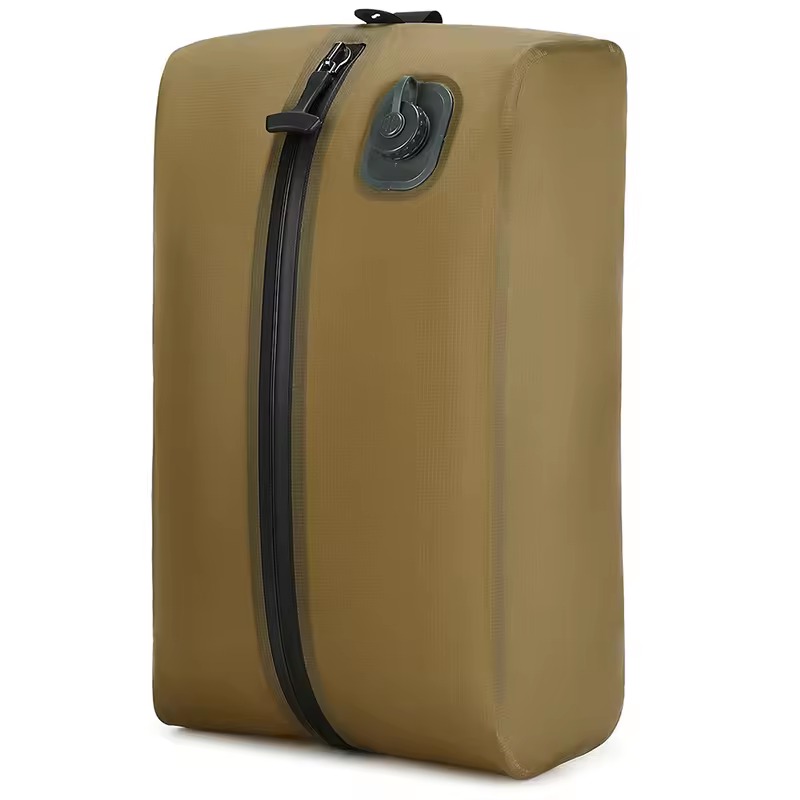
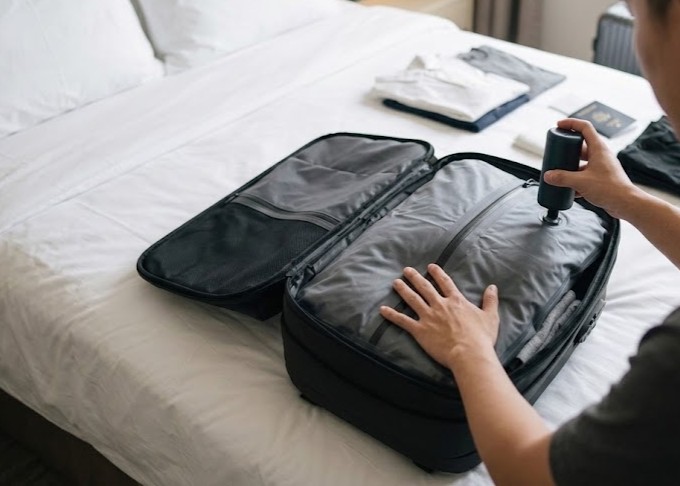
A travel vacuum compression backpack uses a one-way valve and either a manual pump, an electric pump, or a press-fit seal to force air out of a sealed inner chamber, shrinking soft goods like clothing down to a fraction of their packed size. For brands sourcing this category, the real decision isn’t whether to offer one — it’s which compression mechanism, which feature set, and which MOQ tier actually fits the customer they’re selling to.
It’s also a category that’s easy to underestimate on the sourcing side. From the outside, “vacuum backpack” looks like one product with one spec sheet. In practice it spans three fundamentally different builds, a materials list that’s stricter than a standard backpack’s, and — in the electric version’s case — a compliance step most first-time buyers in this category haven’t had to think about before. None of that makes it a hard product to source, but it does make it a product where the questions you ask before sampling matter more than usual.
Who’s Actually Sourcing a Travel Vacuum Compression Backpack?
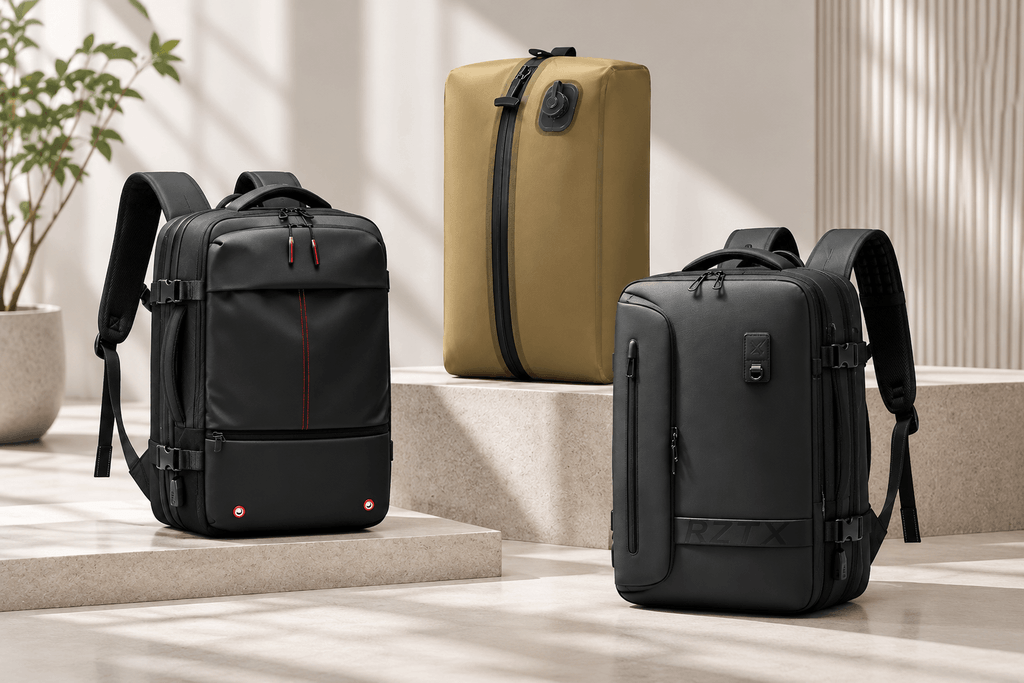
Three buyer types show up for this product, and they’re not all shopping for the same backpack.
Travel gear DTC brands are usually the ones asking for the full package — vacuum compression plus a laptop sleeve, a TSA-compliant lock, sometimes a USB charging port. They’re not selling “a bag that compresses clothes,” they’re selling a business-travel companion piece, which is why so many vacuum backpack SKUs on the market bundle in a 17″ or 17.3″ laptop compartment rather than shipping as a bare compression bag. This is also why the category sits at an unusual intersection on our own site — buyers sourcing it are often the same people who’d otherwise be looking at a laptop-focused business backpack, just with compression as the differentiating feature.
Amazon and independent-site sellers tend to start simpler — one core SKU, one compression method, private-labeled — and expand the lineup once the first version sells. For this group, picking the right compression mechanism up front matters more than a long feature list, since retooling later means a second mold or hardware order. This group also tends to order faster than a DTC brand building a full line: one SKU, one decision on compression type, then straight to sampling.
Corporate and promotional gift buyers show up less often for this category specifically, but when they do, it’s almost always the pump-free or manual version — nothing electric, nothing that needs a battery disclosure on a gift order. A frequent-flyer client gift or a conference giveaway is the kind of order where “no batteries, no charging cable to lose” is actually the selling point, not a limitation.
A fourth, smaller group worth mentioning: outdoor and camping retailers occasionally source the pump-free version specifically for packing soft gear (sleeping bag liners, extra layers) rather than travel clothing. The use case is different, but the build — sealed chamber, one-way valve, no hardware — is identical to the travel version, so it doesn’t need a separate product line, just different marketing copy on top of the same base build.
Manual, Electric, or Pump-Free — Which Compression Type Do Buyers Actually Want?
This is the first real fork in the road, and it’s not just a feature choice — it changes the bill of materials, the MOQ conversation, and in one case, the shipping paperwork.
Manual pump is the standard version most buyers land on. A hand-operated plunger or bellows pump pushes air out through the valve after the bag is sealed. No electronics, no battery, straightforward hardware sourcing — this is usually the lowest-friction option for a first order.
Electric pump versions build a small motor-driven pump into the bag itself — one-touch compression instead of manual pumping. Buyers ask for this when they want a premium, differentiated SKU, but it’s worth knowing upfront that a built-in rechargeable battery brings UN38.3 lithium-battery air-shipping documentation into the sourcing conversation, the same requirement that applies to any product shipping with an embedded lithium battery by air (UN38.3 certification overview, MGA Research Corporation). It’s not a blocker, but it’s an extra step buyers moving from manual to electric for the first time don’t always expect.
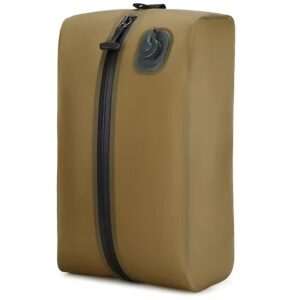
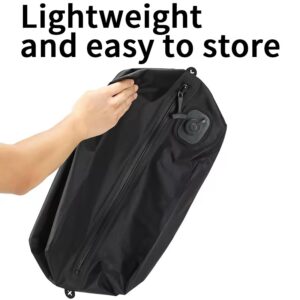
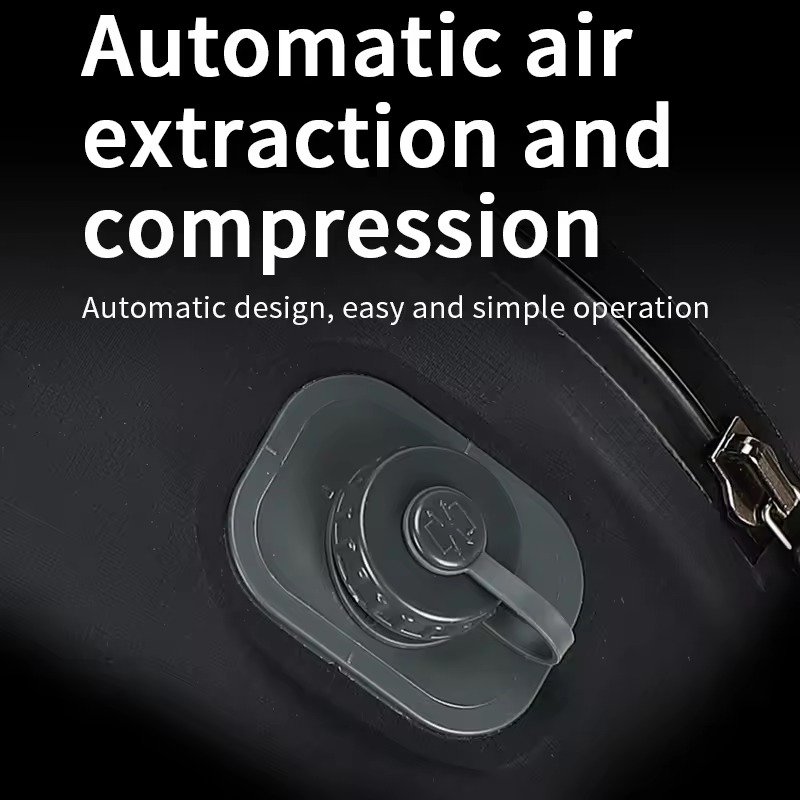
Pump-free / press-fit designs skip the pump hardware entirely — the bag is sealed and compressed by rolling, folding, or pressing out the air through the valve by hand. No moving parts to source, no battery question, and it’s the version most likely to sail through airline carry-on screening without a second look, since there’s nothing mechanical inside to flag.
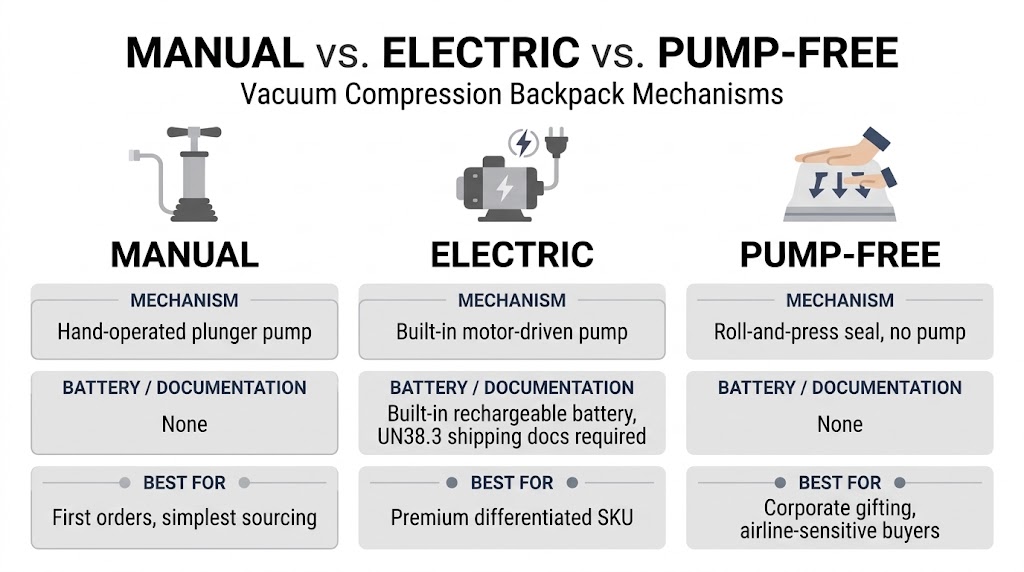
Most buyers who haven’t sourced this category before default to asking for “the vacuum backpack” without realizing these are three genuinely different builds. Getting this decision made early avoids a mid-production change request.
A practical way to think about it: manual is the safe default for a first order, electric is the upsell once you know the SKU sells and you’re ready to handle the extra documentation, and pump-free is the answer whenever “no moving parts” matters more than one-touch convenience — corporate gifting, airline-sensitive buyers, or anyone who’s had a customer complain about a broken pump before.
What Makes the Airtight Chamber Actually Work
The compression only works if the chamber holding the compressed goods stays sealed, which puts different demands on materials and hardware than a standard backpack build.
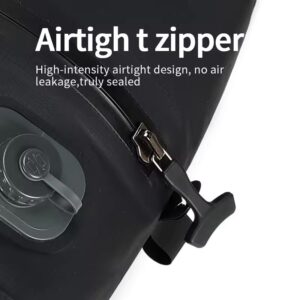
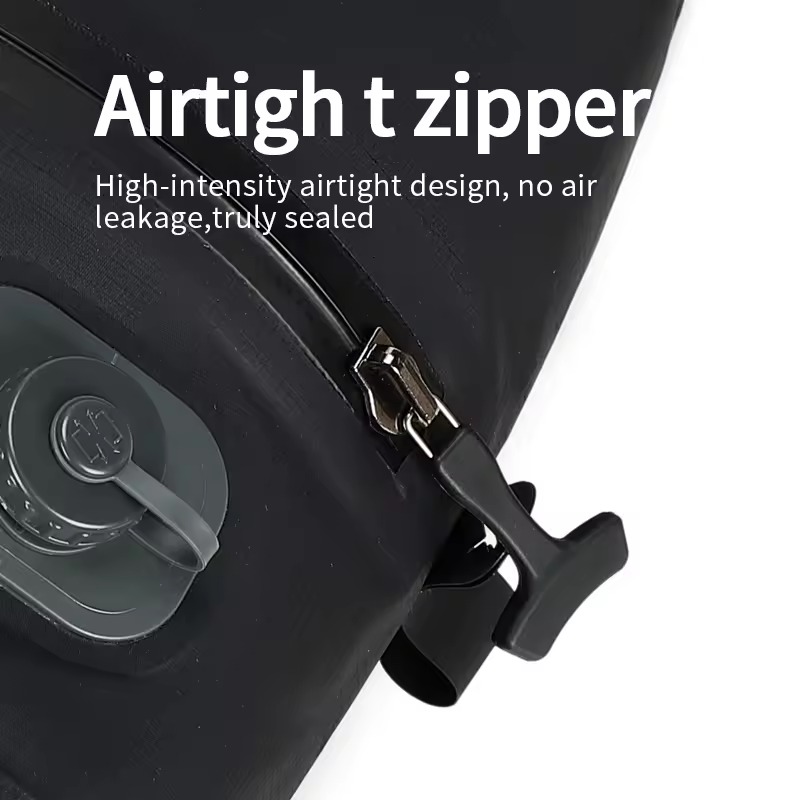
The core mechanism is a one-way valve — commonly built around a silicone flap or seated ball that opens to let air out under pressure and closes to stop air from re-entering — paired with a fully sealed compartment, usually closed with a waterproof or airtight-grade zipper rather than a standard zipper tape (how vacuum compression backpacks work, Fluxis Travel Gear). This is a widely used mechanical approach across the category, not a single manufacturer’s proprietary system.
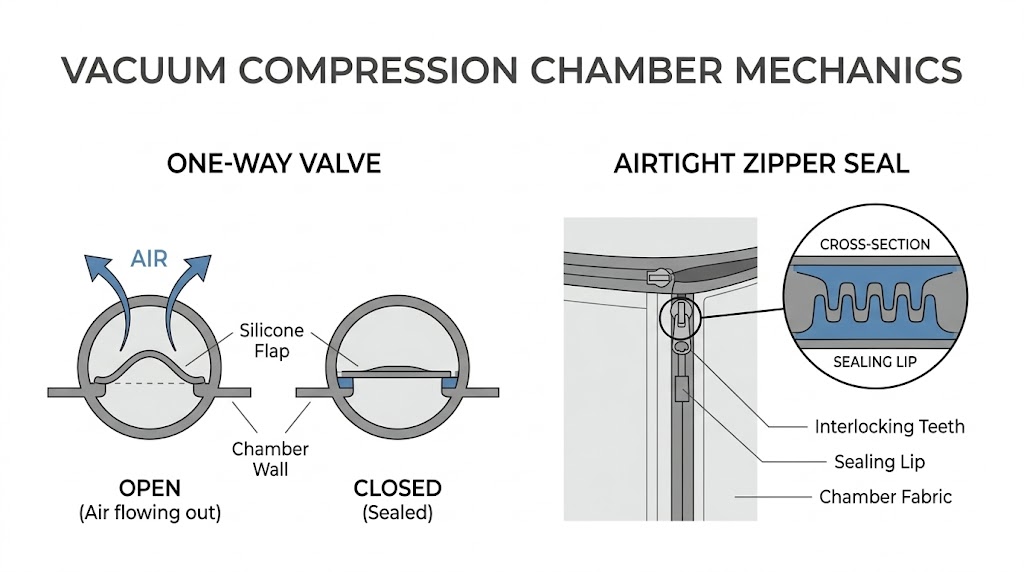
That airtight requirement is why the fabric and hardware specs matter more here than on a general-purpose backpack: the compression chamber panel typically needs a coated fabric (PU or TPU-backed) rather than an untreated one, the zipper needs to actually hold a seal under negative pressure rather than just close, and any seams inside the chamber need to be finished cleanly enough not to create a leak path. None of this is exotic — it’s the same category of build quality already used on dry bags and waterproof compartments — but it does mean a vacuum backpack quote can’t be priced off a standard backpack’s material list.
It also means quality control on this category looks a little different from a standard backpack run. A visual inspection can confirm stitching, zippers, and hardware, but it can’t confirm the chamber actually holds a seal — that takes a functional test (seal the chamber, compress it, check it holds) on a sample from the production batch, not just the pre-production sample. If a supplier only offers visual AQL inspection on this category, that’s worth asking about before the order ships, since a chamber that looks fine but leaks air defeats the entire point of the product.
MOQ & Pricing
MOQ follows the same structure as our other backpack categories: existing style with your logo added starts at 50 pieces. A fully custom build — new structure, added features like the laptop compartment or electric pump, hardware changes — typically starts at 300-500 pieces, since a new mold, valve sourcing, or electric component order isn’t worth setting up below that volume.
In practice, most first-time buyers in this category land in the 50-piece tier without realizing it’s an option — they assume “vacuum backpack” automatically means a fully custom, higher-MOQ product because the mechanism sounds complex. It doesn’t have to. If an existing compression build already fits your spec and you just need your branding on it, that’s the same low-MOQ path as any other backpack category, not a special higher bar because of the valve and pump.
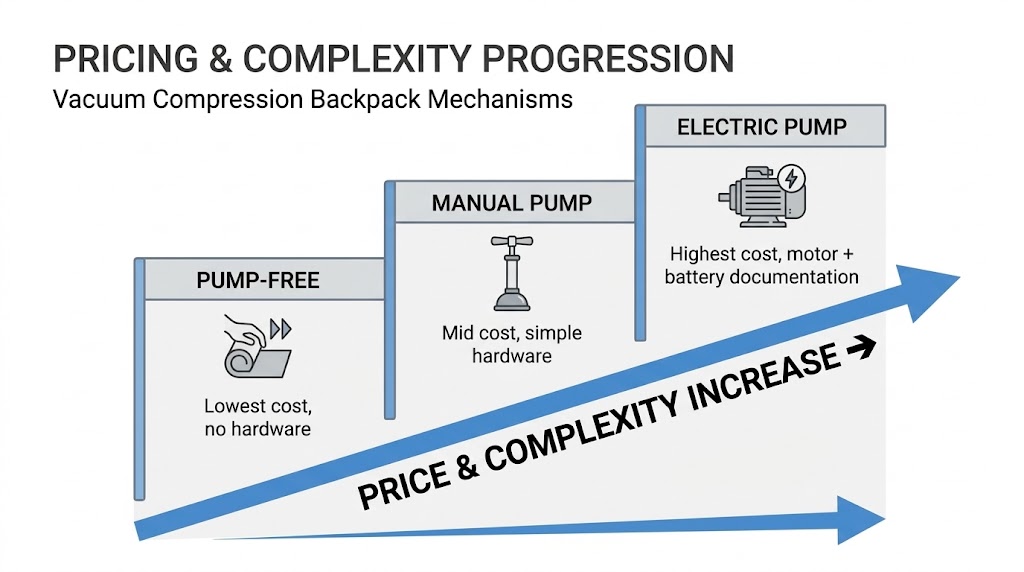
Pricing scales with which compression type you choose and how much else is built into the bag. A pump-free or manual-pump version with a simple single-compartment layout sits at the lower end of the range; adding a laptop sleeve, TSA lock, or multiple compartments moves it up; the electric-pump version sits highest, both for the motor/battery component itself and the additional documentation it requires. If you’re comparing quotes across compression types, ask what’s actually different in the bill of materials — that’s usually where the price gap comes from, not the fabric. This is the same MOQ logic that applies across our other custom categories — see our OEM vs ODM guide if you’re still deciding which sourcing path fits your order size.
OEM/ODM Process
Sourcing a custom vacuum compression backpack follows the same three-step flow as our other custom categories, with one extra decision point up front.
Step 1 — Lock in the mechanism. Before anything else, decide manual, electric, or pump-free. This single choice determines the hardware sourcing list, so it needs to happen before mold or tooling conversations start.
Step 2 — Confirm the feature set and materials. Laptop compartment size (17″ vs 17.3″ is a real difference buyers ask about), TSA lock, USB charging, fabric coating and grade, valve and zipper specs — this is where the quote gets built. This is also the point to flag whether the bag needs to hold up to genuinely frequent airline travel (in which case zipper and hardware grade matter more) versus occasional use, since that changes the materials conversation without changing the compression mechanism itself.
Step 3 — Sample, then scale. Standard sampling timeline applies, with the electric-pump version typically taking a bit longer to sample given the added component sourcing and any compliance documentation. As with any of our categories, we work direct from our own factory — see why that matters for quality control and communication — rather than through a trading company layer.
Questions to Ask Before You Place a Sample Order
A handful of questions separate a smooth first order from a frustrating one on this category, mostly because the compression mechanism gives buyers more to get wrong than a standard backpack does.
What’s the actual valve and pump spec, not just “vacuum compression”? Two suppliers quoting “vacuum compression backpack” can mean genuinely different hardware — ask for the specific valve type and, if electric, the pump’s spec sheet, rather than assuming it matches whatever reference image you sent.
Has the chamber been functionally tested, or only visually inspected? As covered above, a chamber that looks correctly assembled can still fail to hold a seal. Ask specifically whether the sample (and later, the production batch) gets a functional compression test, not just a stitching and zipper check.
If it’s electric, who handles the battery documentation? UN38.3 and related lithium-battery shipping paperwork is a real cost and timeline factor that’s easy to overlook when you’re comparing a manual quote against an electric one. Confirm upfront whether your supplier handles this as part of the quote or whether it’s on you to source separately.
What’s the fabric and coating spec on the compression panel specifically? Not every panel on the bag needs to be airtight-grade — only the chamber does. A supplier that specs the whole bag in heavier, coated fabric “to be safe” is either overbuilding (and overcharging) or hasn’t thought through which panels actually need the airtight spec.
Does the MOQ tier match what you’re actually testing? If you’re validating demand for the category itself, the 50-piece logo-only tier on an existing style is a lower-risk way to find out than committing to 300-500 pieces on a fully custom build with features you haven’t confirmed buyers want.
FAQ
Does vacuum compression damage clothing? No — the compression is on air volume, not on the fabric itself, and it doesn’t create the kind of sustained crushing pressure that damages structured garments. It’s the same principle used in vacuum storage bags, just built into a backpack form factor.
Will an electric vacuum backpack cause problems at airport security or on a flight? The compression mechanism itself isn’t the issue — it’s the built-in battery, which is the same consideration that applies to any electronic device with an embedded lithium battery. Buyers sourcing the electric version should plan for standard lithium-battery air-shipping documentation (UN38.3) rather than assume it ships like a normal backpack.
Which compression type should I choose for a first order? If you’re testing the category for the first time, manual pump is the lowest-friction starting point — no battery documentation, simpler hardware sourcing, and it still delivers the core compression benefit buyers are looking for.
Can you add a laptop compartment or other features to any compression type? Yes — the laptop sleeve, TSA lock, and similar features are independent of which compression mechanism you choose. The compression type affects the internal chamber and hardware; the feature set is a separate layer on top of it.
Is this a good category to test with a small first order? It can be, with a caveat: because the compression mechanism itself is the product’s core value, this isn’t a category where cutting corners on the valve or zipper to save cost is a safe test. A manual-pump version with a simple, well-executed chamber gets you a real test of demand at the lower MOQ tier without betting on features you haven’t validated buyers actually want yet.
Ready to move a travel vacuum compression backpack from concept to sample? Get in touch and we’ll walk through which compression type and feature set fits what you’re selling.
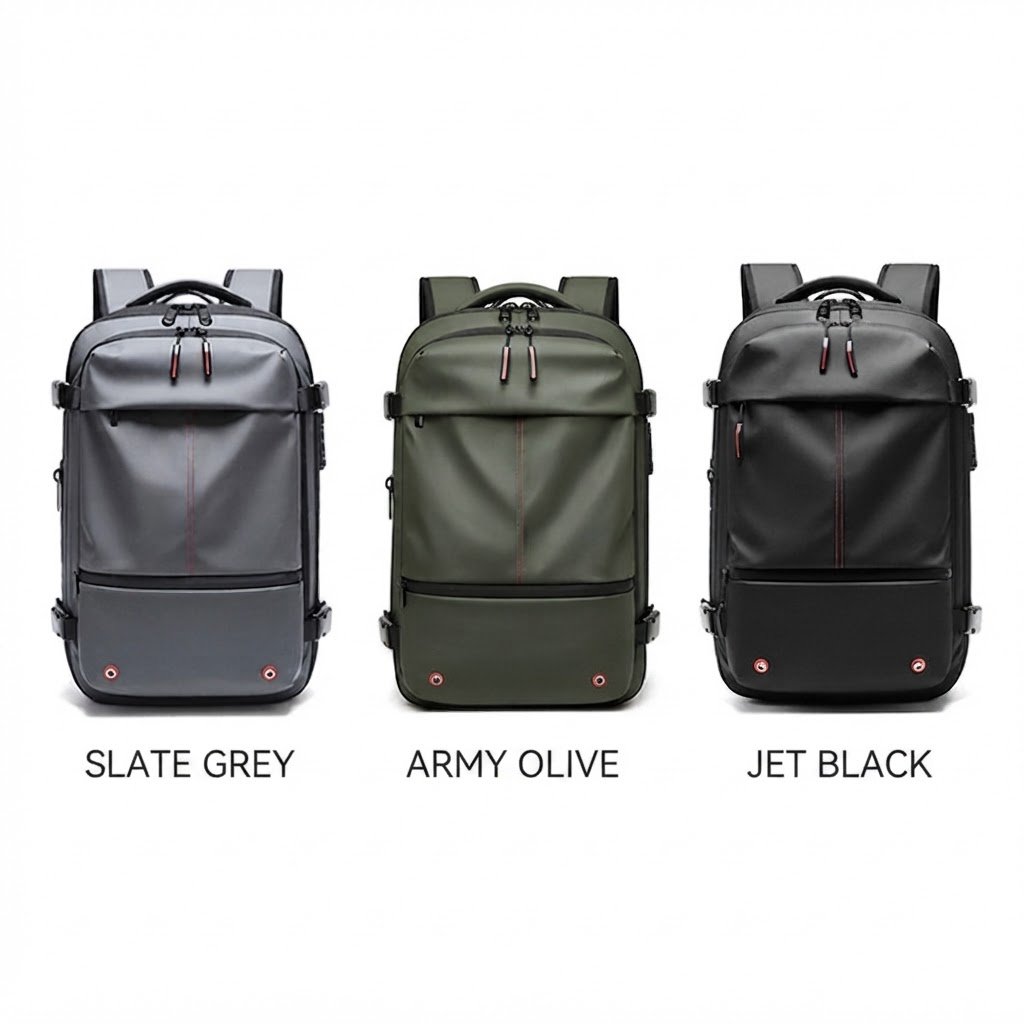
Explore Our Vacuum Compression Backpack Range
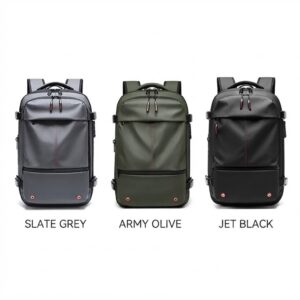
Here are three starting points, or browse our full vacuum compression backpack range to see every compression type and configuration we produce.