
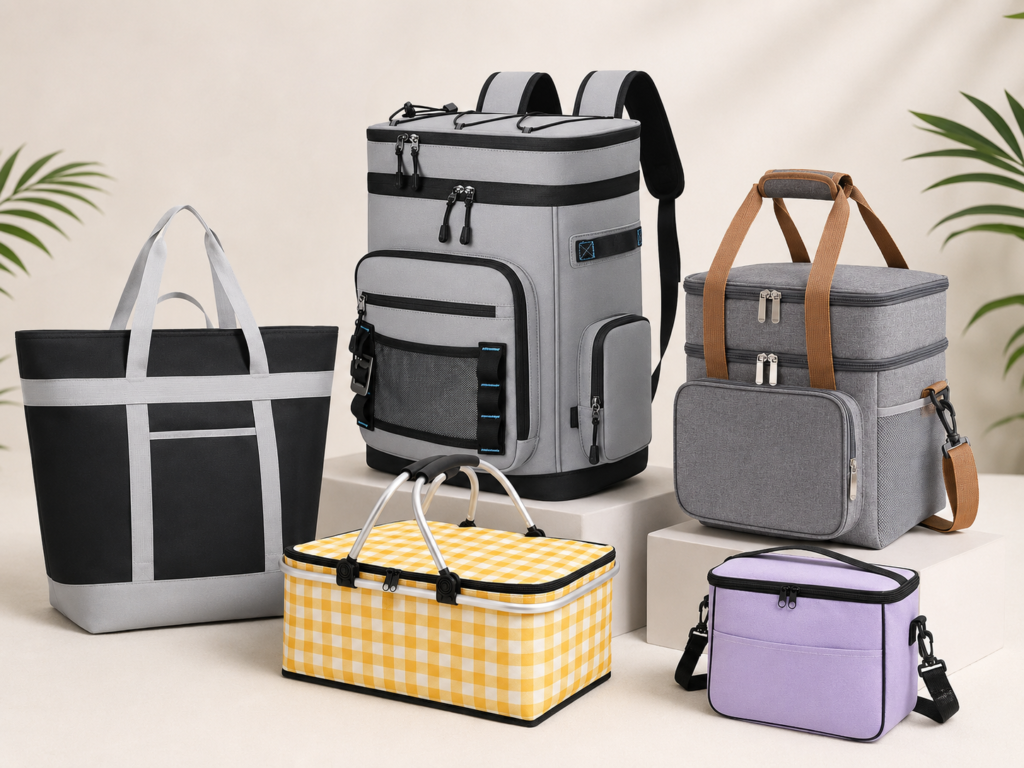
Choosing the right portable cooler bag manufacturer determines whether your brand gets a reliable, on-time production partner or a supplier that causes delays, quality issues, and lost margin. This guide covers how portable cooler bags are made, how to choose between fabric and insulation options, what customization is possible, and what to check before placing an OEM order.
What Is a Portable Cooler Bag?
A portable cooler bag is a soft-sided insulated bag designed for easy carrying — by hand, shoulder strap, or backpack straps — used to keep food and beverages cold or hot during transport. Unlike rigid coolers, portable cooler bags are lightweight, foldable, and better suited for delivery services, retail promotions, camping, picnics, and everyday consumer use.
For brands and distributors, portable cooler bags are a popular private-label product because they combine relatively low unit cost with high customization potential — logo printing, fabric choice, and structural design can all be adjusted without major tooling investment, unlike hard-shell coolers.
Key Manufacturing Components
A reliable portable cooler bag manufacturer should be able to advise on, and adjust, each of these elements based on your target use case and budget:
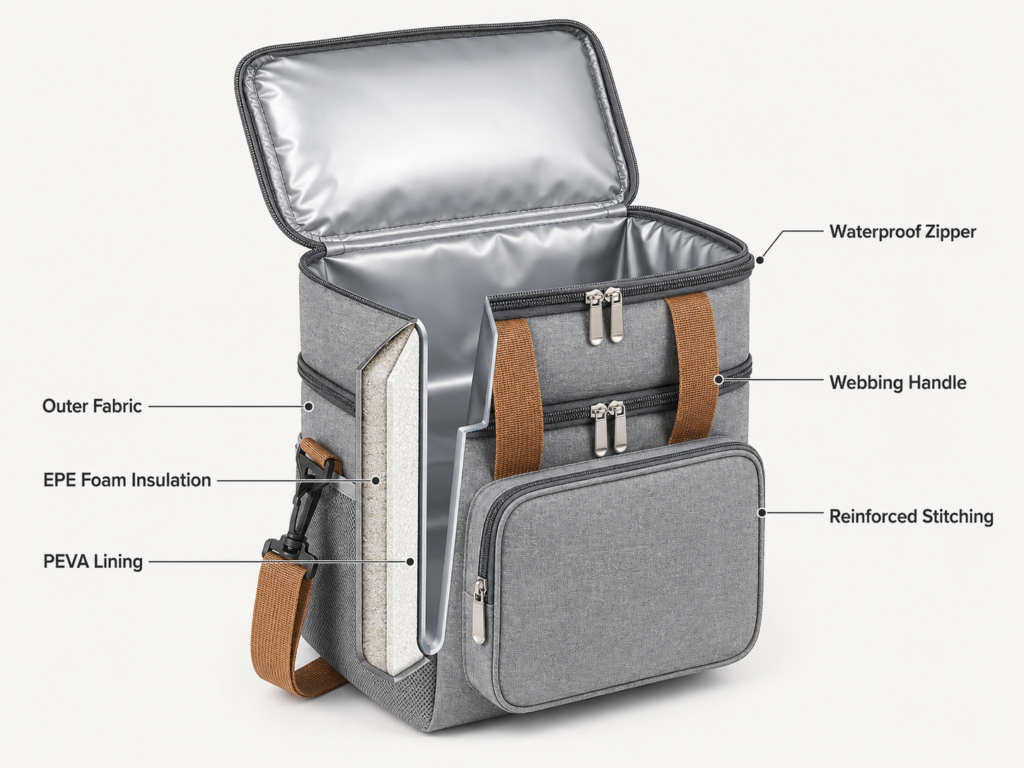
- Insulation layer: PE foam, EPE foam, or aluminum foil laminate — thickness affects both insulation performance and bag flexibility
- Outer fabric: Oxford fabric (300D, 600D, 900D), canvas, or RPET (recycled PET)
- Lining: PEVA or PVC lining for leakproof, easy-to-clean interiors
- Carrying structure: single shoulder strap, dual straps (backpack-style), top handle, or multi-carry designs combining several carrying methods
- Closure: zipper, roll-top, or drawstring, depending on how quickly the end user needs access
Choosing the Right Outer Fabric: Oxford vs. Canvas vs. RPET
Fabric choice is usually the first decision a buyer needs to make, and it affects cost, durability, and brand positioning. Here’s how the three most common options compare for portable cooler bags:
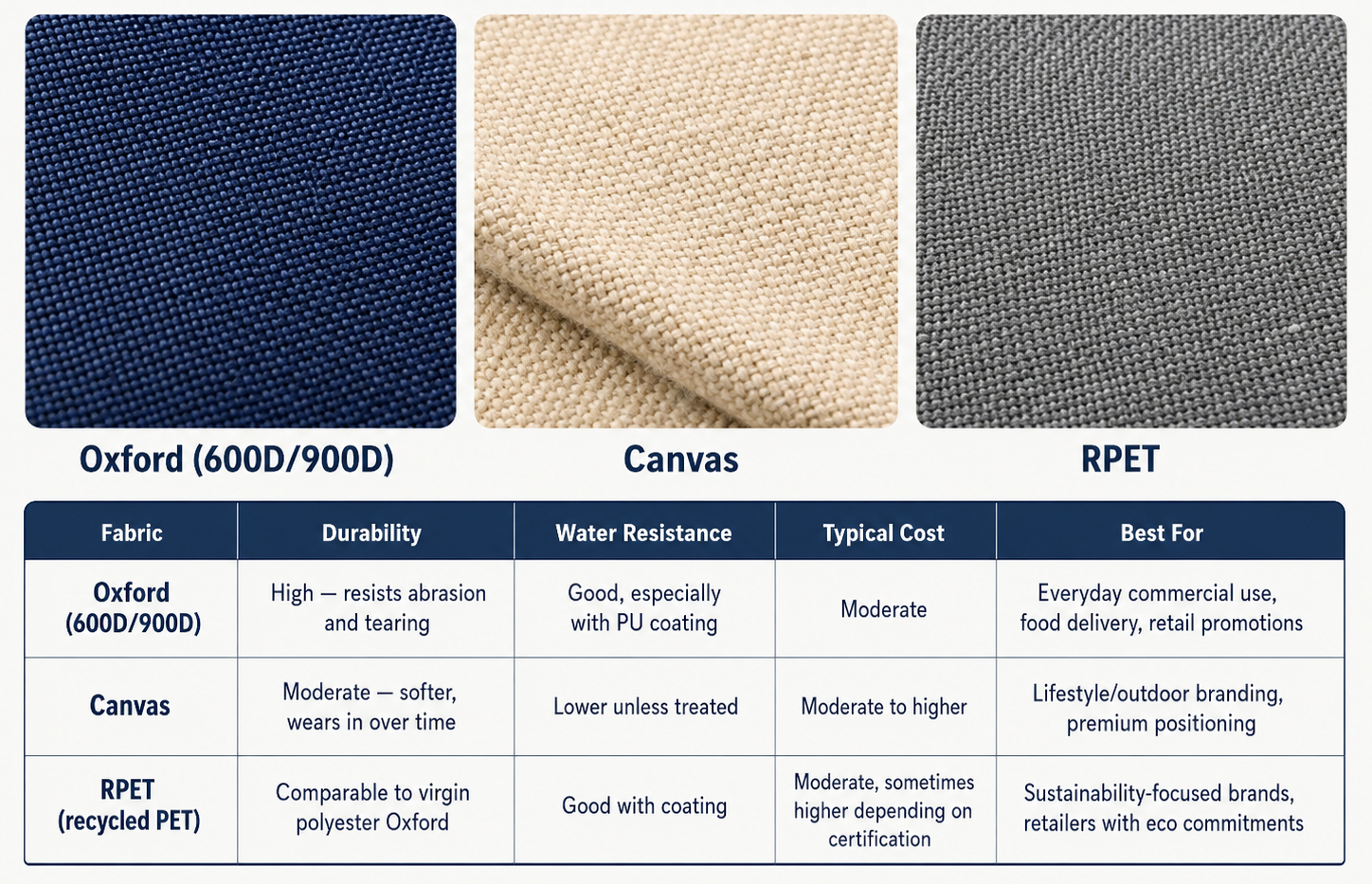
Oxford fabric remains the most requested option for portable cooler bags because it balances durability and cost well — a premium Oxford cooler bag supplier will typically offer multiple denier weights (300D for lighter-duty bags, 600D–900D for heavier commercial use) plus PU or PVC coating for added water resistance.
Canvas suits brands prioritizing a natural, lifestyle aesthetic over maximum technical performance, though it generally requires additional water-resistant treatment for cooler bag applications.
RPET is increasingly requested by retailers and food brands with sustainability commitments. Performance is comparable to standard Oxford fabric, though sourcing and cost can vary depending on certification requirements (such as GRS-certified recycled content).
OEM vs ODM for Portable Cooler Bags
Most portable cooler bag manufacturers, including reusable portable cooler bag and oxford cooler bag suppliers, offer both OEM (fully custom design) and ODM (existing template customized with your branding) production models. ODM is generally faster for brands testing a new product line, while OEM suits businesses with an established design ready for production. For a detailed breakdown of how each model works and which suits your project, see our OEM vs ODM Guide.
Which Portable Cooler Bag Style Fits Your Use Case
“Portable” is less a single product category than a requirement that cuts across several cooler bag styles — cooler backpacks, lunch cooler bags, picnic cooler bags, and food delivery bags can all be built as portable, lightweight, easy-carry designs depending on the strap system and fabric weight chosen. For a full breakdown of which cooler bag type fits which business use case, see our complete guide to choosing the right cooler bag. This guide focuses specifically on the manufacturing side: fabric selection, OEM sourcing criteria, and what to check before ordering — regardless of which style you choose.
Why Material Sourcing Capability Matters Most for Portable Cooler Bags
Because portable cooler bags depend so heavily on fabric and insulation quality, the factor with the biggest impact on consistency and lead time is whether a manufacturer has direct access to Oxford fabric, PEVA lining, hardware, and insulation materials — rather than sourcing everything through third parties. In-house material access typically means more stable pricing, faster sample turnaround, and quicker adjustments if you want to test a different denier weight or switch to RPET mid-project.
MOQ also tends to track customization level: logo-only branding on an existing ODM template usually requires a lower minimum order than a fully custom OEM structure involving new tooling or unique material sourcing.
For a broader checklist covering production capacity, quality control systems, and communication practices when evaluating any bag manufacturer, see our guide to evaluating a reliable bag manufacturer.
Typical Production Timeline
- Sample development: simpler ODM-based samples are generally faster to produce than fully custom OEM designs requiring new pattern-making
- Bulk production: commonly around 30 days after sample approval and order confirmation, though this depends on order quantity, fabric availability, and customization details
- Shipping: express shipping for smaller orders typically takes about 5–10 days; sea freight for large-volume or container orders typically takes about 20–35 days depending on destination
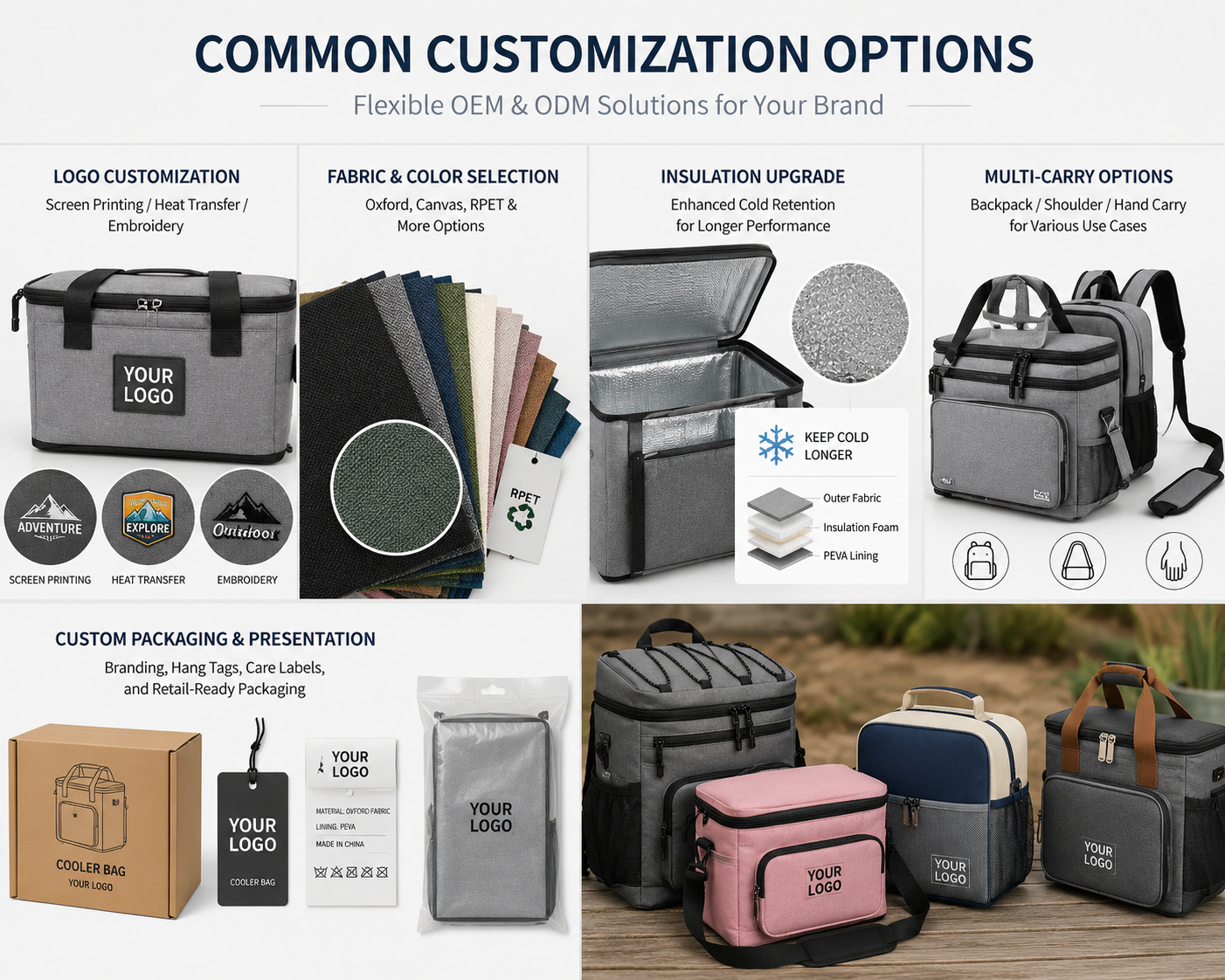
Common Customization Options
- Logo printing (screen printing, heat transfer, embroidery)
- Fabric and color selection, including RPET and other recycled materials for sustainability-focused brands
- Insulation upgrade for extended cold retention (useful for food delivery and beverage applications)
- Multi-carry strap systems for outdoor and travel use cases
- Custom packaging and retail-ready presentation
Questions to Ask Before Placing an Order
- Can you provide an existing sample so we can evaluate material and workmanship before committing to a custom order?
- What is your MOQ for this specific bag structure and fabric?
- Can you accommodate RPET or other sustainable materials if required?
- What quality tests do you run on seams and zippers to prevent leakage?
- Do you support third-party inspection before shipment?
Why Brands Choose Nice Bags for Portable Cooler Bag Manufacturing
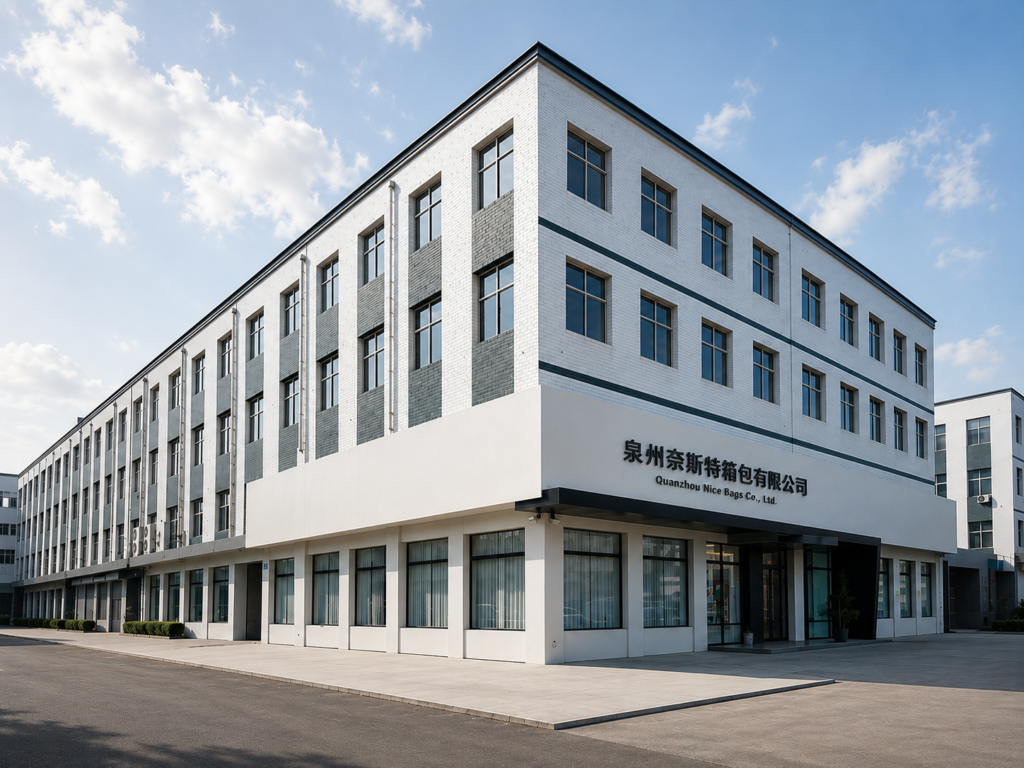
Nice Bags operates its own bag production factory in Quanzhou, China, backed by more than 20 years of experience in custom bag manufacturing. Beyond production, the company maintains direct access to upstream materials — including Oxford fabric, PEVA lining, hardware, and insulation components — which supports more stable pricing and shorter lead times compared to suppliers relying entirely on outsourced sourcing.
Quality is controlled at every stage: incoming material inspection, in-line QC during production, final inspection, and pre-shipment checking, with in-house testing for seam leakproofing, zipper durability, and fabric tensile strength. Third-party inspection can be arranged on request, and photo or video updates are available during key production stages for clients who prefer to track progress remotely.
Looking for a portable cooler bag manufacturer for your next private-label order? Get a custom quote or request a sample to evaluate our materials and workmanship directly.