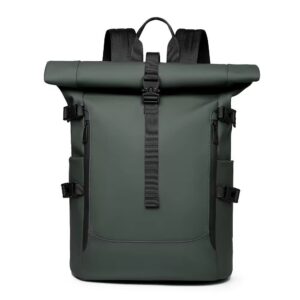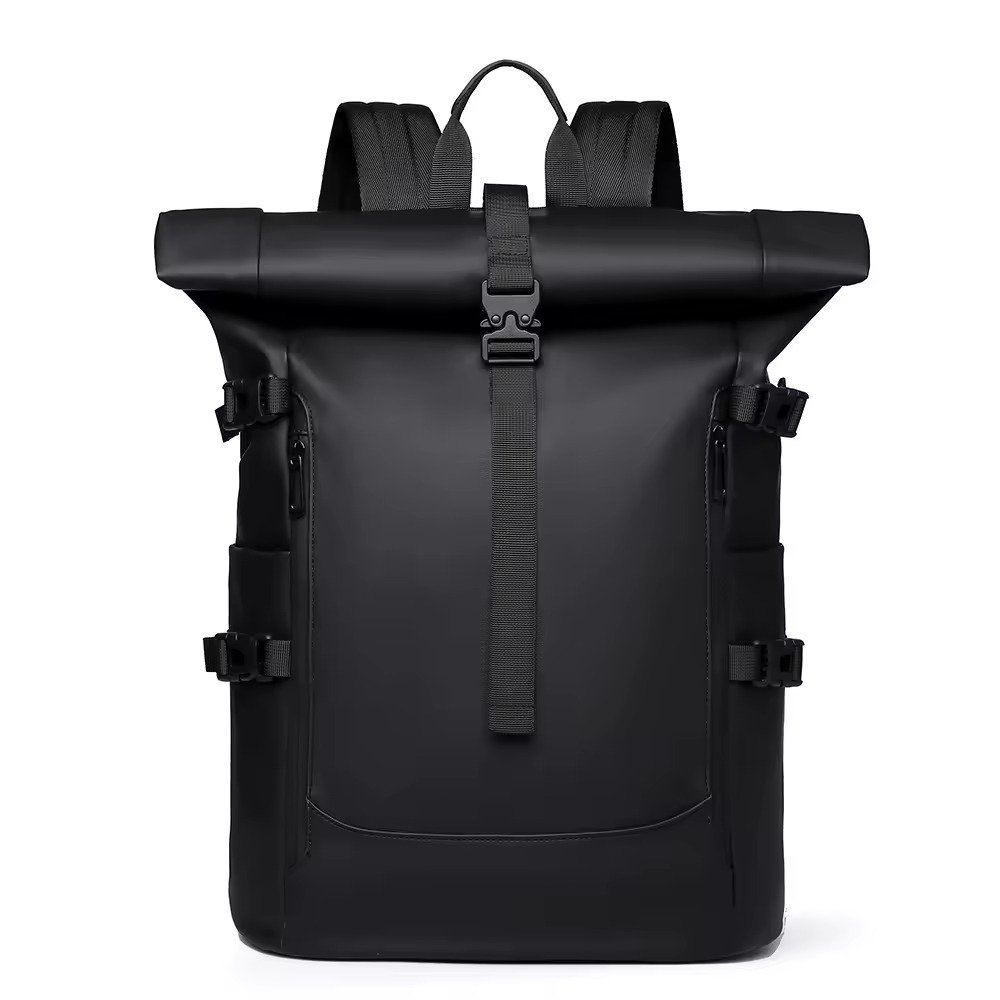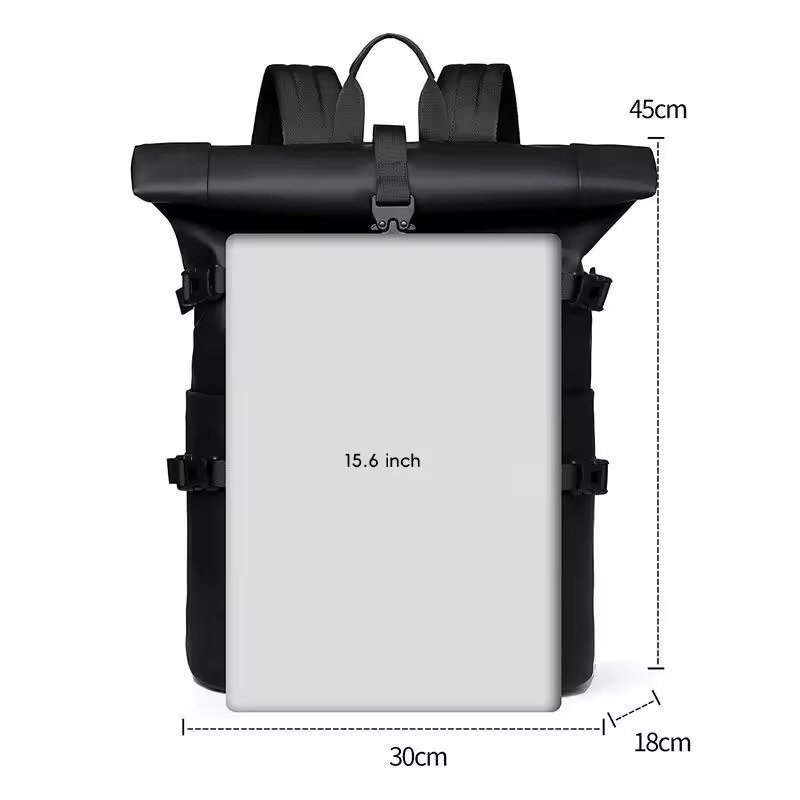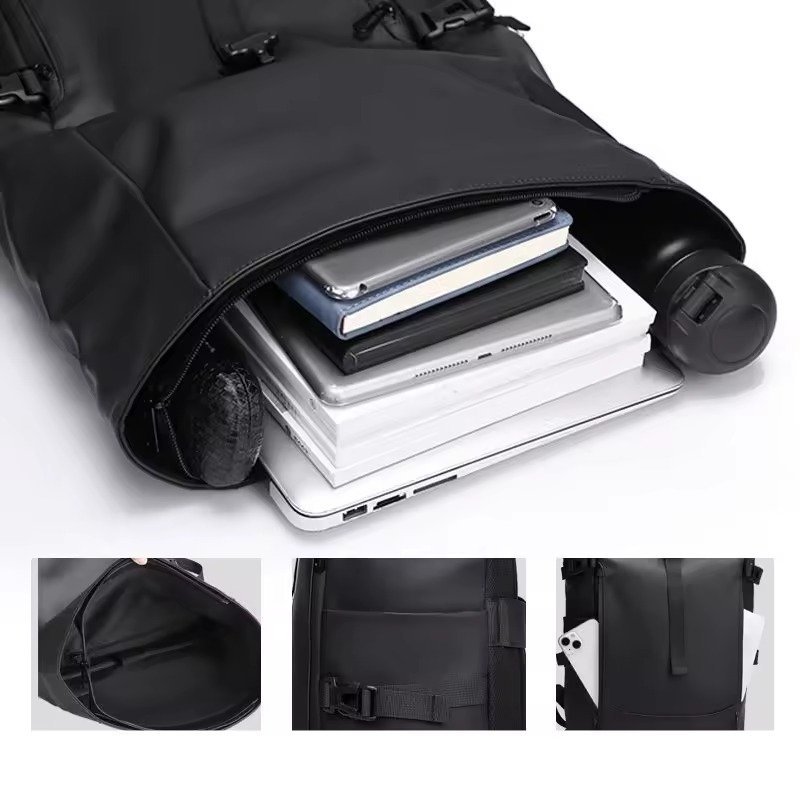

Why Is There a Backpack Price Increase in 2026? The Short Answer
The backpack price increase you are seeing in 2026 is not one cost going up. It is five costs moving in the same direction at the same time.
- Oil-based materials (polyester, nylon, coatings, plastic buckles) jumped after the war with Iran disrupted the Strait of Hormuz.
- The Chinese yuan is about 6% stronger against the US dollar than a year ago, so every dollar a factory receives buys less fabric and labor.
- Ocean freight to the US is still far above its spring level, with emergency fuel surcharges on top.
- US tariffs on a typical polyester backpack from China now stack to roughly 55% of customs value.
- Marketplace fees for Amazon sellers went up again in 2026.
None of these is a factory’s choice. But all of them pass through the factory’s quote, so the factory is usually the one asked to explain. This article tries to do that honestly: the numbers, where they come from, why a reorder can cost more than your first order, and what we think buyers can actually do about it.
We are Nice Bags, a backpack and bag factory in Quanzhou, Fujian. We sell directly to brands, distributors and Amazon sellers, mostly in North America and Europe. So this is written from the factory floor, not from a trading desk.
Where It Started: One War, Many Price Tags
Most of a backpack comes out of an oil barrel. That is the simplest way to understand 2026.
In late February, the US and Israel launched strikes on Iran. Before the war, roughly one-fifth of the world’s oil moved through the Strait of Hormuz, and commercial shipping there dropped sharply once attacks on vessels began (Al Jazeera).
The price effect was fast. Brent crude averaged about $66.8 a barrel in January and about $120.4 in April, roughly 80% higher. It eased to the $83–91 range over the summer, then climbed back to an average of $116.8 in September (Cailian Press, in Chinese). As of November 5, Brent was around $94, down from its peaks on hopes of a peace deal, but still nearly 49% above a year ago (Trading Economics).
Why does a backpack care? Follow the chain:
- Crude oil → PX, PTA and MEG → polyester yarn → Oxford, ripstop and polyester linings
- Crude oil → caprolactam → nylon 6 yarn → nylon shells and coil zippers
- Crude oil → propylene → polypropylene → webbing, plastic parts
- Petrochemicals → PU, PVC and TPU coatings and films → waterproof backing

The same shock also raised ship fuel costs, which shows up later in freight. So one war reached a backpack through at least three doors: fabric, hardware and shipping.
One honest point: even if a peace deal holds and oil keeps falling, don’t expect prices to simply snap back. Price increases rarely come from a single cause. Materials already bought at higher prices are still moving through the supply chain, and while one cost eases, others — currency, freight, labor — usually keep rising.
The Exchange Rate: Same Bag, More Dollars
The quietest driver is also one of the biggest: the yuan has strengthened about 6% against the US dollar in one year.
The US Federal Reserve’s data puts the October 2026 average at 6.68 yuan per dollar, down from 7.12 a year earlier (FRED). The full-year 2025 average was about 7.19. In early November the onshore rate moved past 6.65, and China’s central bank responded by raising banks’ foreign-currency reserve requirement from 4% to 6%, effective November 15, its first such move in five years (21st Century Business Herald, in Chinese). That is a brake on the speed, not a reversal. UBS, for example, still forecasts 6.60 by December 2026 and 6.50 by mid-2027 (Exchange Rates UK).
Why does this raise your price when nothing about the bag changed? Because a Chinese factory earns in dollars but spends in yuan: fabric, zippers, wages, rent, electricity and taxes are all paid in RMB.
A simple example:
| Factory cost of one backpack | Exchange rate | Price in USD |
|---|---|---|
| ¥66.50 | 7.12 (Oct 2025) | $9.34 |
| ¥66.50 | 6.65 (Nov 2026) | $10.00 |
The factory spends exactly the same ¥66.50. The buyer pays about 7% more in dollars. Nothing about the materials, labor or quality moved — only the currency did.
For a large company, a few percent of currency movement can be hedged. For a factory already working on thin export margins, a 6–7% move can be the whole margin.
Fabric: Polyester and Nylon Followed Oil Up
In 2026, fabric was the first cost to move.
Polyester. The main polyester yarn grade (POY) went from about ¥7,000 per tonne at the end of January to ¥9,600 by March 10, a rise of more than 35% in about six weeks. Some mills raised quotes by around 20% overnight when the conflict escalated (21st Century Business Herald, in Chinese). Polyester staple fiber rose about 26% in the March rally alone (China Textile News via Sina, in Chinese).
Nylon. Nylon is the premium choice for many travel and outdoor backpacks, and it has stayed expensive. In mid-October, nylon POY in East China traded at ¥15,800–16,700 per tonne (Mysteel, in Chinese). In late October, Toray announced another increase on nylon 6, nylon 66 and polyester fibers, starting with November 2026 shipments (Sohu, in Chinese).
Coatings and dyes. Waterproof backpacks rely on PU, PVC or TPU coatings, which come from the same petrochemical chain. Dye makers also pushed through several rounds of increases in the spring.
To be fair, yarn prices did not go up in a straight line. Polyester filament drifted down about 2% during May, for example (SunSirs). But yarn is only the first step. Weaving, dyeing, coating and finishing each add their own cost, and fabric mills pass changes on with a lag. So a factory’s fabric bill tends to follow oil up quickly and come down slowly.
Plastic and Hardware: The Small Parts Add Up
A backpack has more small parts than most people notice: side-release buckles, strap adjusters, cord locks, zipper pulls, webbing, foam padding and the poly bag it ships in. Most of these are plastic, and plastic prices are still well above last year.

- Polypropylene (PP), used in webbing and many plastic parts, rose from about ¥6,000 to nearly ¥9,000 per tonne in March. By October 7, the PP benchmark stood at about ¥9,933 per tonne, roughly 44% higher than a year earlier (Cailian Press, in Chinese).
- Engineering plastics used for buckles and adjusters kept climbing into the autumn. On October 8, Kingfa, China’s largest modified-plastics maker, raised modified PA6 (nylon) by ¥2,500 per tonne and modified PP by ¥2,000 per tonne — its second big increase of the year (The Paper, in Chinese).
- Zippers use polyester or nylon tape and coil, so they follow the fabric curve described above.
Not everything went up. Zinc alloy, the base of most metal pulls, rings and hooks, held fairly steady around ¥26,000 per tonne through October (Mysteel, in Chinese). Labor is also a slow, steady cost rather than a 2026 shock: Quanzhou’s urban minimum wage has been ¥2,195 per month since April 2025 (WageIndicator).
We mention this on purpose. A good supplier should be able to tell you which costs moved and which did not. If a quote rises across the board with no explanation, it is fair to ask.
Freight: The Cost Between Our Dock and Yours
Shipping a container across the Pacific costs far more than it did in spring.

Drewry’s World Container Index, the benchmark most buyers watch, rose from $2,712 per 40-foot container on May 21 to $4,351 on October 8, roughly 60% higher (Carra Globe, citing Drewry). On October 29, Drewry put Shanghai–Los Angeles at $7,514, Shanghai–New York at $9,631 and Shanghai–Rotterdam at $3,686 per 40-foot container (Daily Cargo News). US routes are where the pressure sits.
Those are base rates. On top of them, carriers added emergency fuel surcharges when the Hormuz crisis pushed up bunker fuel prices. Maersk introduced a temporary Emergency Bunker Surcharge from March 25 (gCaptain), and CMA CGM added another of up to $165 per container from August 1 after fighting flared again (FIDI Focus).
There is some good news for Europe-bound cargo. Container traffic through the Suez Canal has been recovering: 281 containerships passed through in the four weeks to late October, more than double August’s level, though still below the 474 seen in October 2023 (Lloyd’s List Intelligence). If that holds, Asia–Europe rates have room to soften.
What this means per backpack depends on your shipping terms:
- FOB: freight is your cost, paid to your forwarder. Our quote does not change because of it, but your landed cost does.
- CIF or DDP: freight is inside our quote, so a higher freight rate shows up directly as a higher unit price.
US Tariffs: Not Paid to the Factory, but Felt by Everyone
Tariffs are paid by the importer to US Customs. The factory never sees that money. But they decide what a backpack really costs once it lands, so they belong in this picture.
2026 has been a confusing year for tariffs. In short:
- February 20: the US Supreme Court ruled that the earlier “emergency” (IEEPA) tariffs were unlawful. Importers can claim refunds on those.
- February 24 – July 23: a temporary 10% global surcharge (Section 122) applied for its 150-day legal limit, then expired (ExFreight).
- From July 24: a new Section 301 tariff took over, at 12.5% for goods from China (and also Vietnam and Thailand), 10% for countries such as India, Bangladesh and Cambodia (Argents).
For a typical polyester or nylon backpack (HTS 4202.92.31), the stack from China now looks like this (KoalaGains tariff tracker):
| Layer | Rate |
|---|---|
| Normal (MFN) duty | 17.6% |
| Section 301, List 3 (China only) | 25% |
| Section 301, 2026 action | 12.5% |
| Total | 55.1% of customs value |

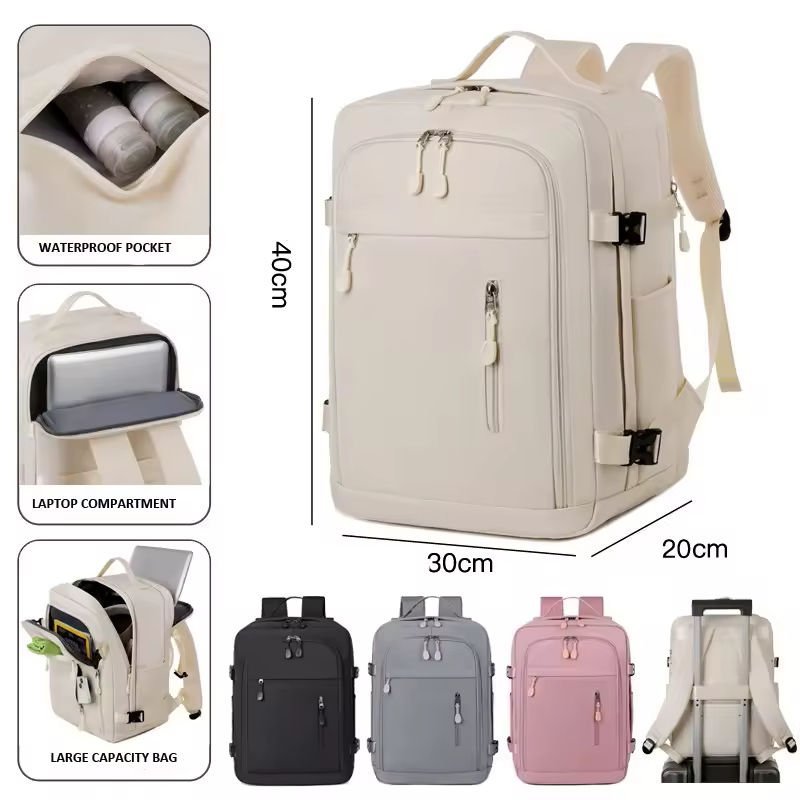
One exception worth checking right now: a Section 301 product exclusion lets man-made-fiber backpacks within set dimensions (35–75 cm high, 19–34 cm wide, 5–26 cm deep) skip the 25% List 3 layer, which brings them to about 30.1%. In November, USTR extended that exclusion for only two more months: it now covers goods entered into the US through January 9, 2027 (USTR notice). What counts is the date your goods clear US customs, not the order or ship date. If it is not extended again, many standard-size backpacks move back to the full 55.1%. Ask your broker whether your style qualifies.
This is lower than the worst of 2025. But for a backpack paying the full stack, it creates a multiplier that many buyers miss: every dollar added to the factory price becomes about $1.55 at US customs before freight, fees or margin. A $0.50 increase in FOB becomes roughly $0.78 in landed cost.
Moving production to another country does not remove the 12.5% layer for most origins; the China-specific difference is mainly the 25% List 3 duty. Whether that difference pays for a new supplier, new samples and new quality risks is a real business decision, not an automatic yes.
Buyers in Europe, the UK, Canada and Australia do not face this US stack. For them, the story is mostly materials, currency and freight. (This section is general information, not customs advice; please confirm your HTS code and rates with your customs broker.)
Why Does My Reorder Cost More Than My First Order?
This is the question we hear most, and it is a fair one. The bag is the same. The pattern is done. The samples are approved. So why is the price higher?
Here are the honest reasons, roughly in the order they usually matter:
- Your first price was set on the costs of that day. A quote reflects material prices and the exchange rate when it was made. Materials for your reorder are bought when the reorder is placed. If the yuan moved from 7.1 to 6.65 in between, or nylon yarn went up, the old number simply no longer covers the bag.
- Quotes have a validity window. That is why most factory quotations carry an expiry date. It is not a trick; it is the only way to quote in a year when costs move monthly.
- The reorder is often smaller. A first order of 1,000 pieces followed by a top-up of 300 is common. Setting up the line, cutting, quality checks and packing take similar effort either way, so each bag carries a larger share.
- Material minimums don’t shrink with your order. A custom fabric color, a branded webbing or a logo zipper puller often has its own minimum run at the mill. On a smaller reorder, the leftover still has to be paid for.
- Our own suppliers re-quote too. Zipper, buckle and webbing makers face the same oil and currency pressure, and they send us price updates just as we send them to you.
- Small changes are rarely free. A new logo position, a different zipper pull or an upgraded fabric on the reorder each changes the cost sheet.
The flip side is also true. Pattern-making and sampling are already done, so a reorder does not carry those costs again. If nothing has moved — same quantity, same specs, stable materials and currency — a reorder can be priced the same as the first order, or even slightly lower. In 2026, unfortunately, several things have moved at once.
Why Amazon Sellers Feel It Most
Many of our customers sell on Amazon, and for them a price increase is not just a smaller margin. It can mean fewer sales.
On Amazon, your price sits right next to your competitors’. Shoppers compare in seconds, and conversion rate feeds ranking. Raise the price, convert fewer visitors, and the listing can slip down search results — which then means fewer visitors still. A brand selling through its own store or retail partners has more room to explain a price change. An Amazon listing mostly does not.
This is not theory:
- In January 2026, Amazon CEO Andy Jassy said tariff costs had started to “creep” into prices, with some sellers passing costs on, some absorbing them, and some in between (CNN). He also noted that retail runs on mid-single-digit margins, leaving little room to absorb sharp cost increases (Storyboard18).
- In 2025, several sellers told Fortune they lost the Buy Box after raising prices to cover tariffs, including one who raised prices about 20% on average. Amazon later lifted those penalties for some of them (Fortune).
- During the 2019 tariff round, one seller told Bloomberg that sales of some products fell by as much as a third within two weeks of raising prices (Bloomberg).
At the same time, selling on Amazon itself got more expensive. FBA fulfillment fees rose by an average of $0.08 per unit from January 15, 2026 (Supply Chain Dive), and a 3.5% fuel surcharge on fulfillment fees followed from April 17 (eFulfillment Service).
Put it together and an Amazon seller is squeezed from both ends: higher landed cost below, and a marketplace that punishes higher prices above. We understand that. It is exactly why we do not take price changes lightly.
Our View, Plainly
We want to say this directly: we know our customers are not having an easy year. Many of them are small brands and Amazon sellers who have already absorbed tariff changes, fee changes and slower sales. Nobody on our side wants to send one more price update.
But we also want to be honest about where we stand. We are a factory selling directly, with no trading company in between. That model only works because our prices are already lean. There is no middleman margin for us to cut. When fabric, plastic and the exchange rate all move against us at once, we cannot quietly carry it for long.
When a supplier never adjusts in a year like this, there are usually only two explanations. Either the first quote had room built in, or something is being changed without telling you: a lighter fabric, a cheaper zipper, fewer stitches per inch, thinner foam. We would much rather send you an honest price update than a silent downgrade. A bag that fails in a customer’s hands costs an Amazon seller far more than a few cents per unit, in returns, reviews and ranking.
So this is how we try to handle it:
- We tell you which costs moved and by how much, instead of a single new number.
- We look for spec changes that save money where your customer won’t feel it, before we touch the price.
- We hold a confirmed quote for its stated validity period, even if costs move again inside it.
- We are honest that a price rarely comes back down just because one material gets cheaper. Increases almost never have a single cause, and while one cost eases, others usually keep climbing.
Price changes should be a conversation, not a surprise. If a number we send you doesn’t make sense, ask us to break it down. We’ll show you.
What Buyers Can Do About It
You cannot control oil, currencies or tariffs. You can control a few things that change how hard they hit.
- Ask for a cost breakdown. Fabric, hardware, labor and packing as separate lines. It shows exactly what moved and gives you something to negotiate around.
- Spend where your customer notices. One customer of ours wanted a backpack that stood up crisp and structured, on a tight budget. We put the money into a firmer, more supportive fabric and stepped the hardware down to a mid grade. The bag looked right on the shelf, and the unit price stayed in budget. This kind of trade-off is part of our OEM/ODM development process.
- Plan reorders instead of topping up. One larger reorder usually beats three small ones, because setup and material minimums are spread over more bags.
- Keep colors and trims consistent across styles. Sharing a fabric color or webbing across two or three styles helps you reach mill minimums without overbuying.
- Test with in-stock styles first. For a new listing or market, an existing style with your logo added can validate demand before you commit to a full custom run. See our private label and wholesale options.
- Check your shipping terms. Compare FOB plus your own forwarder against a DDP quote. In a volatile freight market, the cheaper option can change from one booking to the next.
FAQ
Will backpack prices come down if there is a peace deal with Iran? Probably not by much. Oil-linked materials may ease, but price increases rarely have a single cause. The exchange rate is a separate trend, with most forecasts still pointing to a stronger yuan into 2027, and freight and labor rarely move back down.
Is it cheaper to move production out of China? For US buyers, it can lower the duty by up to the 25% China-only layer. It does not remove the newer 12.5% layer for most origins, and it adds new sampling, quality and lead-time risks. Run the full landed-cost numbers before deciding.
Should I pass the increase on to my customers or absorb it? It depends on how price-sensitive your category is and how strong your listing is. Many sellers split it: absorb part, raise part, and look for spec savings to close the gap.
How often should I ask my supplier for updated pricing? Before every reorder. In 2026, a quote from six months ago is history, not a price. For what else to agree with a factory before you place an order, see our corporate backpack sourcing guide.
Talk to Us Before Your Next Reorder
If you are planning a reorder or a new line for 2027, send us your current spec and target price. We’ll tell you what has changed in the cost, and where we can save without hurting the bag. Get a quote