
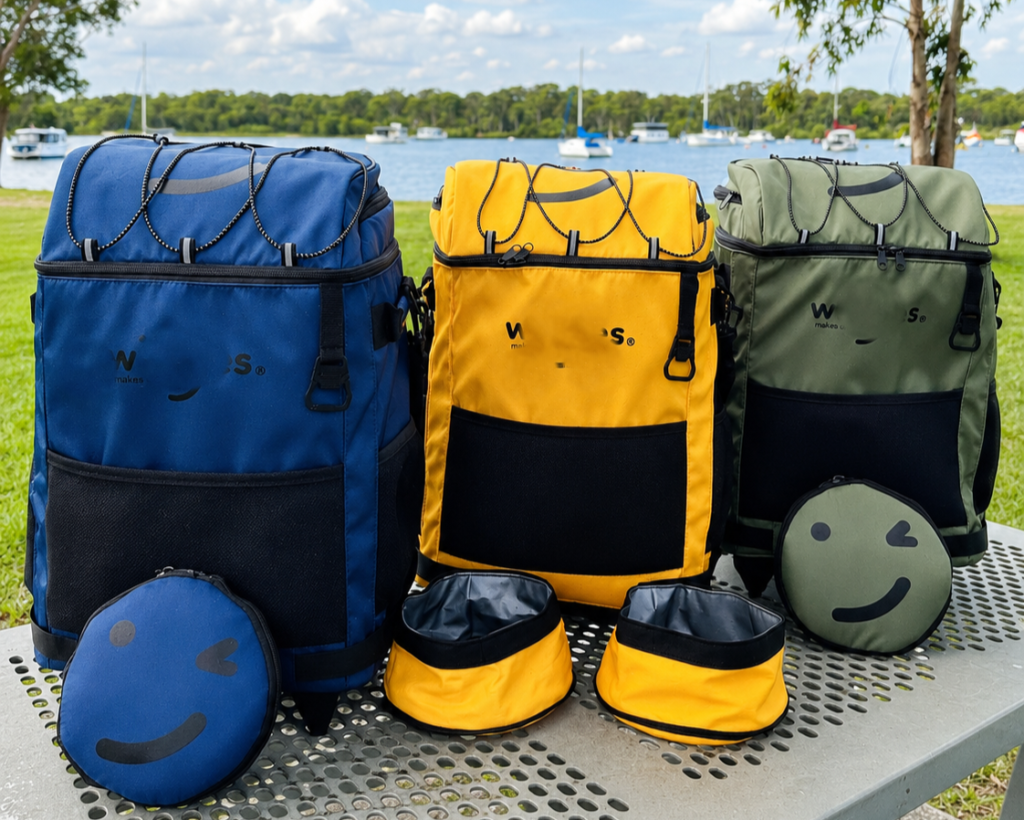
Client: Online retailer specializing in cooler bags, Australia
Product: Custom insulated cooler bag trolley, sold as part of a set with a matching foldable dog bowl
Order size: 1,500 units — 500 units each across 3 colorways
Production lead time: 30 days from sample confirmation to completed production
Shipping route: Xiamen, China → Brisbane, Australia
A Repeat Customer With a Product Line Built Around One Category
Our client runs an online store built entirely around cooler bags — and increasingly, the accessories that go with them. This project includes a matching foldable dog bowl in the same three colors, which the client sells alongside the trolley bag as a set. This is one of several projects we’ve completed for this client, and it’s the kind of repeat, expanding relationship that tells you more about a factory than any single testimonial can. Feedback from the client on this project was simple and direct: they were very satisfied with the result.
The Situation: A Sample From Another Factory That Didn’t Work
This project didn’t start with a blank page. The client had already commissioned a sample from a different factory — and it didn’t hold up. By the time the project reached us, the list of problems was long:
- The drainage/water-outlet structure didn’t work properly
- The interior lining material was wrong for the job
- Stitching quality was inconsistent
- The trolley wheels were small and the pull rod was short — the whole unit was unstable and prone to tipping over
- The metal hardware rusted
- The bottle opener was secured with a webbing strap, which was awkward to use
- The bag itself was smaller than it needed to be
On top of that, the client was under serious time pressure and needed a genuinely complex, multi-component product finished fast. This case study is about what it took to fix all of it — and deliver 1,500 finished units in 30 days.
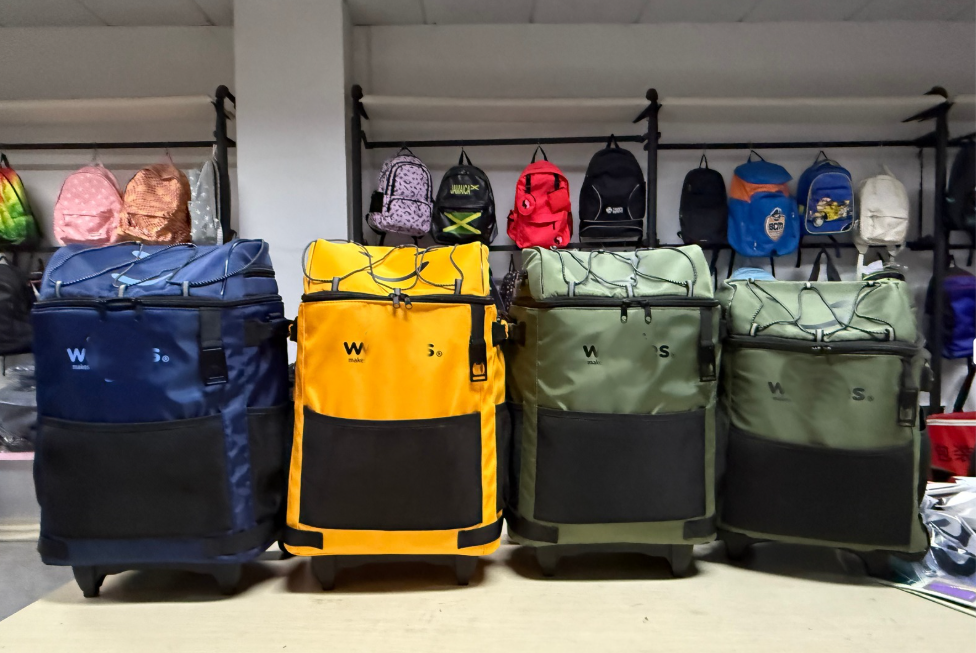
Rebuilding the Trolley System: 10 Days, Not 30
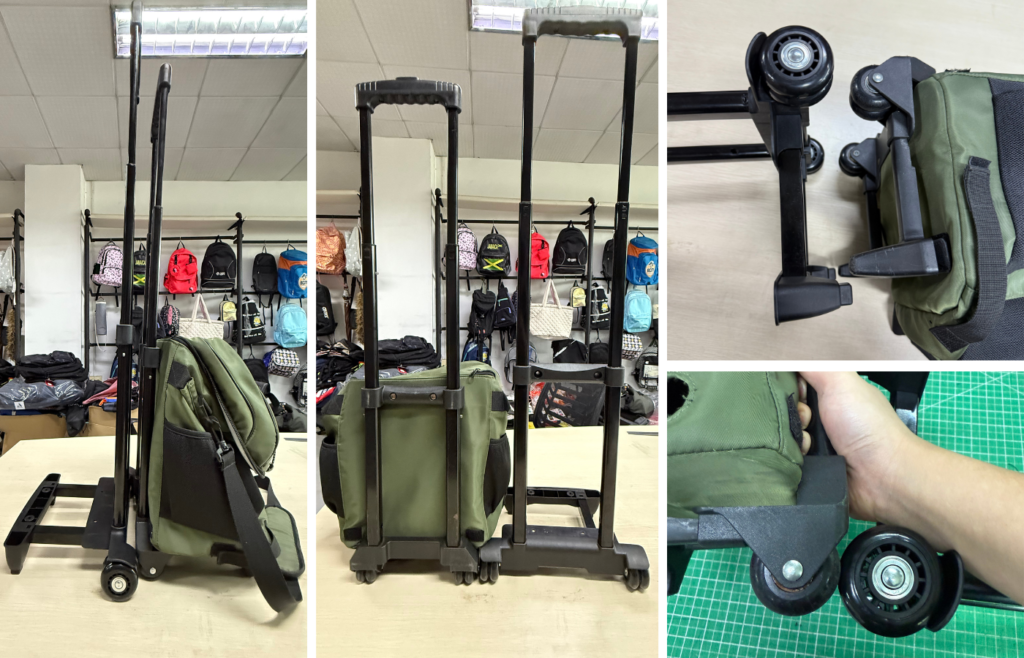
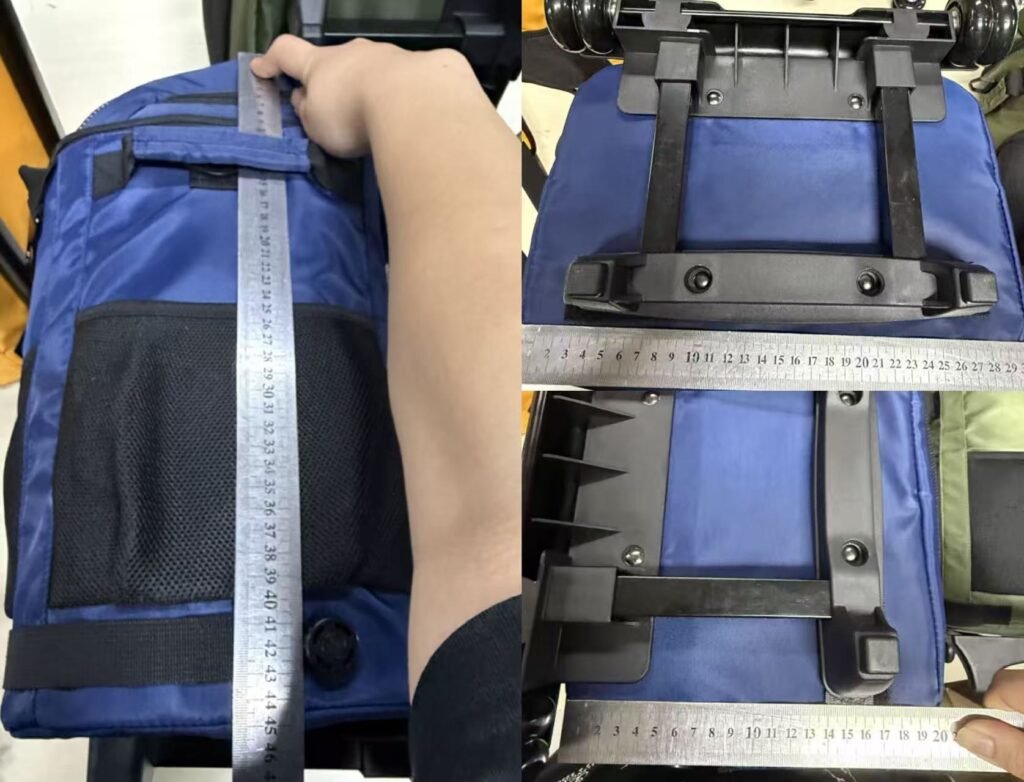
The wheels and pull rod were one of the biggest problems with the original sample — small wheels and a short rod made the loaded bag unstable and easy to tip over. We went back to a trolley-hardware supplier in our own network to rebuild this component with larger wheels and a longer, more stable rod suited to real outdoor use — grass, gravel, uneven ground, a fully loaded cooler.
Timing mattered as much as the fix itself. The client’s original hardware source quoted 20–30 days just for this one component — not workable on the client’s schedule. Our supplier partner, coordinated closely with a dedicated point of contact on both sides, delivered it in 10 days.
Engineering the Lid: Tooling, Proofing, and a Reverse-Zipper Layout
The lid went through its own dedicated tooling and sampling process, separate from the rest of the bag. That’s not a small commitment on our end — opening dedicated tooling for a single component is usually associated with much larger orders — but it was workable here even at 500 units per colorway, which is worth knowing if you’re evaluating custom tooling on a smaller order. It carries a rear-access zippered compartment for keys and snacks, with a mesh-divided interior — and this went through several revised versions as we worked through the layout with the client.
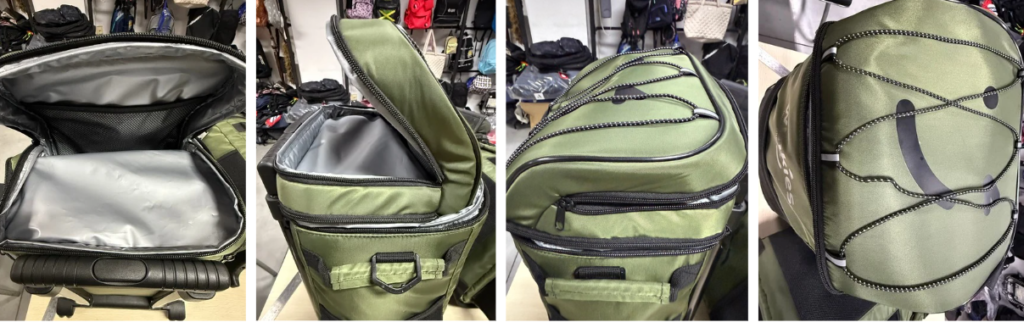
One detail worth calling out specifically: the rear compartment’s zipper faces the trolley-handle side of the bag, running in the opposite direction from the large main-compartment zipper on the front. That’s deliberate. When the telescopic handle is collapsed down, it sits clear of the rear zipper instead of blocking it — so the compartment opens smoothly even with the handle stowed. We engineered the handle height specifically to work with this layout, rather than treating the two components separately.
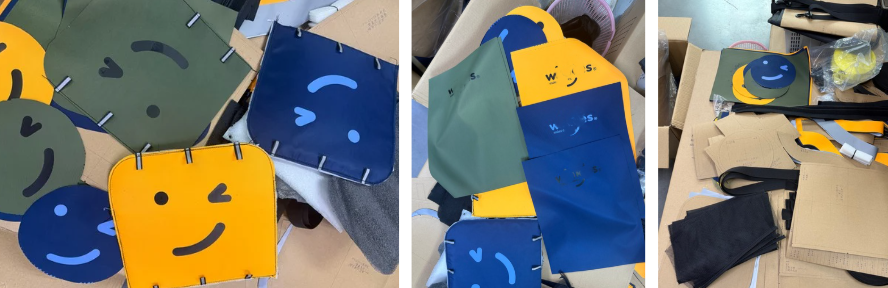
Branding went through its own proofing rounds too. Logo and smiley-face graphic color options were proofed against each colorway so the client could choose what read best — on the deep blue bag, for example, both a black-logo version and a light-blue-logo version were produced side by side for comparison before a final call was made.
Solving the Leakproofing Problem
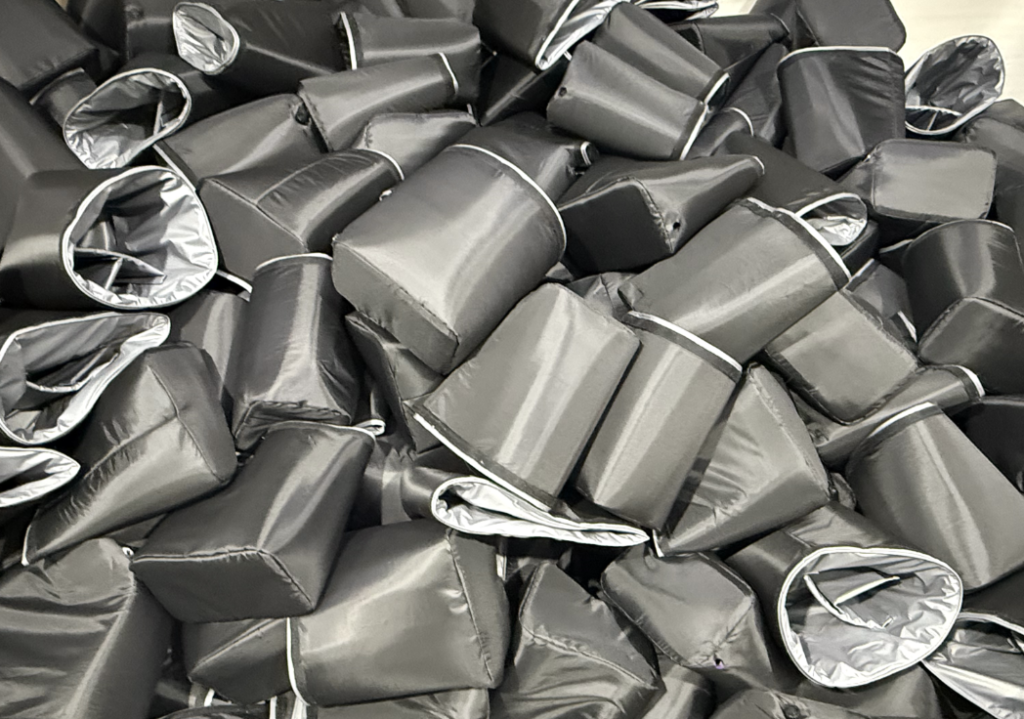
Keeping the bag genuinely waterproof — not just “water resistant” — was one of the harder problems to solve, and it’s where the original sample had failed. We tested several interior lining materials before settling on a seamless, hot-pressed PEVA lining: a food-grade material that’s fused rather than stitched together at the seams, which is what makes it leakproof rather than just splash-resistant. The interior liner is removable, and the divider inside it is secured with hook-and-loop fastening so customers can reconfigure or wash it separately.
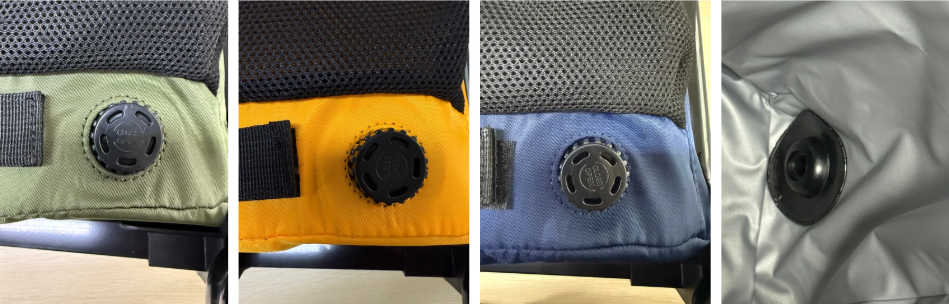
The bag also needed a working drain valve at the base — not a small detail on a product meant to hold ice and drinks. We tested multiple valve components before landing on one that stayed leakproof and fit properly with the bag’s lining material; several candidates were rejected for something as specific as making an audible click or rattle when twisted open and closed, which isn’t the kind of thing you want on a product a customer handles daily.
Hardware, Bottle Opener, and Base Structure
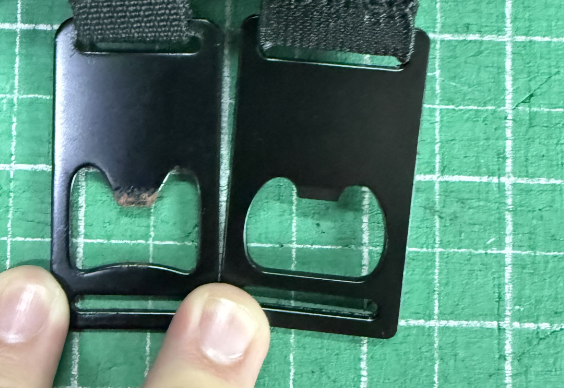
The rusting hardware from the original sample was replaced with new hardware finished in electrophoretic black coating — an anti-corrosion plating process, chosen specifically so the metal fittings hold up outdoors instead of rusting the way the original sample’s did.
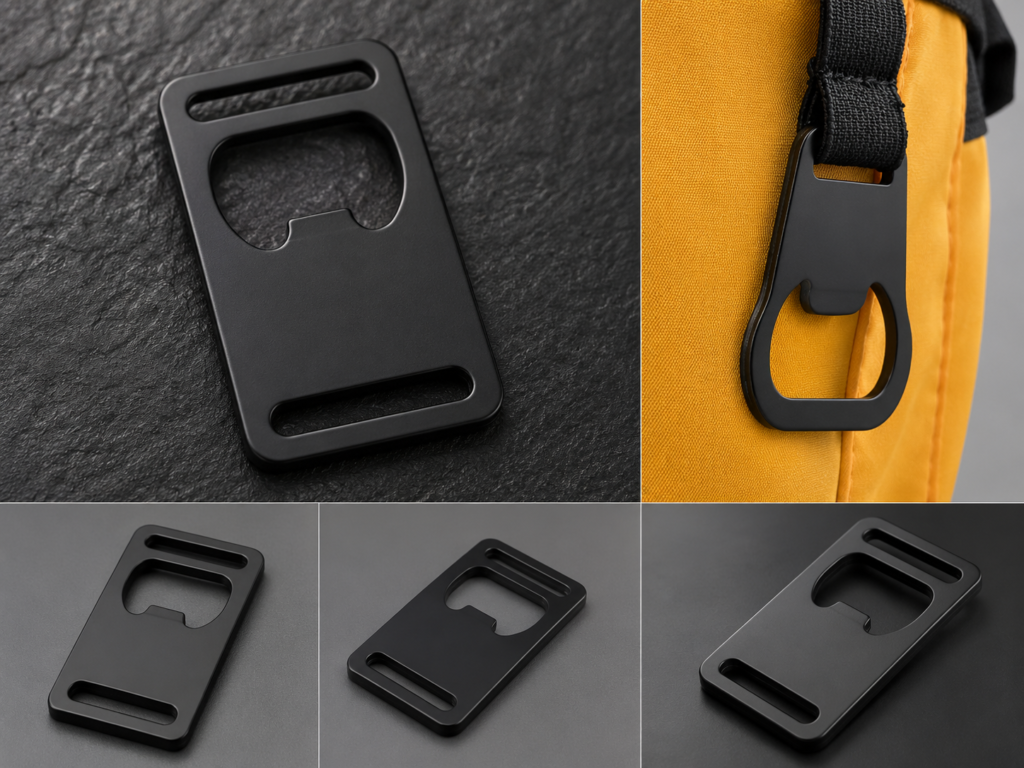
The bottle opener itself moved from a webbing strap to an elastic cord attachment, which is simply more practical to use one-handed while the bag is loaded.
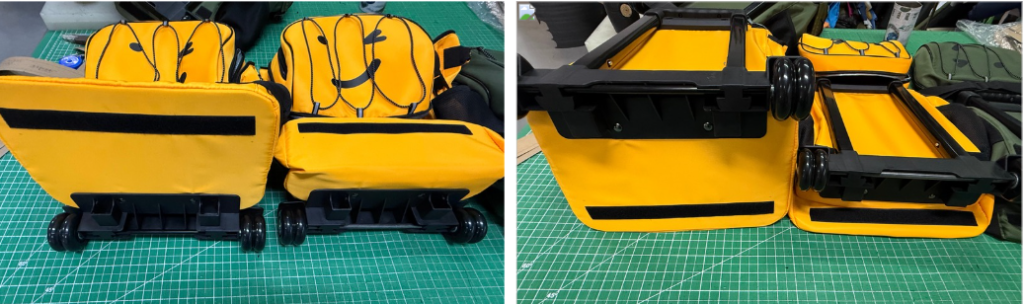
For the base, the client hadn’t settled on foldable (which saves storage space) versus non-foldable (which sits flatter and won’t tip when loaded) — and with the timeline as tight as it was, we didn’t have room to go back and forth by email. We built both as physical samples and let the client choose by handling them directly. They went with the non-foldable base.
From Sample to Mass Production
Every one of the fixes above had to be checked and re-checked before 1,500 units went into production — trolley height and wheel performance under real load, bag dimensions and internal capacity, logo and graphic proofing against each color, the rear compartment’s zipper clearance against the collapsed handle, and the fit of the PEVA lining and divider. As with the zipper and drain valve tests above, individual functions were recorded and sent to the client for sign-off as they were confirmed, rather than bundled into one final review at the end.
That level of check matters more on a project like this one, where the client had already been burned once. A problem caught at the sample stage costs an email and a few days. The same problem caught after 1,500 units are cut and sewn costs a client their margin — and, on a second attempt with a new factory, their trust.
Once every component was confirmed, full production across all three colorways was completed in 30 days.
Production and Delivery
| Detail | Spec |
|---|---|
| Market | Australia |
| Product | Custom cooler bag trolley, sold with matching foldable dog bowl |
| Order quantity | 1,500 pcs (500 pcs per colorway) |
| Colorways | Army Green/Black, Yellow/Black, Deep Blue/Black |
| Key customization | Seamless hot-pressed PEVA lining, removable liner and divider, tested drain valve, electrophoretic black hardware, rear-access lid compartment, telescopic trolley handle (via specialized supplier partner), logo proofing per colorway |
| Production lead time | 30 days from sample confirmation (trolley hardware component alone: 10 days) |
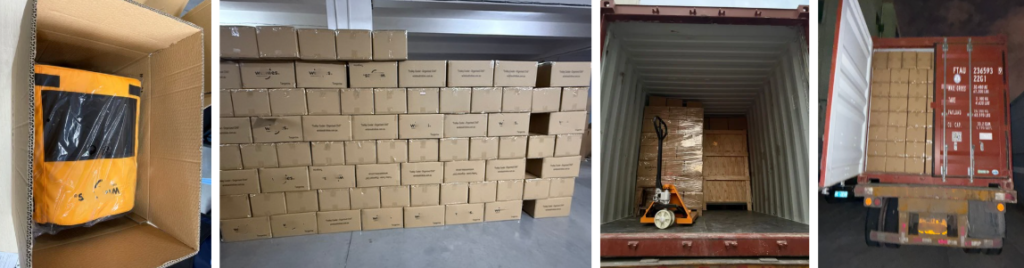
| Packaging | Individual OPP bag + export carton, designed to the client’s specification |
| Shipping route | Xiamen, China → Brisbane, Australia |
Why This Project Is a Good Example of How We Work
- We take over projects that didn’t work elsewhere. This one arrived with a specific list of failures — leakproofing, wheels, hardware, stitching, sizing — and every one of them got solved before mass production started.
- In-house hardware, tightly managed supply chain. The metal bottle opener was built by us. The trolley handle and wheel assembly came from a trusted supplier partner, coordinated closely with a dedicated point of contact — which is how we cut a 20–30 day quote down to 10 days without cutting corners.
- Engineering that thinks about how components interact. The reverse-direction zipper layout between the front compartment and the rear lid pocket, coordinated with the handle’s collapsed height, is the kind of detail that only shows up if you’re designing the whole product together rather than assembling separate parts.
- Real material testing, not guesswork. Multiple lining materials and multiple drain valve components were tested and rejected before we landed on a combination that was actually leakproof.
- Every small function gets tested and shown, not just claimed. Zipper smoothness, drain valve operation, hardware fit — this is standard practice for us, not something we did only because this client had been let down before. Clients see photo and video proof of individual functions as they’re being developed, not just a finished sample at the end.
- Speed without skipping steps. 1,500 units, three colorways, multiple sampling rounds, and full production — completed in 30 days for a client who couldn’t wait any longer.
- A relationship, not a one-off transaction. This is one of several projects we’ve completed for this client, and the fact that they now sell this bag as a set with a matching dog bowl we also produce says more about the relationship than any single order does.
FAQ
What is a cooler bag trolley? A cooler bag trolley is an insulated cooler bag built onto a wheeled frame with a telescopic pull handle, designed to be moved like rolling luggage rather than carried by hand — useful for outdoor events, tailgating, camping, and beach trips where a fully loaded cooler bag can be heavy to carry.
Can Nice Bags produce both the soft bag and the hardware (wheels, handle, metal fittings)? Yes, either directly or through our closely managed supplier network. On this project, the metal bottle opener was produced in-house, while the trolley handle and wheel assembly were sourced from a specialized hardware supplier we work with regularly, with a dedicated contact person coordinating specs and timing on both sides — which is how we turned a 20–30 day component lead time into 10 days.
How do you make a cooler bag actually leakproof rather than just water-resistant? On this project, it came down to lining construction and hardware testing rather than one single fix: a seamless, hot-pressed PEVA lining (fused rather than stitched at the seams) paired with a drain valve tested across multiple candidate components until we found one that stayed leakproof and fit properly against the lining material.
Can Nice Bags take over a project that another factory already attempted? Yes — this case study is one example. The client came to us after a first attempt elsewhere fell short on leakproofing, wheel stability, hardware durability, and sizing, and we rebuilt the product component by component.
What is the minimum order quantity for a custom cooler bag project? This particular order was 1,500 units across three colorways. MOQs vary by product complexity and customization level — on this project, dedicated tooling for the lid was workable at 500 units per colorway, so custom components don’t necessarily require a very large order. Contact us with your product idea for a specific quote.
Does Nice Bags handle export shipping? Yes. This order was packed individually in OPP bags with export cartons designed to the client’s specification, and shipped from Xiamen, China to Brisbane, Australia as part of a complete design-to-delivery process.
Interested in developing a custom cooler bag, cooler bag trolley, or insulated bag product for your brand — or taking over a project that hasn’t worked out elsewhere? Get in touch with our team to discuss your idea, MOQ, and timeline.