
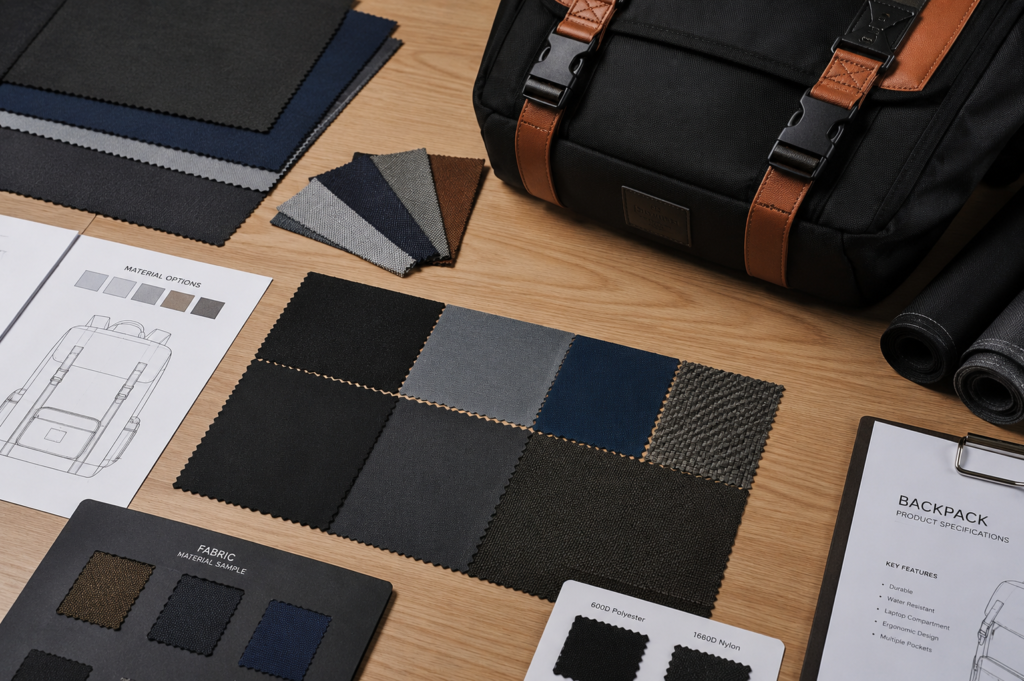
Selecting the right backpack material is one of the most important decisions when developing a backpack product. The material directly affects durability, appearance, comfort, weight, water resistance, and overall product cost. Whether you are sourcing backpacks for travel, business, school, sports, or outdoor activities, understanding the characteristics of different materials can help you make better product decisions and ensure your brand delivers high-quality products to your customers.
Why Backpack Material Matters
A backpack may look attractive on the outside, but its performance depends largely on the materials used. Different applications require different levels of durability, waterproofing, flexibility, and sustainability. Selecting the wrong fabric can lead to customer complaints, shorter product lifespan, and increased returns, which is particularly critical for OEM and ODM brands that must meet strict specifications.
The right material not only improves the user experience but also ensures that the backpack aligns with your target market positioning, whether it’s an entry-level school bag or a premium business backpack.
Polyester
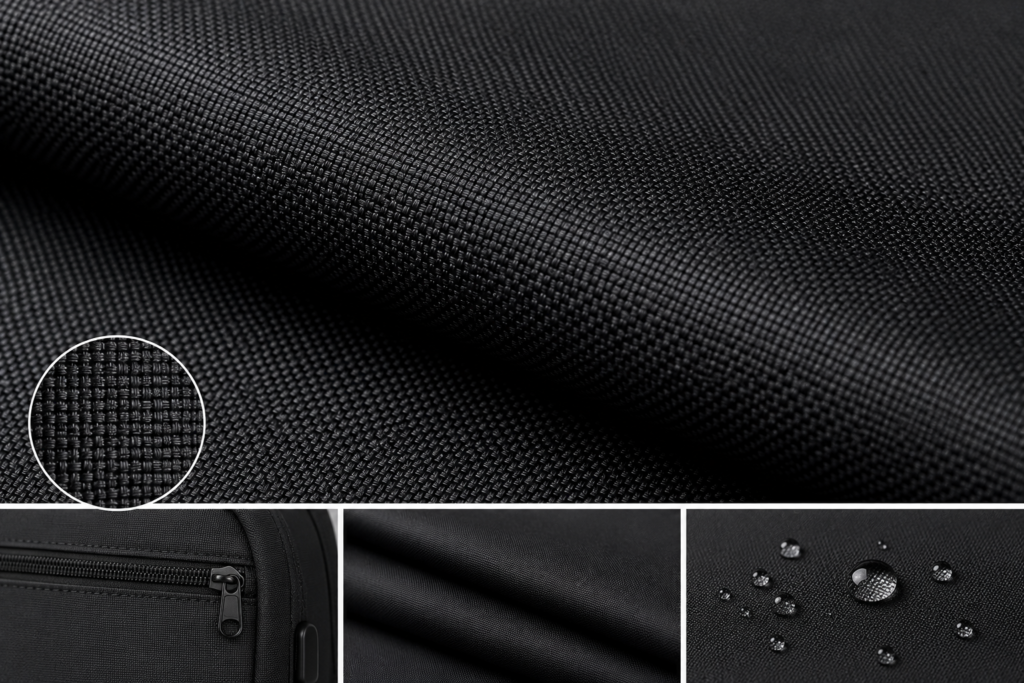
Polyester is one of the most commonly used backpack materials due to its versatility and cost-effectiveness.
Advantages
- Lightweight and easy to carry
- Good color retention and printing capability
- Resistant to wrinkles and abrasion
- Cost-effective for large-scale production
- Suitable for a variety of bag types
Best For
- School backpacks
- Promotional bags
- Casual backpacks
- Entry-level travel bags
Polyester offers an excellent balance between performance and affordability, making it a popular choice for brands that need functional yet budget-friendly options. Modern polyester fabrics can also be coated for water resistance, further expanding their applications in travel and outdoor bags.
Nylon
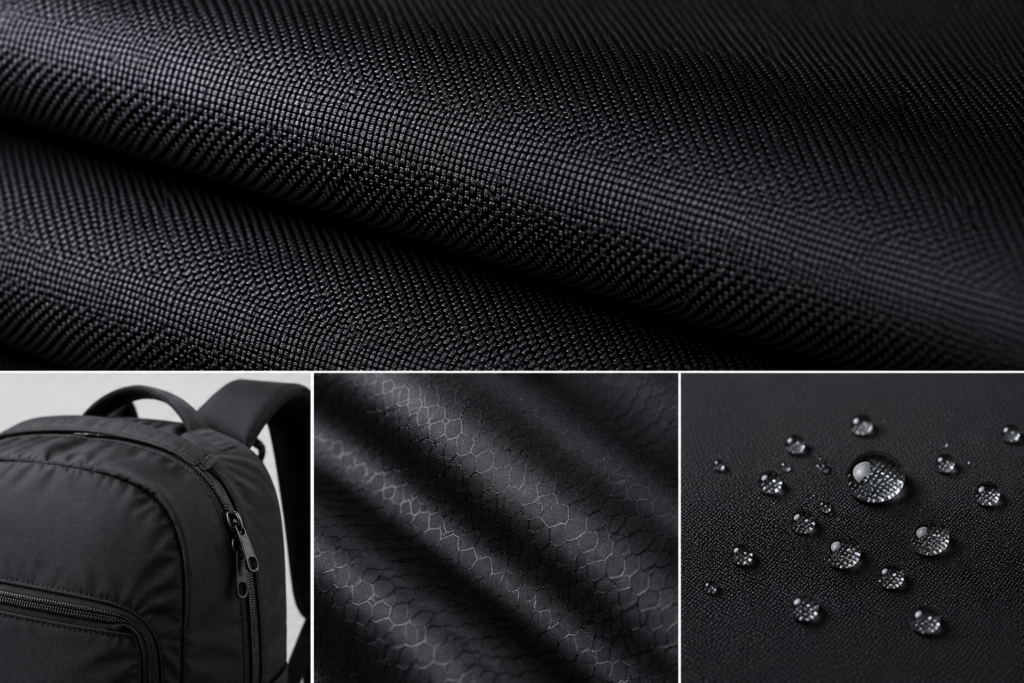
Nylon is well-known for its strength, durability, and abrasion resistance. It is often used in premium and outdoor backpack lines.
Advantages
- Extremely durable and tear-resistant
- Lightweight but strong
- Can be treated for water resistance
- Maintains shape well under heavy loads
Best For
- Business backpacks
- Travel backpacks
- Outdoor backpacks
- Premium backpack collections
Compared with polyester, nylon generally provides a more premium feel, making it ideal for products aimed at professional or outdoor markets. Variations such as ripstop nylon add extra tear-resistance and are suitable for rugged use.
Oxford Fabric
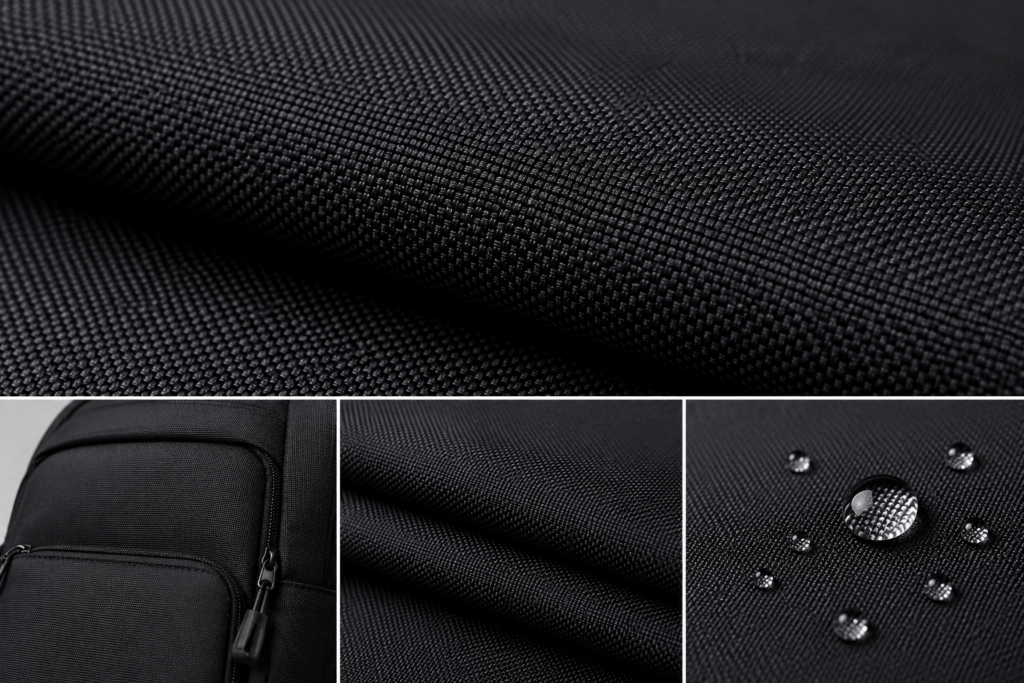
Oxford fabric is popular for backpacks that require a professional appearance with moderate durability. It has a distinct woven texture that gives the product a polished look.
Advantages
- Strong and durable
- Water-resistant options available
- Professional and clean appearance
- Easy to maintain and clean
Best For
- Laptop backpacks
- Business backpacks
- Daily commuting bags
Oxford fabric is particularly appreciated for office and corporate environments, where aesthetics and functionality need to be balanced.
RPET Recycled Fabric
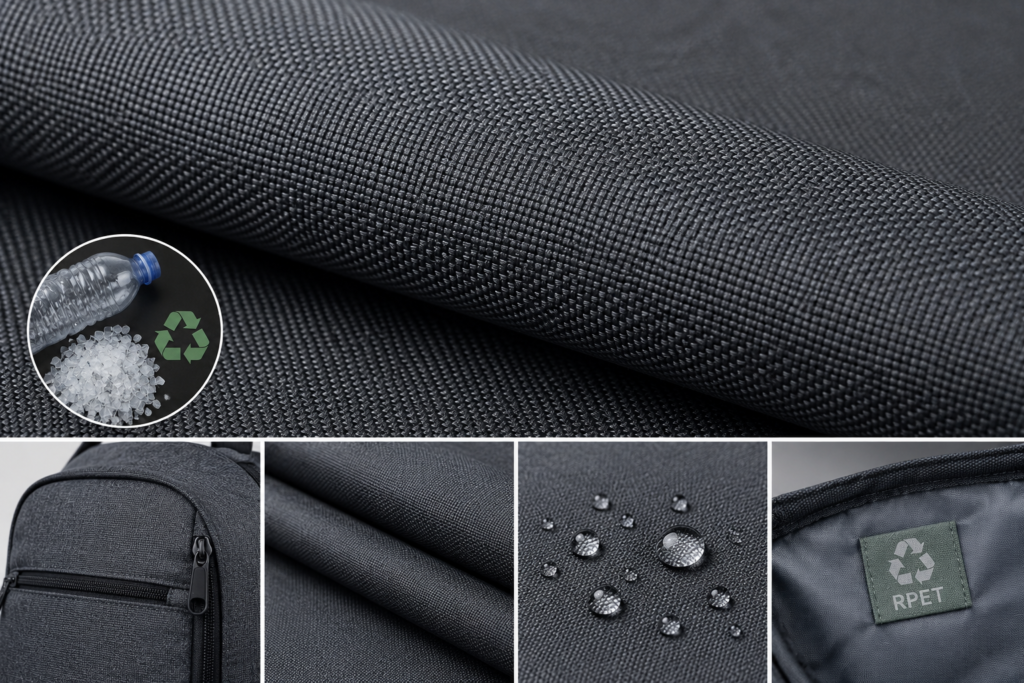
Sustainability is increasingly important in product sourcing. RPET fabric is made from recycled plastic bottles, offering an environmentally friendly alternative without compromising performance.
Advantages
- Eco-friendly and sustainable
- Lightweight and durable
- Increasingly popular among global brands
- Supports corporate ESG initiatives
Best For
- Eco-conscious backpack collections
- Corporate gifting or promotional bags
- Brands focusing on sustainable products
Using RPET materials can also improve brand image in markets where environmental responsibility is valued by consumers, adding marketing value beyond functional benefits. Many global brands are adopting recycled materials to support sustainability initiatives.
Canvas
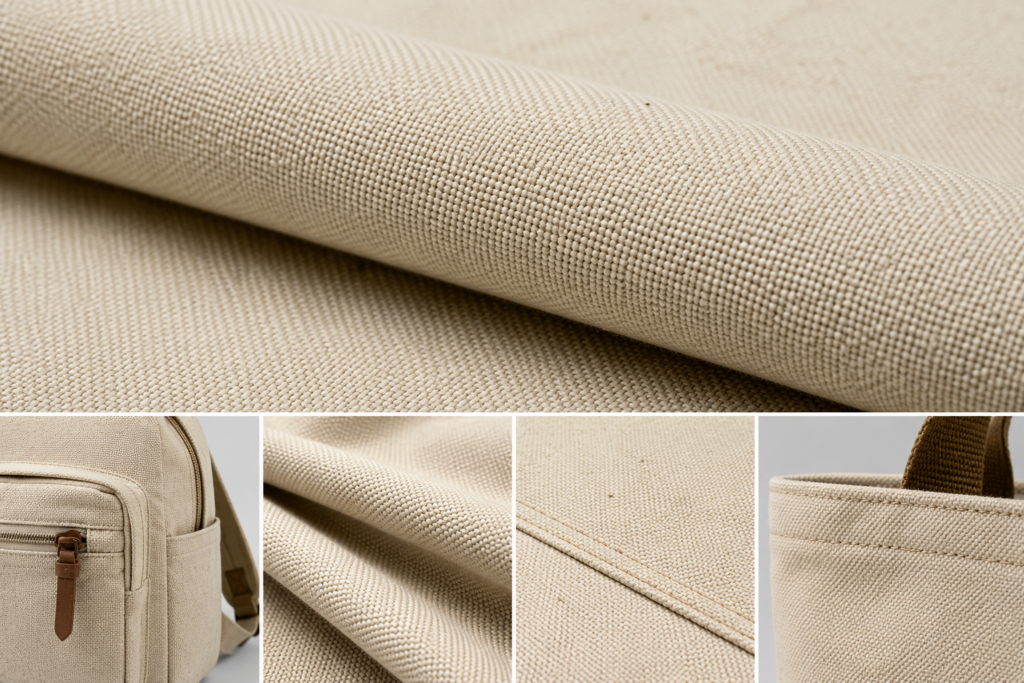
Canvas is a classic material that provides a vintage or lifestyle aesthetic. It is often used in fashion and casual backpacks.
Advantages
- Durable and structured
- Comfortable natural texture
- Easy to print or customize
- Stylish and classic appearance
Best For
- Fashion backpacks
- Lifestyle collections
- Casual outdoor bags
Canvas works particularly well for lifestyle or premium casual collections, where the look and feel are as important as the functional aspects.
Waterproof Coated Materials
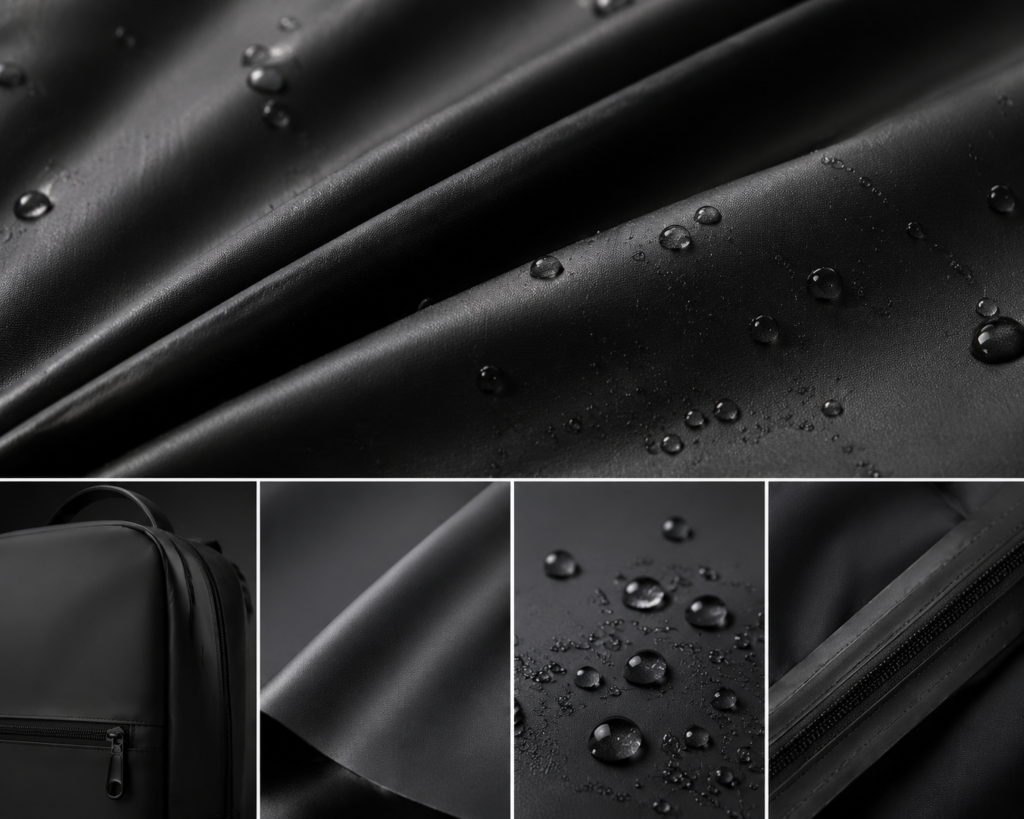
For backpacks exposed to challenging weather or outdoor conditions, waterproof coated materials such as PU or TPU coatings are essential.
Advantages
- Excellent water resistance
- Protects contents from moisture
- Maintains durability in harsh conditions
- Sleek, premium finish possible
Best For
- Outdoor backpacks
- Hiking bags
- Cycling bags
- Travel backpacks
Waterproof coatings can be combined with nylon or polyester fabrics, offering both durability and protection, making them ideal for high-end or adventure-focused backpacks. Material performance can vary depending on fabric specifications and testing standards.
Material Comparison Table
| Material | Durability | Water Resistance | Weight | Cost | Typical Use |
|---|---|---|---|---|---|
| Polyester | Good | Moderate | Light | Low | School, promotional, casual |
| Nylon | Excellent | Good | Light | Medium | Travel, business, outdoor |
| Oxford Fabric | Very Good | Good | Medium | Medium | Laptop, commuting |
| RPET | Good | Moderate | Light | Medium | Sustainable collections |
| Canvas | Good | Low | Heavy | Medium | Lifestyle, fashion |
| Waterproof Coated | Excellent | Excellent | Medium | Medium-High | Outdoor, travel, adventure |
How to Match Backpack Materials with End Users
Different user groups have different expectations for backpack performance.
Students often prioritize affordability and lightweight designs, making polyester a popular option.
Business professionals typically prefer Oxford fabric or premium nylon materials that offer a clean appearance and long-term durability.
Outdoor users require stronger fabrics with enhanced water resistance, making nylon and waterproof coated materials ideal choices.
For environmentally conscious consumers, RPET recycled fabrics provide a sustainable solution without sacrificing functionality.
Understanding your target audience is essential when selecting materials for a backpack collection.
How OEM Brands Select Backpack Materials
Professional backpack brands evaluate several factors before selecting materials:
- Intended user and target market
- Product positioning and price point
- Expected durability and load capacity
- Sustainability goals and certifications
- Brand aesthetics and marketing strategy
A reliable OEM or ODM backpack manufacturer can recommend suitable materials based on these specifications, helping brands minimize production risks and meet market expectations.
Conclusion
There is no single “perfect” material for every backpack. The best choice depends on intended use, target customer, budget, and brand positioning. By understanding the properties and applications of polyester, nylon, Oxford fabric, RPET, canvas, and waterproof coated materials, brands can make informed decisions and ensure high-quality backpacks that satisfy their customers.
At Nice Bags, we provide guidance on material selection and flexible OEM/ODM manufacturing solutions to help brands deliver the right backpack for every purpose.